


Football’s food chain: The world’s top 20 clubs ranked by where they sit after Carragher comments
Nov 05 2026 08:48 · بواسطة onefootball.com · 23 عدد المشاهدات


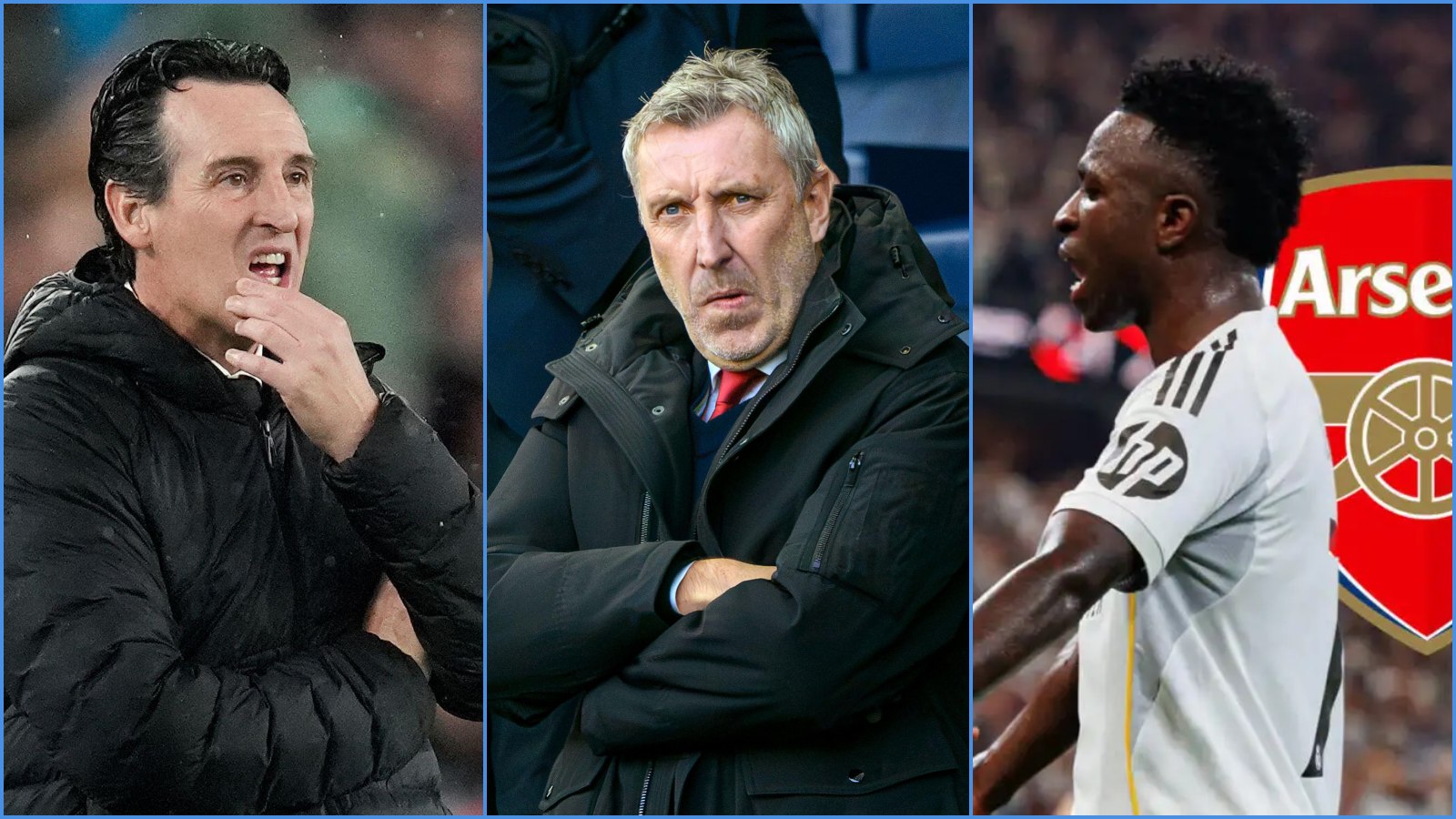
There absolutely is a food chain in football – and almost half of the world’s top 20 most attractive clubs to players and managers are English.
Preston just missed out in 21st.
20) Roma There might be no better fanbase to play for than the absurdly passionate Romanisti when things are going well. That does mean the unbridled worship can flip when the tide starts to turn, but Roma have generally resisted the sort of collapse most modern giants suffer; they haven’t finished lower than 8th in Serie A since 1997, and are currently unbeaten in third.
Life in the Italian capital isn’t half bad either, while Champions League football and the undoubted Gian Piero Gasperini pull works in Roma’s favour – even if it was all tarnished by that Manchester United comeback.
19) Bournemouth It might be a contentious inclusion among more glittering, illustrious names, but in a snapshot ranking of transfer lure in 2026, Bournemouth deserve their place.
There is a certain transience. Any and all manner of Portuguese teams are waiting in the wings to shift the Cherries from their pedestal as an eventual launchpad into the elite.
But building their entire recruitment process around providing a platform towards ‘bigger’ teams makes Bournemouth one of the most tempting two or three-year projects (eurgh) for players and agents who will have noted how they did not stand in the way when vultures like PSG, Real Madrid, Liverpool, Manchester City and Rangers came calling last season.
It remains to be proven beyond doubt whether the model functions as well without Andoni Iraola in charge of polishing those rough diamonds, but Marco Rose did perform a similar role at Leipzig, Dortmund and Gladbach and is currently thriving.
18) Juventus There is no better place to go in Italy if money is a driving factor, with Juventus claiming the highest wage bill in Serie A. But the Old Lady has shown her age somewhat in these fallow post-Scudetto years, being overtaken by a handful of clubs run more capably.
This remains a team in transition, with uncertainty over their manager, sporting director and a transfer policy still contingent on player churn and loans with various clauses attached.
The name value and reputation undoubtedly remains but Juventus have also not made the Champions League quarter-finals since 2019 and have only two Coppas Italia to show for the last five seasons.
They are, however, and likely will be until beset by some sort of inevitable scandal, Juventus.
17) Milan Devastatingly enough, these are not the 1990s so there are no preposterous levels of Serie A spending, nor the attraction of being discussed by a pastry-eating James Richardson in a wonderful Italian cafe.
But the charm of metropolitan life persists, and Milan will always channel that as well as anybody.
There is also Ruben Amorim, whose obvious charisma and magnetism shone through even during that scarring experience at Manchester United.
16) Borussia Dortmund The established cliche used to be that Bayern would sign the best players from Dortmund, who in turn would shop in the smaller Bundesliga markets. But it doesn’t really apply anymore, with free agent Raphael Guerreiro the only player since 2016 to cross the divide and leave Germany’s second-biggest fish for the one bona fide shark.
Dortmund cannot even lay consistent claim to being the country’s perennial bridesmaid. They have finished 3rd, 4th or 5th as often as they have 2nd in the last ten Bundesliga seasons.
But they will point to proof in the pudding; the idea of following in the footsteps of Erling Haaland and Jude Bellingham works in their favour even if the smaller those examples in the rear window become, the better chance Leverkusen and others have of usurping them.
15) Brighton For a great many players and agents, Brighton would potentially rank No. 1. But only as a means to eventually reach some of the teams higher up on this list.
It is not an insult to be a stepping stone or a selling club. In the modern game the latter is an absolute necessity and only two or three teams can honestly, truthfully say they are categorically not the former.
Brighton have embraced their role in identifying, polishing and upselling gems while having the next five lined up in every position across the globe, all while maintaining an absurd level of consistent performance on the pitch under a bright young coach in European competition.
14) Como Perhaps more than with any other team, Como’s transfer allure feels slightly ephemeral.
That is no comment on their substantial, non-fairytale financial backing, more a reflection of how they will likely reach a ceiling at some point when not beating teams 9-1 in the Champions League, while the appeal of playing for Cesc Fabregas will not be Como’s to dangle for much longer.
But a relentlessly upward trajectory, an ambitious set-up and the unique intrigue of the Lombardy lakeside does make Como a destination worth considering.
13) Aston Villa Jamie Carragher was not wrong. “There is a chain in football, whether you like it or not,” and Aston Villa sending the lawyers round to those who remind them of their place does not change that.
“Real Madrid will take Manchester United’s best player, they did it with Ronaldo,” he said, with Villa next in the chain. “And there will be teams below Aston Villa, and they’ll take their players or manager,” Carragher added in his delightful, friendly exchange with the club’s supporters.
With Unai Emery, trophies, Champions League qualification and even some secret release clauses chucked in, Villa is certainly a place to be.
12) Atletico Madrid It depends on perspective and specificity: for a fiery South American centre-half, Atletico would rank much higher. But in general terms, they have lost some lustre while keeping in touch with the continent’s chasing pack.
Diego Simeone’s soul-binding eternal contract does remove the sort of perennial question mark which hangs over many clubs. The absolute certainty over the manager is as much a selling point as the constant cojone complimenting would surely be.
The regular trophy supply has dwindled, however, and any hope of winning the Champions League must be left at the Metropolitano door. But honestly, the amount of unprocessed parent-inflicted trauma that could be healed by one Simeone arm around the shoulder and ruffle of the hair after being substituted in a backs-to-the-wall, dark arts, European second leg masterclass would make any move worth it.
11) Spurs Last summer was when the Big Six – rarely if ever the best six – was permanently crystallised.
Spurs are lagging behind their contemporaries but it pays to be part of that establishment. The gap between them and the Premier League’s five other giants is smaller than that Spurs boast over everyone else in England and across most of Europe.
They have finished 17th in consecutive seasons, and reacted both times by simply ransacking stars from the non-elite teams above them.
Throw in Roberto De Zerbi and you have a place players, albeit not fans, coaches and indeed often players, want to be.
10) Inter Champions League finalists in two of the last five seasons, Inter have been meticulously and impressively rebuilt in the image of Simone Inzaghi and Beppe Marotta.
The transition to Cristian Chivu has not been painless, thanks mainly to Bodo/Glimt. But they are Serie A champions again and probably already co-own everyone somehow anyway in that endearing ’90s fashion.
9) Chelsea “I don’t know why as a player I would look at that Chelsea project and think I would sign,” Carragher once said.
But really the reasons are numerous and obvious when looking past the instinct of laughing at how batsh*t it all is: money, a long-term contract, a chance to work with excellent players and coaches, a guarantee of never being coached by John Terry, regular European football, trophy-winning pedigree and life in London.
There might be an element of reticence to join a club which has shown such scant and consistent disregard for players it no longer deems of value, but that rather ignores the ingrained egotism of professional athletes who believe they are so good that such treatment will never befall them.
8) Manchester United The fact is that what is at what is currently their lowest modern ebb, Manchester United finished 15th in the Premier League, had lost a final to Spurs and were an operational mess, yet still beat Champions League clubs to Matheus Cunha, Bryan Mbeumo and Benjamin Sesko.
They even contemplated selling their best player in the same summer but Bruno Fernandes resisted “because I genuinely like the club”.
More than a decade of general irrelevancy has done little to change the global standing of Manchester United. Money plays a part – they didn’t beat Real Madrid to Leny Yoro because of their philosophy – but this is a juggernaut the size of which precious few can compete with even at their miserable worst.
7) Liverpool Anfield is no longer the stable, safe environment for player development. They sack managers now. And waste money on ill-fitting signings. And probably no longer have a clue themselves who is still on their transfer committee, nor whether one even actually exists.
There was a structure with Jurgen Klopp, a clear hierarchy and direction which made it easy for players to buy into. That was true even in the early Arne Slot days. But brilliant as Andoni Iraola is, the sense of chaos behind the scenes does make the current Liverpool a bit of a gamble.
No club is responsible for more of the world’s nine-figure transfers, with Florian Wirtz, Alexander Isak and Bradley Barcola all proving Liverpool have an undeniable pull. But how much of their ability to get such deals over the line is down to them being the one club willing to put such money down for those players is unclear.
6) Manchester City There is no team harder to place in the current football hierarchy, for 114 reasons.
It will be intriguing to see how Manchester City approach the January transfer window. The sheer uncertainty over their immediate and long-term future must surely preclude the level of mid-season investment seen at the Etihad in the last two winters.
Beyond that, it is anyone’s guess precisely what happens, where they end up and how it all impacts their ability to attract the calibre of talent which made all their imaginary trophies possible.
5) Arsenal It was a bruising summer for the Premier League champions.
They tried to cash in on that cache by involving themselves in conversations with the most sought-after players in the world. But Arsenal were the latest pawn in a Real Madrid contract negotiation, Chelsea hijacking and Barcelona transfer story.
Vinicius Junior played them. Morgan Rogers could have insisted on the Emirates but chose not to. Julian Alvarez was never going to come. Arsenal signing the best players from two teams an echelon below in the same division simply solidified their status as the Premier League place to be, but their standing in Europe still needs work.
A Champions League trophy ought to do it.
4) Bayern Munich There isn’t really a box Bayern don’t tick. They have a ridiculous economic advantage in a league they are favourites to win each season, with a raft of brilliant players, a wonderful stadium, the guarantee of Champions League football every year and a magnetic, likeable, recent retiree turned coach.
As the breakers of the Harry Kane trophy curse the only thing that can possibly stand against them is a bias towards Premier League teams, but the capture of England’s captain, Jamal Musiala and Michael Olise against intense competition shows that they can hold their own in those battles too.
And with the Ballon d’Or only rising in importance and prestige among players, it does help to have pushed the current holder over the line into the absolute elite.
3) Barcelona The excellence of Hansi Flick has certainly helped Barcelona regain their footing in the world game, although the emergence of some ludicrously gifted academy products might have played a part too.
There remain some doubts over whether they can actually afford to register the players they sign, but if any iteration of Barca come knocking you answer, and this one is finally taking steps to sort itself out by complementing the La Masia production line with more tailored recruitment.
2) Paris Saint-Germain The one mark PSG had against them has been meticulously erased by the brilliance of Luis Enrique. Their inability to convert domestic hegemony into European glory haunted them for years but a shift away from relying on superstars to emphasise instead the importance of the team has transformed them into the strongest unit the Parc des Princes has ever produced.
And that negative has been turned into a positive: such is their dominance and influence over Ligue Un, players know they will be rested amply and have their fixtures moved around to make Champions League glory even more likely.
They pay the highest wages and basically guarantee a couple of trophies a season when all is said and done, making it slightly easier to grin and bear living in actual Paris for a bit.
1) Real Madrid Still the one club no-one turns down.
It has not gone particularly well for the player since but Liverpool were the latest to learn that harsh lesson over Trent Alexander-Arnold. Many feel they are special and different enough to counteract decades of self-fulfilling importance but they are wrong and always will be.
Real Madrid shattered the world transfer record to sign Cristiano Ronaldo from Champions League runners-up Manchester United at the end of a season in which they were eliminated 5-0 on aggregate by Liverpool in the round of 16, lost in the first round of the Copa del Rey to Real Union and finished a distant second to Barcelona in La Liga.
They tempted Alexander-Arnold into ending a 21-year union with Liverpool despite being comfortably beaten in that Champions League campaign’s quarter-finals by Arsenal and ending up with a new manager and no trophies of note.
It’s not personal and it’s not an insult. Real Madrid just tend to get what they want.