


Man United want Mauricio Pochettino to turn them into Tottenham – it won’t be easy
Nov 18 2026 14:48 · بواسطة onefootball.com · 73 عدد المشاهدات


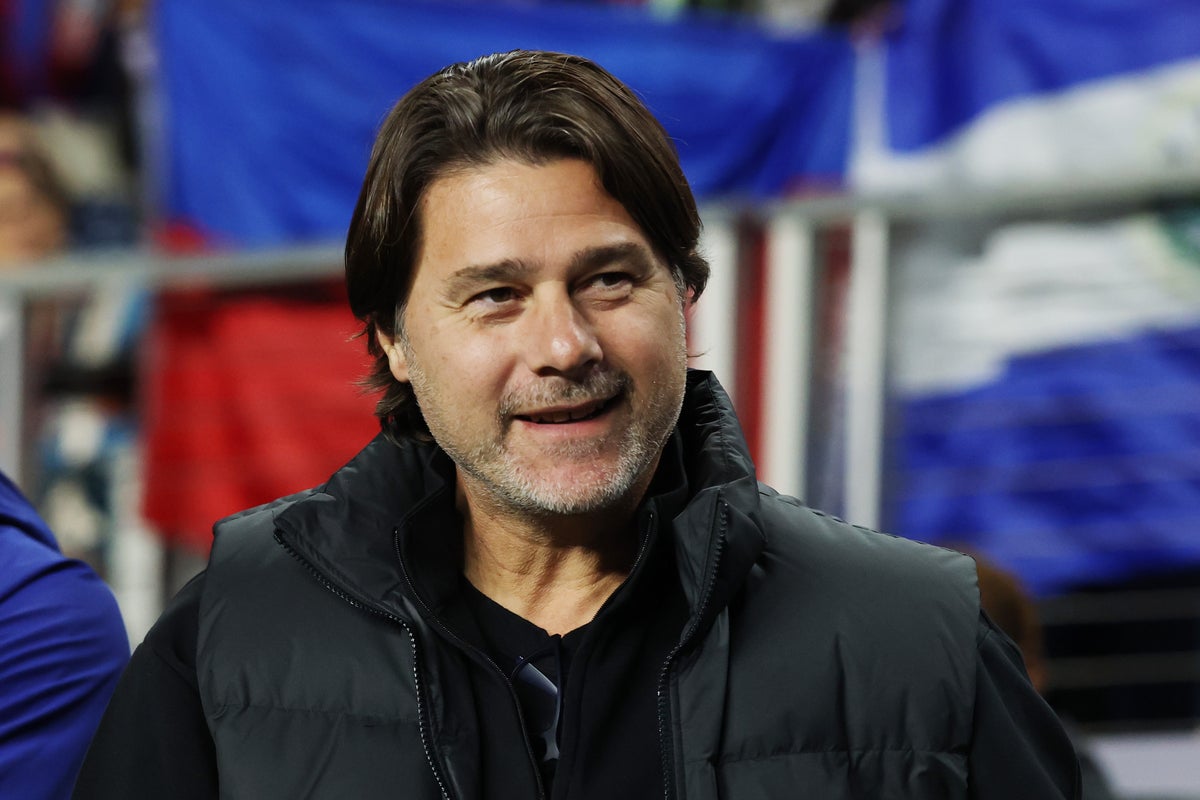
Officially, Manchester United have appointed the USA manager Mauricio Pochettino. The hope at Old Trafford may be that they have actually appointed Tottenham Hotspur manager Mauricio Pochettino.
The Argentinian has had higher-profile jobs since, one (PSG) that yielded silverware, another that put him in charge of a host nation at a World Cup, but for many his defining work remains at White Hart Lane. It earned him admirers in Manchester, Sir Alex Ferguson and Gary Neville among them. As the man who seemed the great lost United manager finally arrives at Old Trafford, part of the aim is simply to replicate what he did in north London.
Pochettino played attacking, energetic football, galvanised the crowd and united them behind the club, improved players, turned signings into successful buys, prospered with a limited budget, mounted a title challenge, qualified for the Champions League on a regular basis and reached a Champions League final. United would appreciate it if he did all that again. If they are greedy, they may ask him to win the Premier League and bring in other silverware. From the depths of the relegation zone, however, they should not get ahead of themselves.
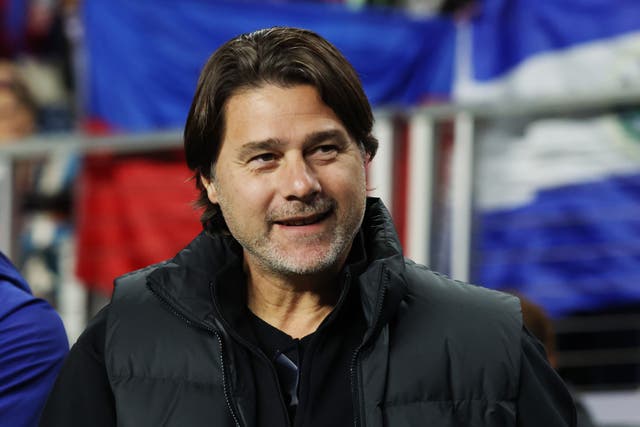
Mauricio Pochettino is tasked with transforming Man United’s fortunes (Getty)
And making United Tottenham 2.0 comes with certain complications. If one of them is that Pochettino is now 54, and there is a school of thought United should have appointed him a decade ago when he was 44 and when Louis van Gaal left, another lies in the group he has inherited. Pochettino’s Spurs were relentless runners. Michael Carrick’s United ranked 19th for distance covered this season – ahead only of Sunday’s opponents, Liverpool – and whereas the Argentinian is indelibly associated with pressing football, his new captain Bruno Fernandes complained after the defeat to Como about the lack of pressing. Yet much of this team feels ill-equipped to press frenetically or adopt a high defensive line.
That is not entirely their fault. On average, Pochettino’s Tottenham were the youngest team in the Premier League in each of his first three seasons in charge. Now United are one of the older sides.
The manager is not alone in offering evidence of the passing of time. He is reunited at Old Trafford with Luke Shaw: a teenager at Southampton, an injury-prone thirty-something now. The Argentinian’s Tottenham team were notable for quick, dynamic full-backs, Danny Rose and Kyle Walker in particular. Shaw once met that description: now he, Diogo Dalot and Noussair Mazraoui scarcely do. Patrick Dorgu has the pace and dynamism, but there are doubts if he is a full-back.
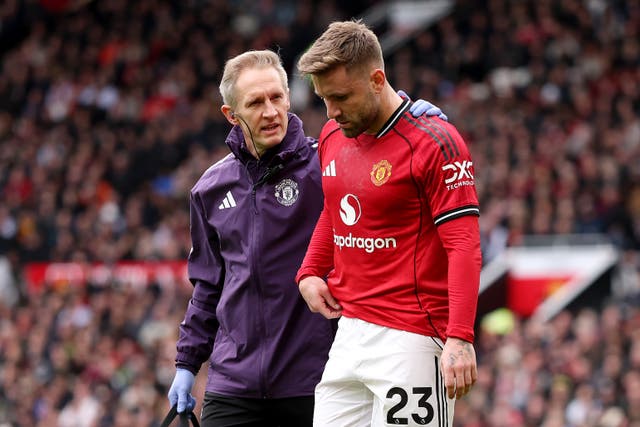
Luke Shaw worked with Pochettino as a teenager at Southampton but he is now an injury-prone veteran (Getty)
In the centre of defence, Pochettino’s preferred double act at Spurs was the Belgian axis of Toby Alderweireld and Jan Vertonghen; each furnished with positional intelligence, each excellent in possession and, if not electric, at least quick enough to defend on the halfway line. In contrast, Bournemouth’s third goal at Old Trafford illustrated that Harry Maguire is not, while Matthijs de Ligt isn’t either, explaining Carrick’s preference for a mid-block. Maguire and De Ligt are more of ball-playing defenders than Leny Yoro, who at least has the speed Pochettino can appreciate. A fondness for left-footed centre-backs suggests Lisandro Martinez could be pivotal, despite his dreadful season.
In midfield, United’s £150m summer overhaul scarcely seems designed with Pochettino in mind. Only one of their quartet has the required mobility and he, Carlos Baleba, is injured. Youri Tielemans, Andrey Santos and the homegrown Kobbie Mainoo can tend to get outrun; Tielemans at least has age as a mitigating factor. But rewind to Pochettino’s first season at White Hart Lane and his flagship choices were Nabil Bentaleb and Ryan Mason; neither ultimately top class and each later displaced from the side, but young players who could set the tone with their running power. United do not have an obvious Bentaleb or Mason.
Most obviously, they do not have a Harry Kane either; in a recent interview, Erik ten Hag lamented their inability to buy the striker in 2023, without mentioning that United might have been able to afford the England captain had he not wasted £85m on Antony. Kane could represent Pochettino’s greatest success while, with Benjamin Sesko sidelined, United have no specialist striker available.
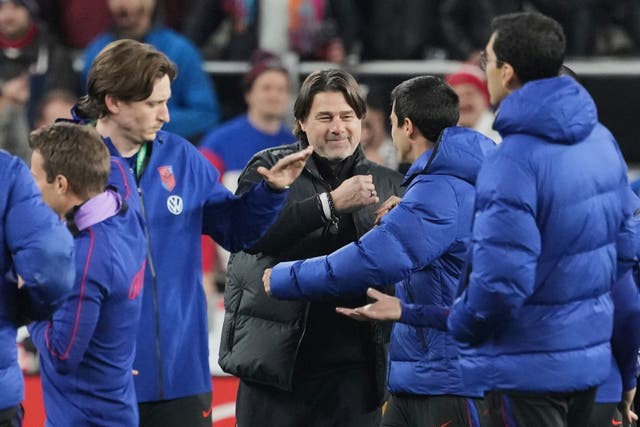
Pochettino left the US job on a high (AP)
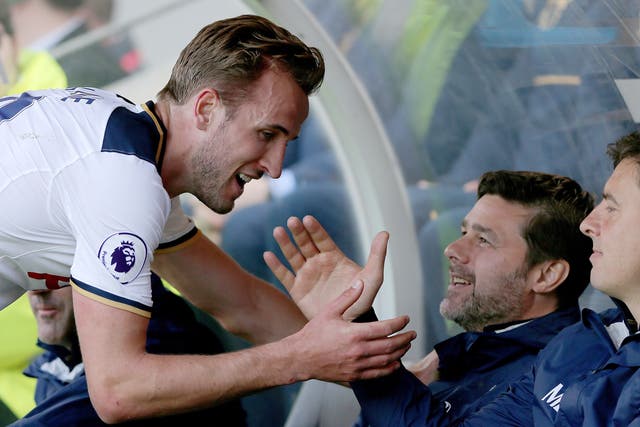
Sadly for Pochettino, he won’t find a Harry Kane figure at Man United (Getty Images)
United can note the 2016-17 Spurs scored 86 league goals, at least 13 more than they have managed in any season since Sir Alex Ferguson retired. Kane was a huge factor in that, but not the only one. Heung-Min Son flourished as a goalscoring winger who could run in behind defences; perhaps only Bryan Mbeumo, if used wide, and Marcus Rashford might meet those criteria. A ‘what if?’ of Rashford’s career is if, were he managed by someone like Pochettino or Jurgen Klopp at a formative stage, would he press more effectively and enthusiastically?
So there may only be one encouraging precedent from Pochettino’s Tottenham. While he has often favoured 4-2-3-1, he usually played 3-4-2-1 in 2016-17, when his side earned 86 points. But whatever the formation, he often had two – some would say three, including Mousa Dembele – players with very different skillsets, but who could be called No 10s, including Dele Alli and Christian Eriksen, with the Dane often playing off the right.
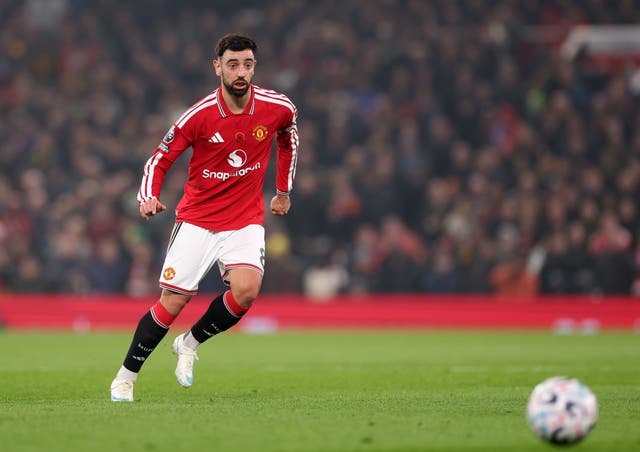
Bruno Fernandes is one of a surfeit on No 10s at Old Trafford but that may suit Pochettino (Getty)
Now United have Fernandes as the central creator plus Matheus Cunha, Mason Mount and Tielemans, who arguably all have designs on the role. That they were signed by four different managers and are now bequeathed to a fifth is an indication of the difficulties of Pochettino’s inheritance.
He managed to make sense of Spurs in a way few have done before or since. If, for much of the Premier League era, Tottenham may have looked on enviously and wondered how they could become United, now United may want to emulate the Spurs side of a decade ago. But a glimpse at Pochettino’s new charges shows it will not be easy.