


Newcastle must adapt before Jaissle’s problems deepen
Nov 07 2026 12:47 · بواسطة onefootball.com · 31 عدد المشاهدات


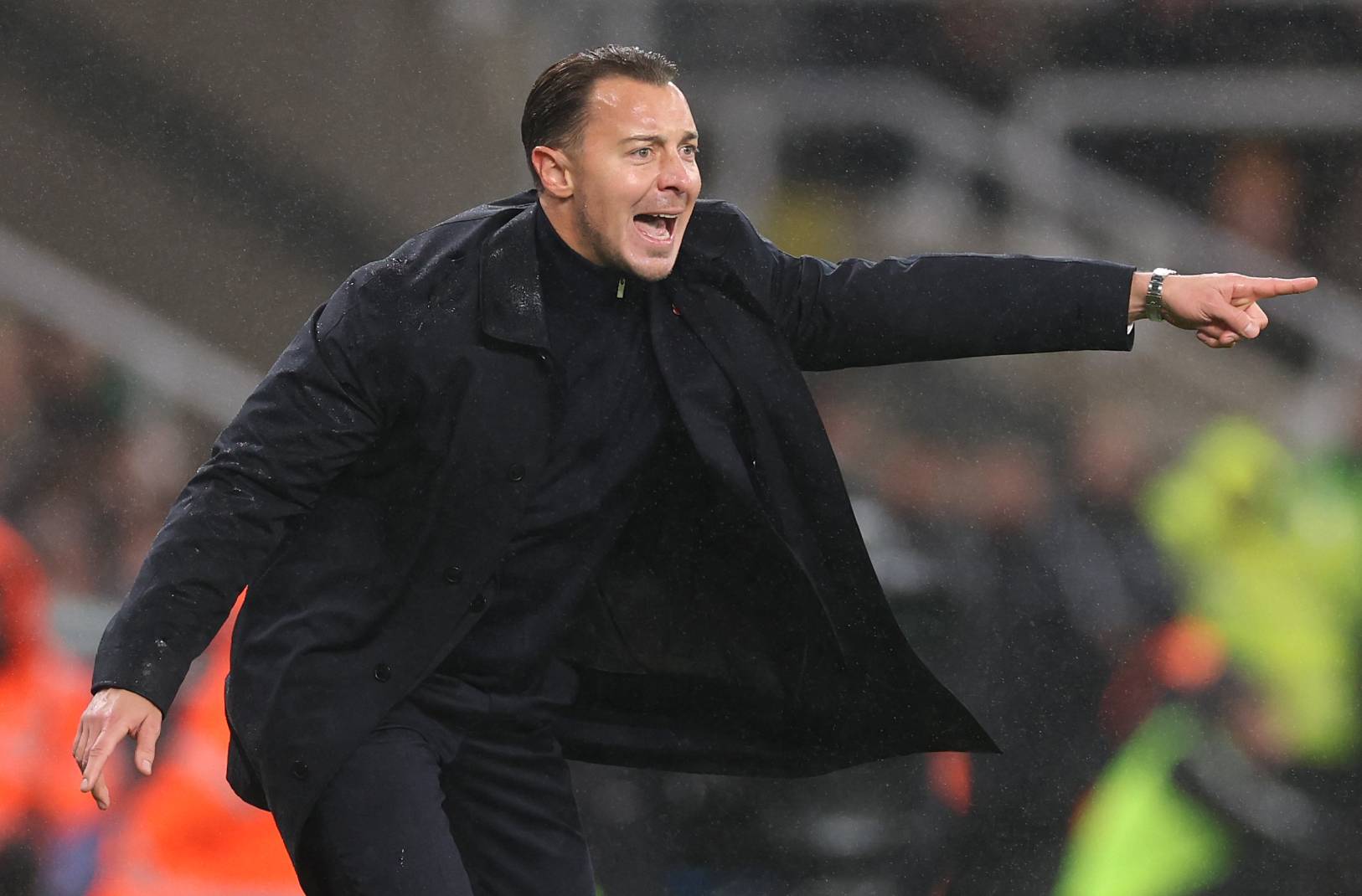
On a warm summer’s evening at Murrayfield, Newcastle United were given an early warning of the problems that would follow.
Newcastle had just been shown up physically and tactically by Everton in pre-season. The discussion afterwards revolved around whether Matthias Jaissle’s side would be anywhere near ready for the new campaign.
Jaissle was then asked that very question after the game. He placed his trust in his own processes and insisted the hard work would continue.
The doubts, however, lingered even after he had left the room.
Admittedly, the performance that followed on the opening day of the season against Liverpool appeared to show a team making progress. It would prove to be a false dawn.
Fast forward to November and, as the rain fell from a dark Tyneside sky, Everton once again claimed victory over Newcastle, having also done the same a few days prior in the Carabao Cup.
It was, quite simply, a turgid evening. To my eyes, Newcastle looked less coherent than they had in Scotland.
Back in August, Newcastle had actually started the game positively and, while the rest of the match was cause for concern, there was at least the mitigation of Jaissle having only just arrived.
That initial allowance for a new coach is becoming harder to sustain.
We are now nine games into the Premier League season and the playing identity Jaissle wants to establish is arguably less clear than it was when he first sat down in front of the north east media in the summer.
It was assumed that playing vertically meant progressing upfield as quickly and efficiently as possible. That would make sense.
It was also assumed that a coordinated press would be key to that approach, allowing Newcastle to win the ball back high up the pitch.
Newcastle want to be intense. Jaissle said so himself following Monday’s defeat. They want to use that intensity to fire up the St James’ Park crowd.
As one senior source put it, Newcastle are “committed” to this style of play, which they believe is “best suited” to the club and its fanbase. They hired Jaissle as head coach to spearhead that aim.
Why, then, has an approach built around purposeful progression produced so much hopeful long passing?
Jaissle’s style probably can work anywhere, provided you have the right players. So far, this squad has not shown it can execute that approach consistently.
That certainly raises questions over the club’s summer recruitment, but that is a debate for another day because, until January, nothing can be done on that front.
The question now is whether Jaissle can, or is willing to, help himself.
The danger for Jaissle is that persisting with an approach unsuited to the players available to him allows the same problems to keep recurring.
He still has time to take a different route.
The young German head coach cut an incredibly frustrated figure following the full-time whistle on Monday and made clear that his players had not carried out the plan they had worked on.
The long balls that caused so much angst in the stands were not supposed to happen.
The problem is that Jaissle’s persistence with a system that is clearly not working with this group is contributing to those issues.
The squad seemingly does not possess the qualities required to play exactly the way he wants.
As a result, we are now at a point where Jaissle must show adaptability and find a solution that works with the players he has.
It does not have to be radical. It does not have to represent the end goal for what he eventually wants his Newcastle side to become. It just has to work.
The first move appears obvious. Sean Steur must start at Fulham.
His 20-minute cameo against Everton on Monday gave Newcastle an impetus they had lacked for much of the night.
At just 18 years of age, Jaissle is seemingly inclined to protect Steur but has shown enough to deserve more of an opportunity.
Furthermore, Steur needs to play as part of a midfield three made up of one number six and two number eights.
The current focus on playing Nico González as a six so deep that he may as well be in defence, with Joelinton seemingly everywhere and nowhere at the same time and Joe Willock shoehorned into a number 10 role that does not suit him, has to end.
Newcastle do not have a natural number 10 in their squad, so continuing to play with one feels increasingly difficult to justify.
Of course, Newcastle also have to be more clinical.
They had moments against Everton that they really should have made more of, despite all the other issues with the performance.
But if the midfield can become more coherent, there is every chance more opportunities will follow. That is what Newcastle desperately need ahead of a trip to face an improving Fulham side.
It is a game they need to take something from, particularly with more difficult fixtures to come after the subsequent international break.
Improvements must come. Without them, scrutiny of Jaissle’s methods will only intensify.