


India's seamers and Kohli 74 power them to 1-0 lead in rain-hit match
Nov 04 2026 11:20 · Par Sidharth Monga · 94 Lectures


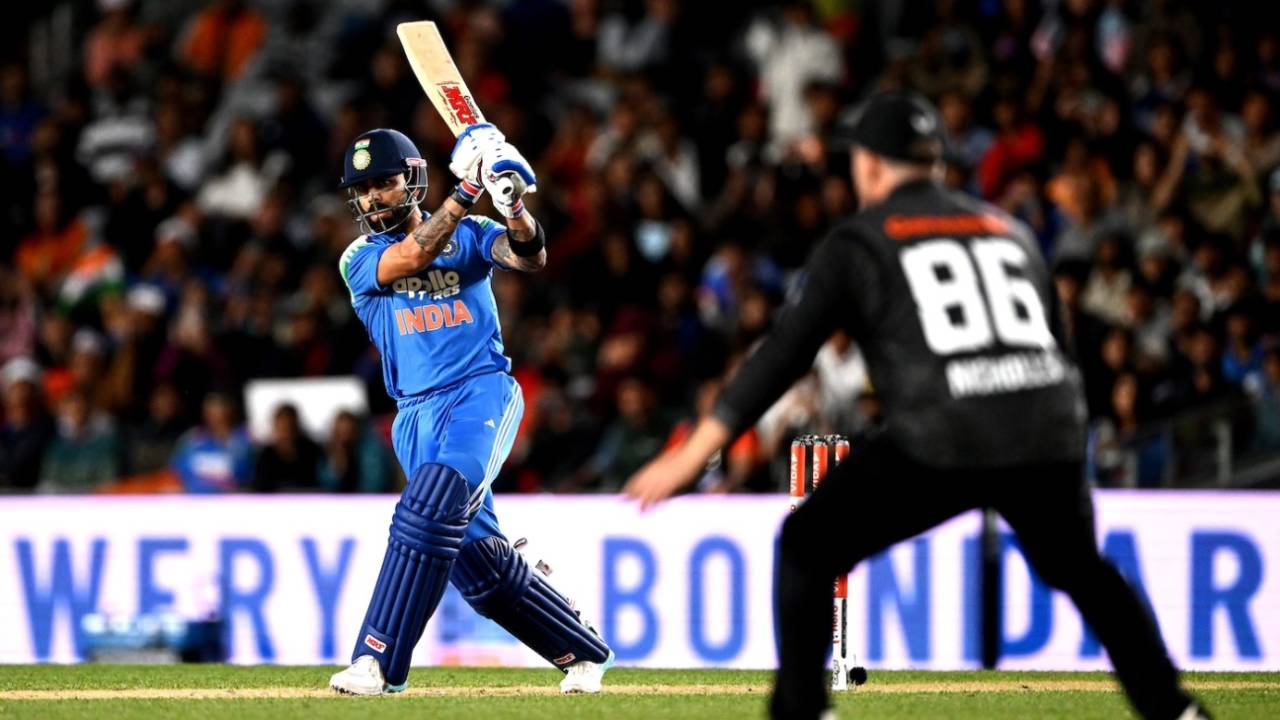
India 143 for 5 (Kohli 74, Gill 37, Duffy 3-49) beat New Zealand 185 (Seifert 38, Arshdeep 4-70, Gurnoor 3-44) by five wickets (by DLS method)
A lot can change in four days. On last Friday New Zealand scored 259 in a T20I at Eden Park. In an ODI on Wednesday, they were bowled out for 185 by India's seamers, who were relentless with their interrogation of the batters and were supported by excellent fielding and captaincy. All the aggression with the ball and in the field proved to be useful as it earned Virat Kohli and Shubman Gill the time to get the win amid frequent rain breaks during their chase.
Anshul Kamboj, picked ahead of Mohammed Siraj, was the pick of the bowlers even though he took just two wickets. He extracted seam movement right until his last over, the 33rd of the innings, conceded just 22 in his 10 overs bowled across two spells and contributed to wickets at either ends with his discipline. The two Punjab seamers, Arshdeep Singh and Gurnoor Brar, caused sharp damage either side of Kamboj's wickets, getting four wickets with the short ball.
Arshdeep got a little greedy for the fifth wicket in the end, allowing the No. 11 Blair Tickner hit three sixes off him to rearrange his figures to 10-0-70-4, but Gurnoor backed him up with his third, ending a frustrating 39-run last-wicket stand between Tickner and Jacob Duffy.
India's tactics and fielding complemented the bowling. There was a second slip in place when Kamboj produced an edge in the 29th over. Kohli, a day short of his 38th birthday, was there to dive low to his right to take a one-handed stunner to match the 39-year-old Rohit Sharma's diving run-out of Daryl Mitchell. Apart from attacking field sets, Gill also kept bowling his strike bowlers: when Gurnoor got the final wicket, India had exhausted the quota of the three strike bowlers in the 41st over.
They wouldn't have known it then given the unpredictable Auckland weather, but bowling New Zealand out early was crucial for India as rain appeared out of nowhere twice and reduced India's innings to 32 overs. If New Zealand had batted their 50 overs out, they would have been close to escaping with a no-result even though Kohli's sensational 74 off 51 full of pulls and drives on the up ensured India needed only a little under 10 overs to spare.
The kind of fluency that Kohli displayed looked scarcely possible when New Zealand were asked to bat first. One of the bounciest surfaces in the world added some seam movement to make batting difficult as India's four-man pace attack hardly gave them a loose ball. Making a comeback because of various injuries in the hosts' squad, Tim Seifert manufactured shots and tried desperately to transfer the pressure back on the bowlers, but managed only to top-score with 38 off 43.
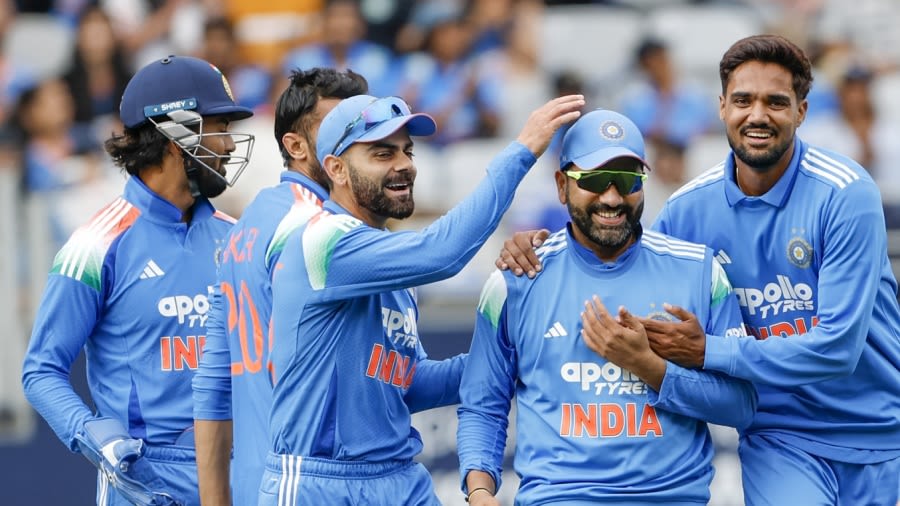
Arshdeep made the early inroads with the occasional short ball. Two of them resulted in top edges from Will Young and Henry Nicholls, two batters who, like Seifert, are still auditioning for the World Cup. Once Kamboj came on as first change, Seifert had to endure a maiden and then dots because he was even more accurate.
Even though Seifert and Mitchell built a partnership, New Zealand looked edgy, wanting to break free but not allowed to do so. The wickets during this period of play happened to fall to Gurnoor with Seifert top-edging another pull and Tom Latham offering a sharp return catch when looking to work the ball on the up.
Having survived two poorly-judged singles earlier, New Zealand finally made a contribution to their own collapse when Mitchell responded to Glenn Phillips' call for a single. Rohit fielded to his right at square leg and released the ball while diving.
Now that India were into the allrounders, Gill went back to looking for wickets. Off went Axar Patel, and back came Kamboj. His second spell enjoyed much more luck than the first. Mitchell Santner played him on thanks to wicked turn from the batters' foot holes, changing the ball's direction dramatically. Kamboj stayed on the hard length, only occasionally going slightly fuller, which produced Nathan Smith's edge for Kohli to snap.
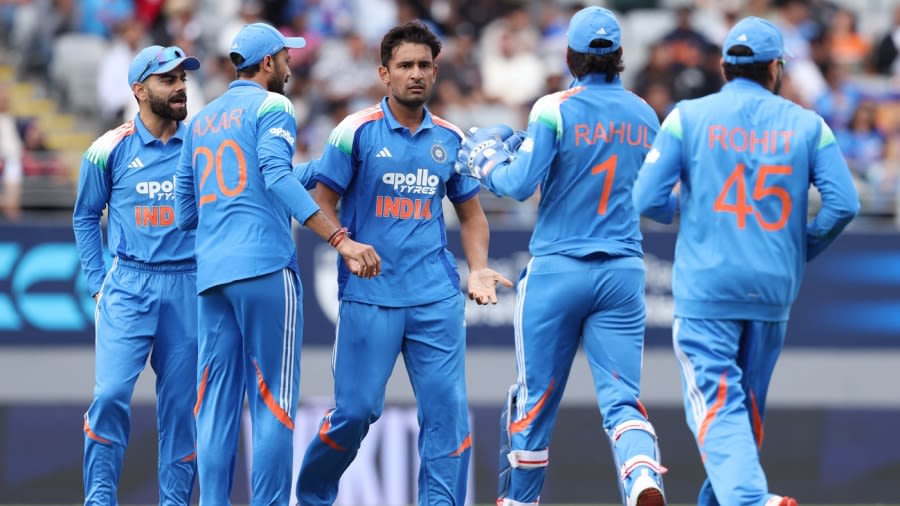
Encouraged by the fall of the last five wickets for 42 runs, Gill went all in with Arshdeep and Gurnoor once Kamboj was done. Good lengths did the job for Arshdeep in the second spell with both Kyle Jamieson and Phillips struggling to keep the ball down the drive.
Arshdeep went searching for his five-for, which allowed Tickner get a few blows in, but Gurnoor ended the innings with another short ball.
It was apparent that the pitch was not easy to bat on even during the chase when Rohit fell for a duck to a shot not dissimilar to the ones that got Latham and Phillips out, failing to keep down an off-drive.
Kohli, though, and Gill, to an extent, were on another planet. While Gill batted with a high control percentage even on this pitch, Kohli dominated the bowling without attaining that degree of perfection. When he started playing the shots, though, it was well worth the wait for the annoying drizzle to stop. The innings was studded with dismissive pull shots, especially off Tickner, but even they might not outshine the cover drive on the up off a bowler as tall as Tickner just before the first rain break.
Even though Gill's dismissal kickstarted a mini-collapse of 4 for 22, all four, including Kohli falling to the short ball, it was a comfortable win for India.