
'/%3e%3cdefs%3e%3clinearGradient%20id='prefix__paint0_linear_4737_37157'%20x1='3.018'%20y1='23.6'%20x2='44.925'%20y2='24.977'%20gradientUnits='userSpaceOnUse'%3e%3cstop%20stop-color='%231CB7FF'/%3e%3cstop%20offset='.502'%20stop-color='%232FF58B'/%3e%3c/linearGradient%3e%3c/defs%3e%3c/svg%3e)


Ben White and Jurrien Timber injury latest as Arsenal plot to keep duo fit this season
Sep 17 2026 14:50 · By Tony Mogan · 58 Reads


Timber and White both hugely important for the league champions (Picture: Arsenal FC via Getty Images)
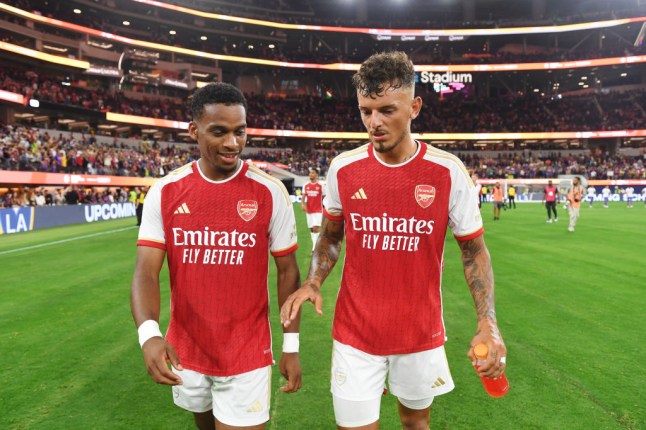
It has very often been the case of one in, one out at right-back for Arsenal over the last couple of years.
Mikel Arteta has had the luxury of having two elite right-backs at his disposal in Ben White and Jurrien Timber. White, having recovered from a knee injury that dashed his World Cup hopes in May, has started the new season impressively, ever-present in the starting XI that conceded just one goal in the opening four games.
He shook off a knock that forced him off late on in the Champions League win over Napoli to start against Sunderland last Saturday. But his evening at the Stadium of Light came to a premature end, taken off at half-time with what appeared to be a groin injury.
Timber came onto replace him for the second-half on Wearside, making his first appearance of the season having recovered from a persistent groin injury of his own he picked up in March.
Mikel Arteta has the best array of full-backs in the Premier League at his disposal, also incredibly well-stocked on the left with Riccardo Calafiori, Piero Hincapie and Myles Lewis-Skelly.
White and Timber are crucial to his set-up on the right. But the two have felt the effects of playing in one of the most demanding positions on the pitch. And when one of the two is out injured, the other is left to carry the load.
The role of the modern full-back is huge, particularly with Arteta placing so much stock in them as part of his title-winning machine. Overlapping and underlapping runs, recovery sprints and tackles make it perhaps the most physically demanding area of the pitch with the emphasis on load management greater than ever when it comes to keeping White and Timber fresh and available. While we are barely a month into the new season, avoiding the burnout that leads to injury is already vital.
‘The vast majority of athletes get treated differently based on what they need. Full-back is certainly one of the most demanding positions on the field and the data backs it up,’ Stephen Smith, CEO and founder of Kitman Labs which specialises in injury welfare and performance analytics, told Metro.
White has started every Premier League game this season (Picture: Getty)
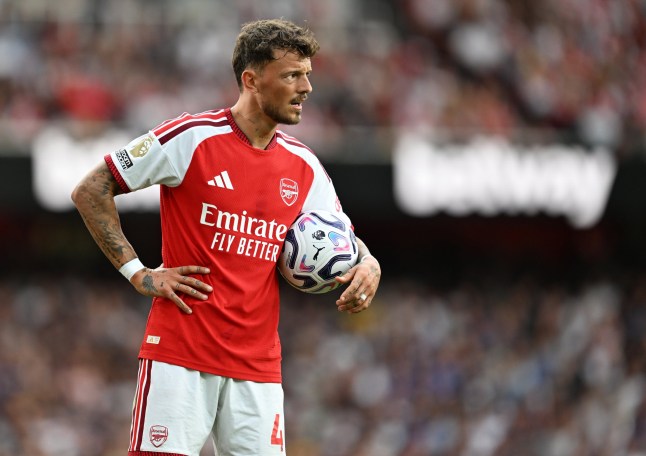
‘Distance covered over 90 minutes is generally topped by central midfielders but the honest picture is demand for a full-back isn’t about total mileage, it is about the type of running – repeated, explosive sprints up and down the same channel, sudden changes in direction and movement, recovering at pace only to bomb forward again a minute later.
‘That kind of repeated, high-speed loading is what tends to produce the soft tissue and muscular issues we see cropping up. So for Arsenal, the staff and those players, it is about very specific load management to overcome the accumulation of those efforts in a match. It’s a huge toll on the body.
Timber made his first appearance of the season against Sunderland (Picture: Getty)
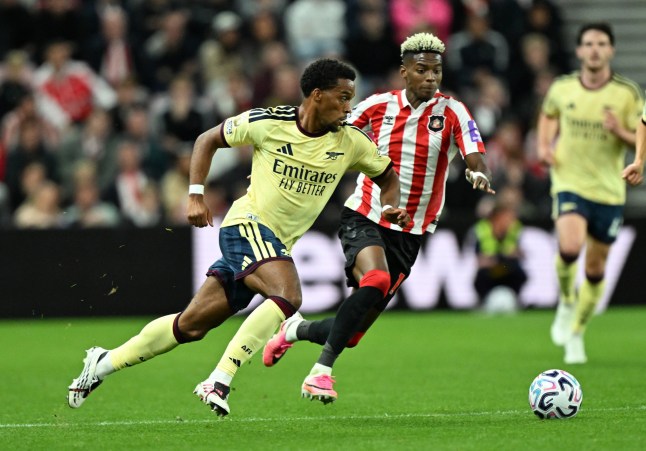
‘There is the risk of significantly more muscle fibre damage doing things like that because it is not the distance that makes the role so demanding, it is the repeated explosive efforts that can cause much more wear and tear.’
After coming off against Sunderland, White was left out of the squad that faced Ipswich in the third round of the Carabao Cup midweek with Martin Zubimendi dropping into right-back. Arsenal have not revealed any further details on the issue with the Gunners up against White’s former side Brighton on Saturday afternoon.
An extended three-week international break will immediately follow and while there is a good chance of White being available for the trip to the AMEX, Arsenal are likely to use those weeks on the training ground to get him back up to full speed.
Arteta delighted to have Timber available again (Picture: Getty)
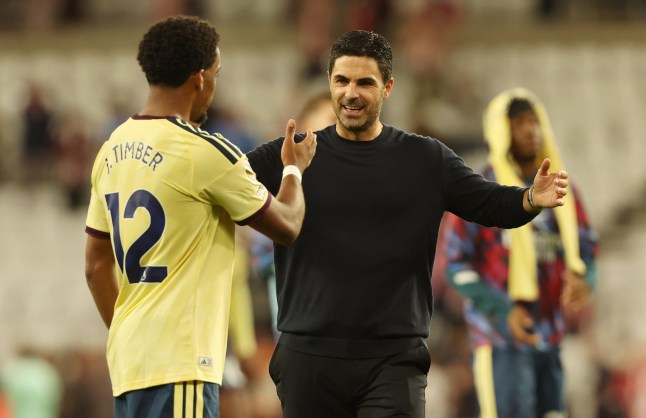
‘Without being in the medical room, generally even a mild groin or adductor strain typically needs a week or two of managed loading before a player is even back to full training intensity – more if there is any grade to that strain,’ Smith said.