
'/%3e%3cdefs%3e%3clinearGradient%20id='prefix__paint0_linear_4737_37157'%20x1='3.018'%20y1='23.6'%20x2='44.925'%20y2='24.977'%20gradientUnits='userSpaceOnUse'%3e%3cstop%20stop-color='%231CB7FF'/%3e%3cstop%20offset='.502'%20stop-color='%232FF58B'/%3e%3c/linearGradient%3e%3c/defs%3e%3c/svg%3e)


Bob Pettit's relentlessness and desire set him apart from everyone else
Sep 25 2026 02:48 · By Shaun Powell · 43 Reads


The first player to reach 20,000 points, Bob Pettit never finished lower than seventh in the scoring race in any season.
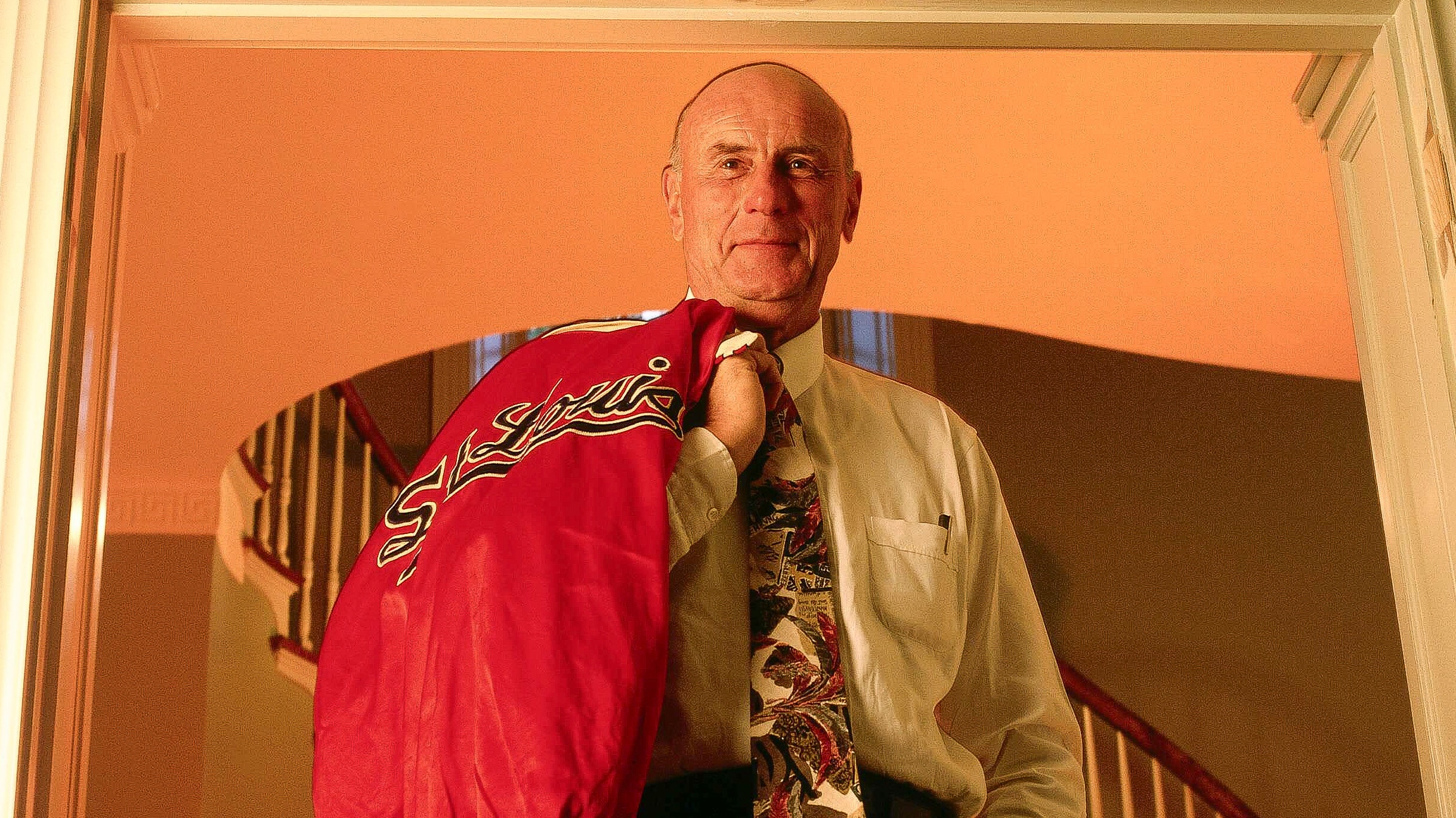
He was the prototype power forward before the position was actually defined, dominated the tail end of the early era of the NBA just before the league underwent change, and was the only player to thwart Bill Russell in a championship series.
Yes, Russell played for 12 championships and won “only” 11, a blemish mainly due to the big-game brilliance of Bob Pettit.
Pettit’s epic performance in the 1958 series, among other accomplishments, helped separate him from his peers and placed him in an elite class of achievers. Pettit was a true pioneer in that sense, among the select players who, if they didn’t change the game, they certainly impacted and influenced it during their prime and their time.
He played his entire 11-year career with the St. Louis Hawks, just before the franchise moved to Atlanta, and reached the mountaintop with that title-clinching victory over the Boston Celtics. And his timing was perfect, because afterward Russell and the Celtics launched a dynasty that couldn’t be stopped over the next decade.
Pettit and the Hawks lost to the Celtics in the ’57 championship when, in the final seconds of overtime in a classic Game 7 — perhaps the best Finals game ever — a tip-in attempt by Pettit rolled around the rim before rolling out. Pettit had sent the game into overtime with a pair of free throws with six seconds left.
This was pre-Wilt Chamberlain, so at that stage, Russell’s closest rival was Pettit, a prolific scorer and fierce rebounder who would finish his career averaging an impressive double-double — 26.4 points and 16.2 rebounds.
Pettit steered the Hawks to four trips to The Finals
, and in that ’58 series he once again saw Russell. This time, Pettit used what was then the greatest single-game performance in NBA Finals history to clinch it.
It was his Game 6 that not only denied the Celtics, but also stood the test of time. Pettit scored 50 points, the most in a championship close-out game, which wasn’t matched until Giannis Antetokounmpo did so in 2021 for the Milwaukee Bucks.
On April 12, 1958 Bob Pettit dropped 50 points, leading the Hawks to a series-clinching win over the Celtics in Game 6 of The Finals!
Tommy Heinsohn,
who was mainly responsible for guarding Pettit, said legendary Celtics coach Red Auerbach never let him forget it in the ensuing years. Auerbach would tease Heinsohn by saying:
“
We would have won 10 straight (championships) if you had held Pettit to 48 points!’’
There was probably no stopping Pettit in that series, actually, and even Russell, who wasn’t 100% healthy, suspected as much.
Russell admired Pettit’s competitive streak, and once said: “Bob made ‘second effort’ a part of the sports vocabulary. He kept coming at you more than any man in the game. He was always battling for position, fighting you off the boards. And he was always great under pressure.”
That Game 6 was by no means an outlier.
Pettit was astonishingly consistent at a high level, from a rookie when he averaged 20.4 points and 13.8 rebounds, to his final season at 22.5 and 12.4.
“That’s unheard of today,” said Hall of Famer Oscar Robertson.
The first player to reach 20,000 points, Pettit never finished lower than seventh in the scoring race in any season and averaged at least 20 points every season.
He was the second-leading rebounder in NBA history when he retired in 1965 because he had an appetite and instinct for offensive rebounds, which he once said “were worth 8-to-12 points a night for me.” Again, Pettit was a pioneer in that sense; in those days, players didn’t gravitate to offensive rebounds.
Bob Pettit was an 11-time NBA All-Star and 4-time All-Star MVP. Check out some of his great performances!
He was the league’s first MVP
in 1956, and repeated in 1959. He was also a 10-time All-NBA First Team member, 11-time All-Star and four-time MVP of the All-Star Game. This was all due to his relentlessness and desire.
He once explained: “I played as hard as I could play every minute I was in the game. I never took time off. I never relaxed or said I’m not going to go get the ball this time. I didn’t do that. I went after every offensive rebound. Every time my teammate shot, I went after the ball. Not once, not twice, every time. In the long run, that really paid off for me.”
He was 6-foot-9, a bit on the thin side at 205 pounds, but played much taller and more physical. He overmatched most of his opponents in that regard. The big men in the NBA during the ‘50s weren’t very coordinated or athletic and almost never became the No. 1 option offensively. Pettit stood out from the pack and, almost from the start, turned the Hawks, who were based in Milwaukee during his rookie season, into a winner.
His size and focus were evident immediately, as soon as the ball was in the air.
“Whenever my teammates shot the ball, I didn’t watch the ball; I watched the guy playing me,” he said.
I focused on the guy playing defense on me who was trying to block me off the boards. I fought and got around him and then got in position so the ball would bounce in the area I was fighting to get to. Basically, my game was pushing and shoving under the backboard to get rebounds.”
Born and raised in Baton Rouge, Louisiana, Pettit worked on outside shooting in high school, and the skill helped him win a state championship a few years after he was cut from the team. By the time he arrived at LSU, he grew five inches. Therefore, he became somewhat of a rarity — a big man who could score 15 feet away from the rim.
The combination of scoring from multiple spots on the floor and his rebounding prepped him for NBA greatness. Decades later, the league placed a premium on such players, called power forwards. These players were valuable around the rim, in the paint and also beyond.
Pettit was the poster child for a new breed of player
and a position that became useful and necessary.
Hear directly from Bob Pettit on the transition from playing center to power forward!
His teammate in St. Louis for his final few seasons was Lenny Wilkens, the young point guard who said he learned plenty from Pettit.
“This guy came ready to play every night. He never made excuses. I knew if I got him the ball in certain areas, he was going to be effective.”
And he usually was effective. Pettit not only became a Hall of Famer, but among the greatest players ever — celebrated with a spot on the NBA’s 25th, 35th, 50th and 75th anniversary teams.
And yet that was probably just enough to explain his impact on the game.
“He was a hell of a player,” said Wilkens.
* * *
Shaun Powell has covered the NBA since 1985. You can e-mail him at
spowell@nba.com
, find his
archive here
and
follow him on X
.