
'/%3e%3cdefs%3e%3clinearGradient%20id='prefix__paint0_linear_4737_37157'%20x1='3.018'%20y1='23.6'%20x2='44.925'%20y2='24.977'%20gradientUnits='userSpaceOnUse'%3e%3cstop%20stop-color='%231CB7FF'/%3e%3cstop%20offset='.502'%20stop-color='%232FF58B'/%3e%3c/linearGradient%3e%3c/defs%3e%3c/svg%3e)


How England can close the gap to Spain and finally put an end to decades of hurt
Oct 07 2026 17:20 · By onefootball.com · 45 Reads


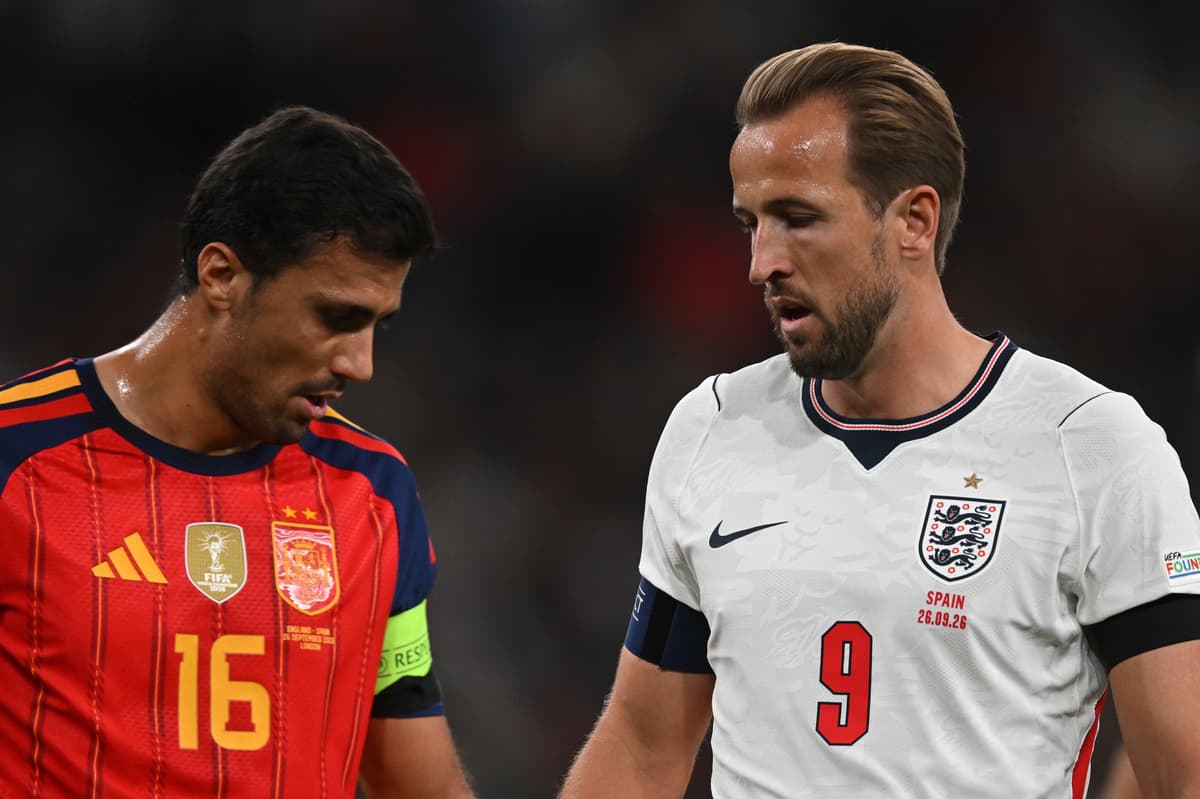
The Three Lions must catch up with the world champions - but do it their own way
England are in their Neil Armstrong era. There is just one small step left for them to take: the most important one of all.
Deep runs in tournaments have become the norm. In their last five: fourth place, runners-up, quarter-finals, runners-up, third place. All that is left is to get over the line. So no longer is there tolerance for close defeats like 3-2 against Spain or a passenger-seat willingness to trust the process.
Having had those near-misses, won at every age group, hired the cup-winning head coach, nearly exhausted the shelf life of the nation’s finest-ever goalscorer, and still not lifted a trophy, no wonder introspection and rumination over the style and ‘DNA’ of English football has flared. The tendency to romanticise how England are going to take that final step is an understandable product of the weight of the decades in which they have repeatedly fallen short.
What Thomas Tuchel’s assistant, Anthony Barry, said would be a World Cup “of moments” was in fact won by the only team with supreme control throughout. FIFA’s technical report into the World Cup last week revealed England’s average stint of possession at the tournament lasted 11.9 seconds, shorter than all three other semi-finalists. Is copying Spain the answer?
Thomas Tuchel, paid £4.9million a year to work out the answer, has obsessed over producing the “complete 90 minutes” throughout his tenure and finally he had it when they handed Croatia their heaviest-ever defeat in Saturday’s 7-0 win.
In the dressing room at Stadion HNK Rijeka, 4-0 up at half time, senior players including Harry Kane and Jude Bellingham pressed home the need to keep going. Internally, players believe a Croatia-style “perfect 90” is achievable against a France or Spain, who were the ideal opponents for the first step on the road to recovery from their Stygian exit to Argentina in Atlanta.
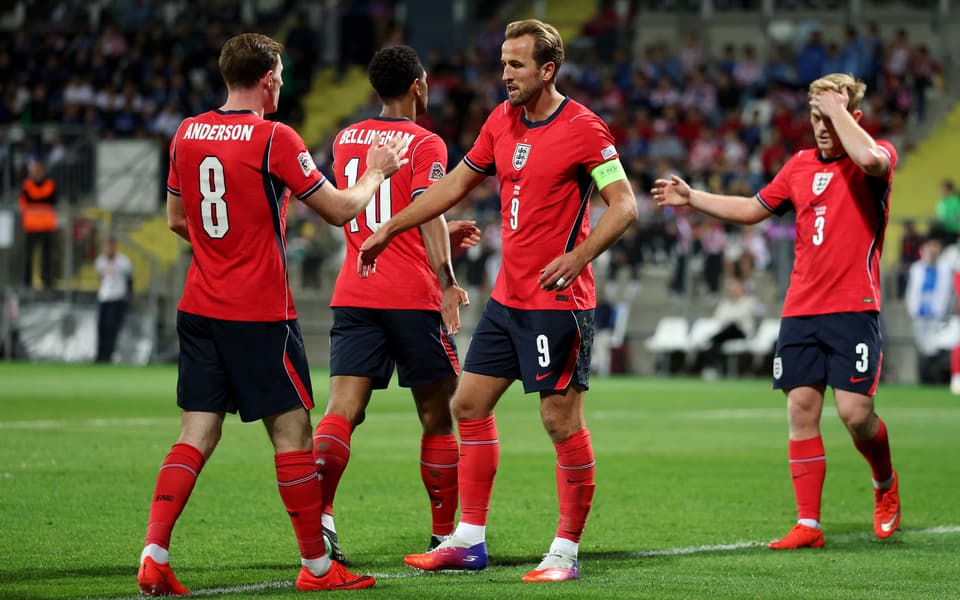
Relentless: England are not slowing in pursuit of a ‘perfect 90 minutes’
Getty
But all they could muster 12 days ago was another lost lead in another game that got away from them. Tuchel called England “a valid part of a very good football match” — not enough for a nation that contested both of the last two European Championship finals and boasts the world’s best league. Being in the game should be the barest of bare minimums, even against the world champions.
Tuchel is still tetchy about the World Cup and criticism of The Great Retreat but wants England to evolve and has made James Trafford the first serious competition in goal since 2017 for Jordan Pickford, “who did so well over so many years”. These four internationals in 11 days were taken seriously, Tuchel keen to keep what works. There are six or seven key men he can’t envisage dropping out the starting XI before Euro 2028, Kane first among them.
More so than Pickford or Gareth Southgate or anyone else, Kane is the face of this England era of excruciating near-misses — England’s top-capper who may well win the Ballon d’Or later this month, and also may well not. “Our feeling after Argentina is that we can’t let something like that happen again,” he said of a tournament exit not so different from the Euros final against Italy some five years earlier. “We spent a lot of time trying not to lose [to Argentina], and you end up losing anyway.” Not for the first time, England were bystanders to their own demise.
Kane said before the Spain game it is “important we have our own identity”. Is it? Is a recognisable way of playing a prerequisite for success? What England need are sustainable ways of winning, repeatable routes to success. Playing immediately identifiable football is trumped by playing football that wins. For this, England are well set. Their head coach’s managerial career has been defined more by winning than by how.
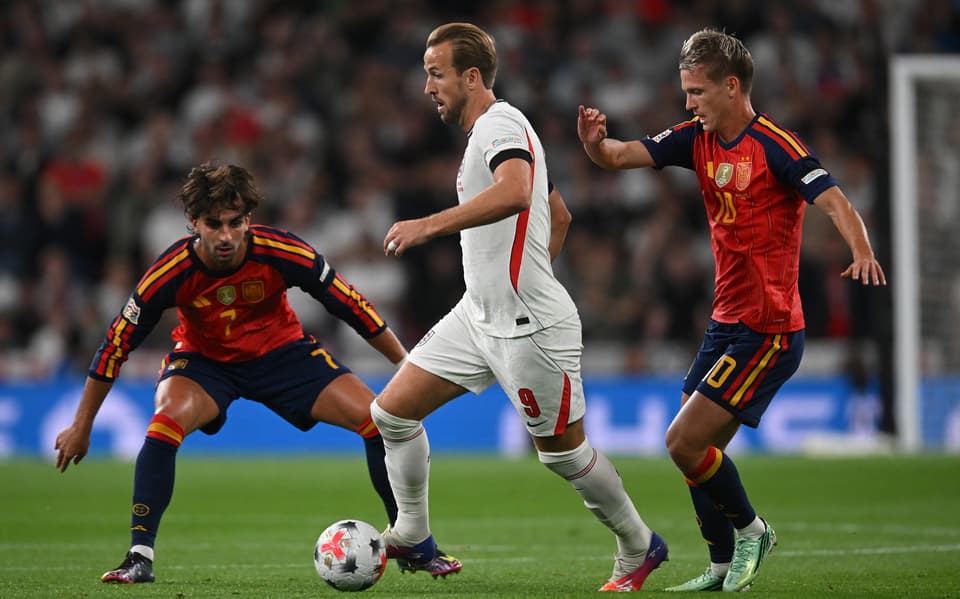
Harry Kane wants England to be unique
Anthony Gordon overplayed his hand when he said there is “no gap” between England and a Spain team now unbeaten in 42 games and world champions. But England’s Barcelona insider continued: “We don’t have that strength like the Spanish to control games like they do. It’s not in us. I’m not sure it’s something that can be taught.
“Playing in Spain I can now speak with an educated view, and the way they keep the ball is different, much different from anything I’ve experienced playing in England.” This country not producing Spanish-style midfield metronomes is a decades-old cliché because it is true.
Czech Republic manager Santi Denia lost twice to England in the past nine days and led Spain when England beat them in the 2017 U17 World Cup final and 2023 U21 Euros final. Denia calls the FA’s improvement of English football “unbelievable”. “This is the way to grow: invest a lot of money in young players.” England’s level compared with Spain? “It’s very, very close.” Luka Modrić labelled losing 7-0 to England the only time in 205 caps he had felt “ashamed” with Croatia. England have improved in these four games.
Next steps? Cutting out defensive errors. Creating chances against low blocks, and against the best sides. England’s open-play xG was 0.57 when Spain’s was 3.08 at Wembley, and they still don’t win nearly enough games against teams as good as them. Was this broached, or the elephant in the room, during the FA’s post-World Cup review with Tuchel?
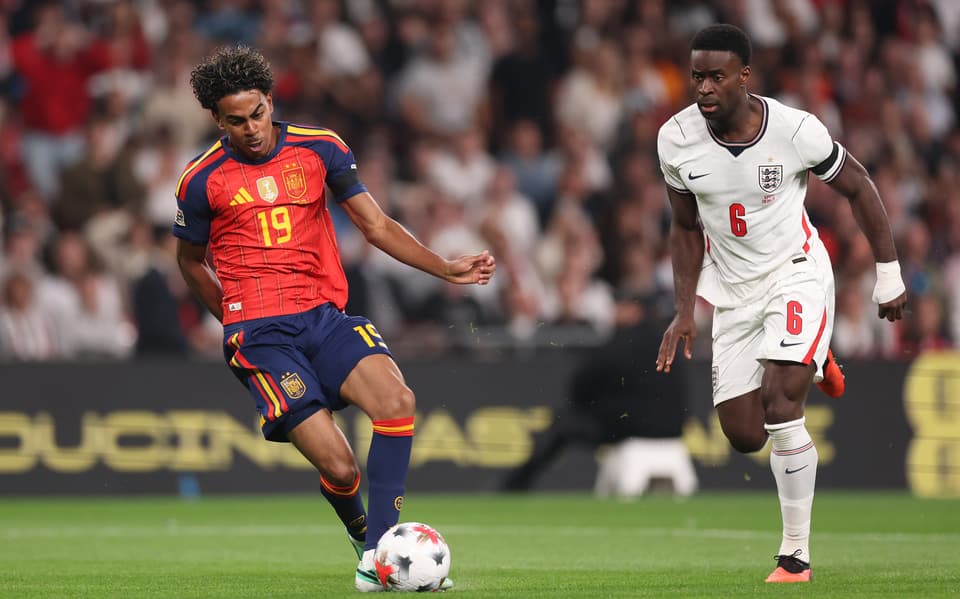
England must cut out defensive errors - such as Marc Guehi’s before Lamine Yamal’s put Spain 1-0 up at Wembley
Leading in big games still brings a psychological conundrum generations of England teams have been unable to solve. It is this mental courage they’ve lacked more than a La Masia midfielder.
The top academies and the national football centre, St George’s Park, have got England to a point where they are no longer technically inferior. This wasn’t always the case. Physically, they are among the strongest, fastest, fittest and hardest to contain. At counter-pressing, no team is better. Gordon was more on the money when he said: “We have our own strengths that Spain don’t have.”
England should not be seeking to replicate what Spain do. The blistering transition for Gordon’s equaliser against them was the blueprint for what England can do to top sides; they became the only team in 2026 to score twice against Spain and did so in a period of three minutes and 13 seconds.
The front four of Kane, Bellingham, Gordon and Bukayo Saka have scored 29 of England’s last 34 goals, and Kane believes their ability to interchange positions is why defences cannot cope. Kane’s England are elevated by Bellingham’s swagger, and he elevates himself for England. Roy Keane says he can “go on to be one of the greatest players of all time”, mixing the powerful dribbling of Sandro Mazzola, the Inter Milan legend who died last month, with that menacing blend of physical prowess and technical ability from which Zinedine Zidane built one of the sport’s great midfield careers.
Kane and Bellingham are not only world-class players but two men perfectly suited to international football and the way England want to play it. After Bellingham purred in Croatia, Kane grabbed the occasion on Tuesday. Besides adore each other, they can push each other on — and can close the gap by being England, not trying to be someone else.