
'/%3e%3cdefs%3e%3clinearGradient%20id='prefix__paint0_linear_4737_37157'%20x1='3.018'%20y1='23.6'%20x2='44.925'%20y2='24.977'%20gradientUnits='userSpaceOnUse'%3e%3cstop%20stop-color='%231CB7FF'/%3e%3cstop%20offset='.502'%20stop-color='%232FF58B'/%3e%3c/linearGradient%3e%3c/defs%3e%3c/svg%3e)


How the UK’s Embrace of Rap Culture Through Football Mirrors the US’s Through the NBA
Sep 18 2026 18:50 · By onefootball.com · 18 Reads


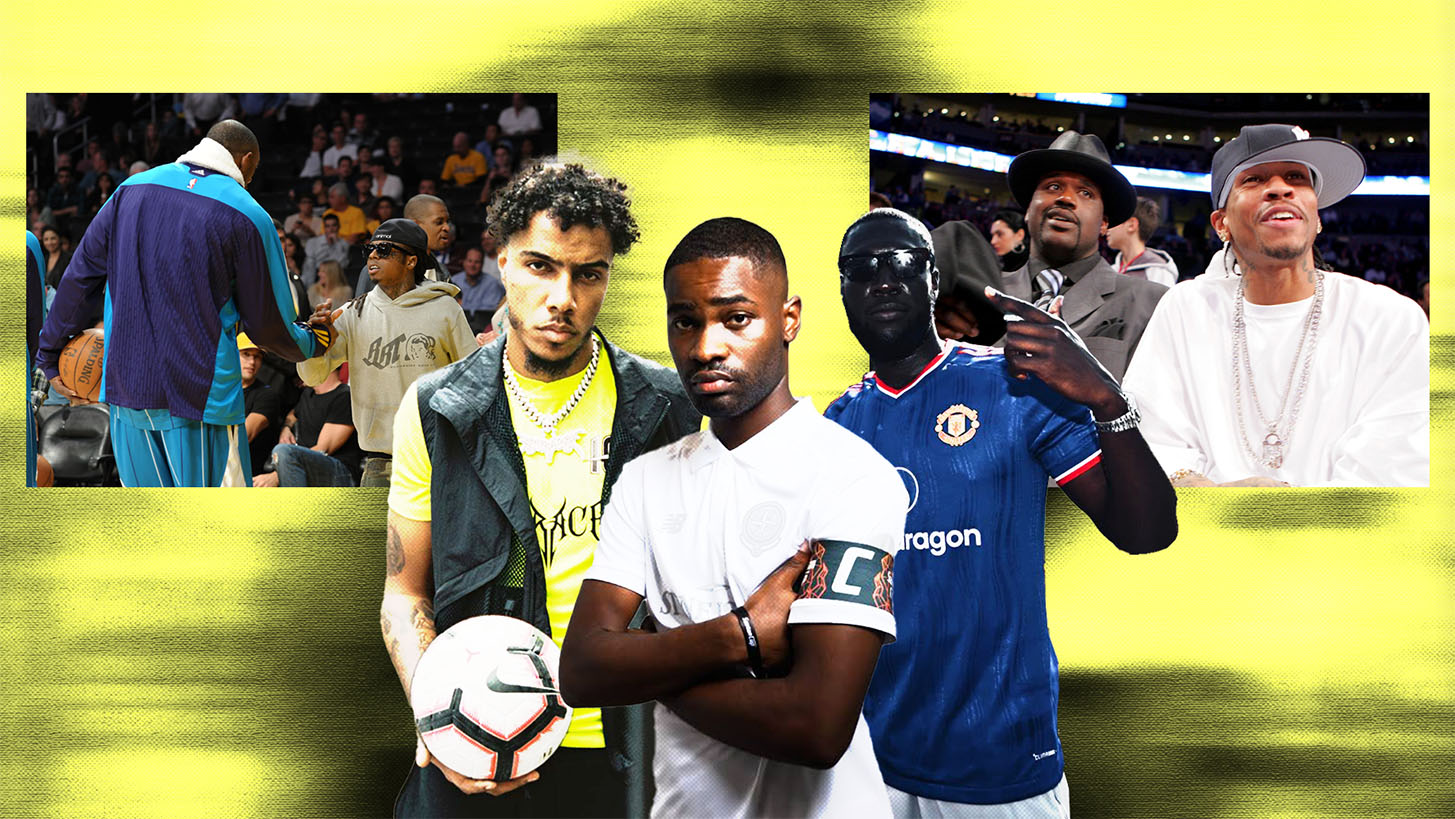
One of the early adopters of rap music and culture, NBA players were major figures in making the artform the mainstream force that it is today. And while the English Premier League hasn’t fully adopted rap just yet, it’s on a similar path.
Today, rap and basketball seem nearly inseparable. Several NBA stars have tried their hands at laying bars over instrumentals to varying levels of success, and the world’s biggest MCs haven’t been shy about their fandom, sitting courtside and dropping in on sports TV shows and podcasts to share their ball knowledge.
J. Cole even had a brief pro basketball career in Rwanda, Canada, and China, and Ice Cube famously started the BIG3 league, which will celebrate its 10-year anniversary in January 2027.
The famous adage is, “Every rapper wants to be a hooper, and every hooper wants to be a rapper.”
But while the genre and sport now go hand in hand without question, that wasn’t always the case.
While many basketball players were among the early adopters of all things rap, the NBA as a whole took longer to adjust to the curve.
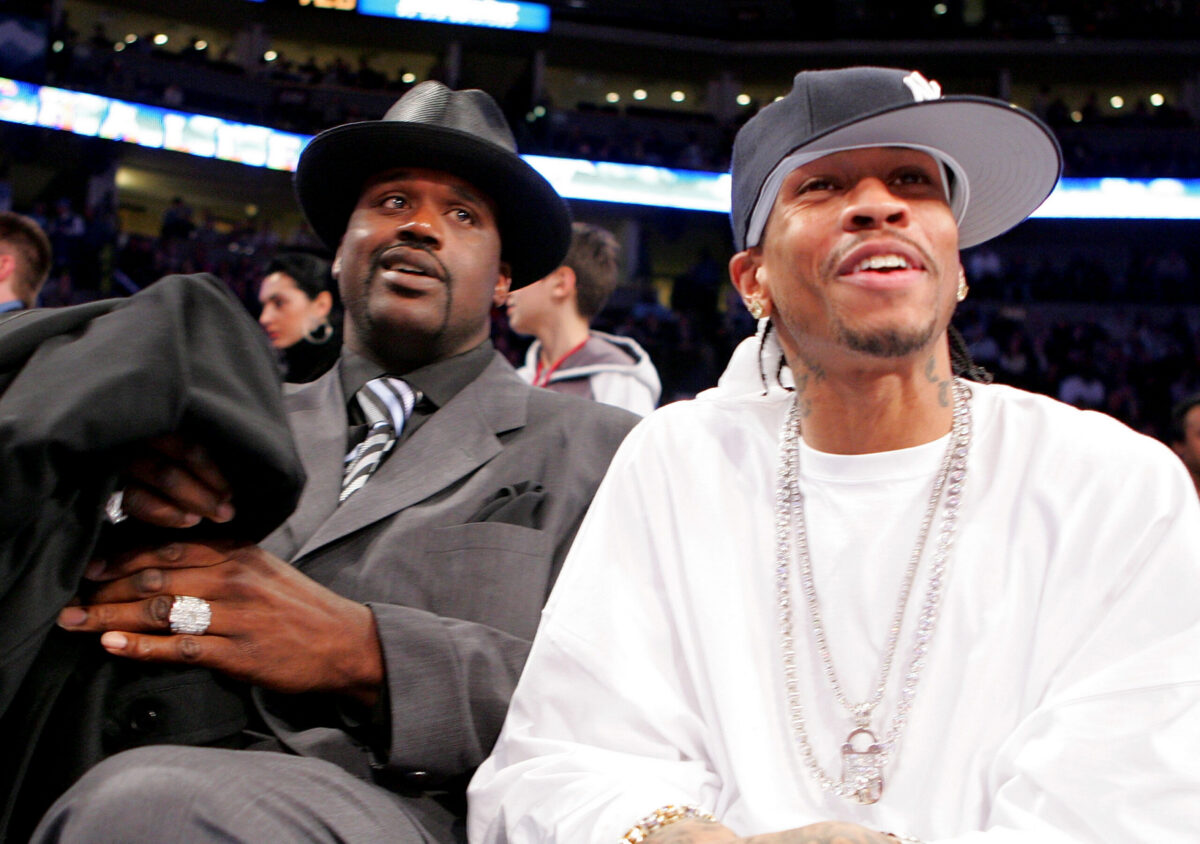
Photo by Ezra Shaw/Getty Images
The most pertinent example was the 2005 dress code, which the league enacted in an effort to “clean up” its image. Players like Allen Iverson, whose entire aesthetic was a product of hip-hop culture, were seen as deterrents to sponsors, and the 2004 “Malice at the Palace” brawl was the tipping point.
The new rule stated that players must wear business casual attire, and banned items like t-shirts, indoor sunglasses, chains, pendants, and headphones when arriving and departing games in addition to when sitting courtside.
While the dress code had its fair share of supporters, it drew the ire of many, who claimed it had racial undertones and specifically targeted the league’s Black players.
However, the new rule did little to change the influence NBA players had on both American and global culture. As time went on, the line between basketball and rap became increasingly blurred, eventually leading to today’s landscape, where rappers are hooping at various levels from celebrity games to pro leagues, and hoopers are releasing full-length albums featuring the industry’s biggest producers and recording artists.
If we look across the pond, England is on a similar journey but at a different stage, as the Premier League is still reckoning with what it means to accept hip-hop as part of the culture.
Compared to NBA arenas, which will frequently blare anthems like Future’s “March Madness” or Sheck Wes’s “Mo Bamba,” rap music is far less common in EPL stadiums, a product of the vast traditions often associated with various clubs across the English top flight.
Songs like “I’m Forever Blowing Bubbles” and “You’ll Never Walk Alone” have been belted for decades, and there is little to no chance that they’ll be usurped any time soon.
But while rap is mostly absent from the terraces of English football stadiums compared to those in the NBA, that doesn’t mean that the genre has avoided football entirely. In fact, it’s quite the opposite.
Grime, a rap subgenre that originated in London and has flourished throughout the United Kingdom, has multiple close ties with the beautiful game. Artists like Skepta, Stormzy, Dave, and AJ Tracey have heavily referenced football in their music, and have even worked with the clubs they support.
Stormzy has helped with multiple kit releases for Manchester United, and in 2016, he helped announce Paul Pogba’s record-breaking transfer from Juventus. Also in 2016, Dave teamed up with Tracey to release “Thiago Silva,” a smash hit single that shouts out the prodigious Brazilian defender.
While far from the first song to reference a footballer, “Thiago Silva” represented a shift towards a more seamless union between football and rap.
During the 2019 Glastonbury Music Festival, Dave brought on a fan wearing a Silva PSG jersey on stage to help perform the song. In what was maybe the most serendipitous music moment of the decade, the bucket-hat-clad fan rapped every single word flawlessly, and in addition to giving the track a revival, “Alex from Glastonbury” became an instant sensation.
Dave, along with many of his British rap cohorts, have continued to shout out football in their music, but what about the footballers?
In basketball, we’ve seen players like Shaquille O’Neal and Damian Lillard release albums that saw considerable sales (O’Neal’s Shaq Diesel went platinum), and while his basketball career was quite short, LiAngelo Ball’s “Tweaker” moved the needle enough to get a Lil’ Wayne remix, and it earned platinum status as well.
There have been multiple instances of footballers trying their hands at music (we’ve covered them pretty extensively on this site), with some being more serious than others.
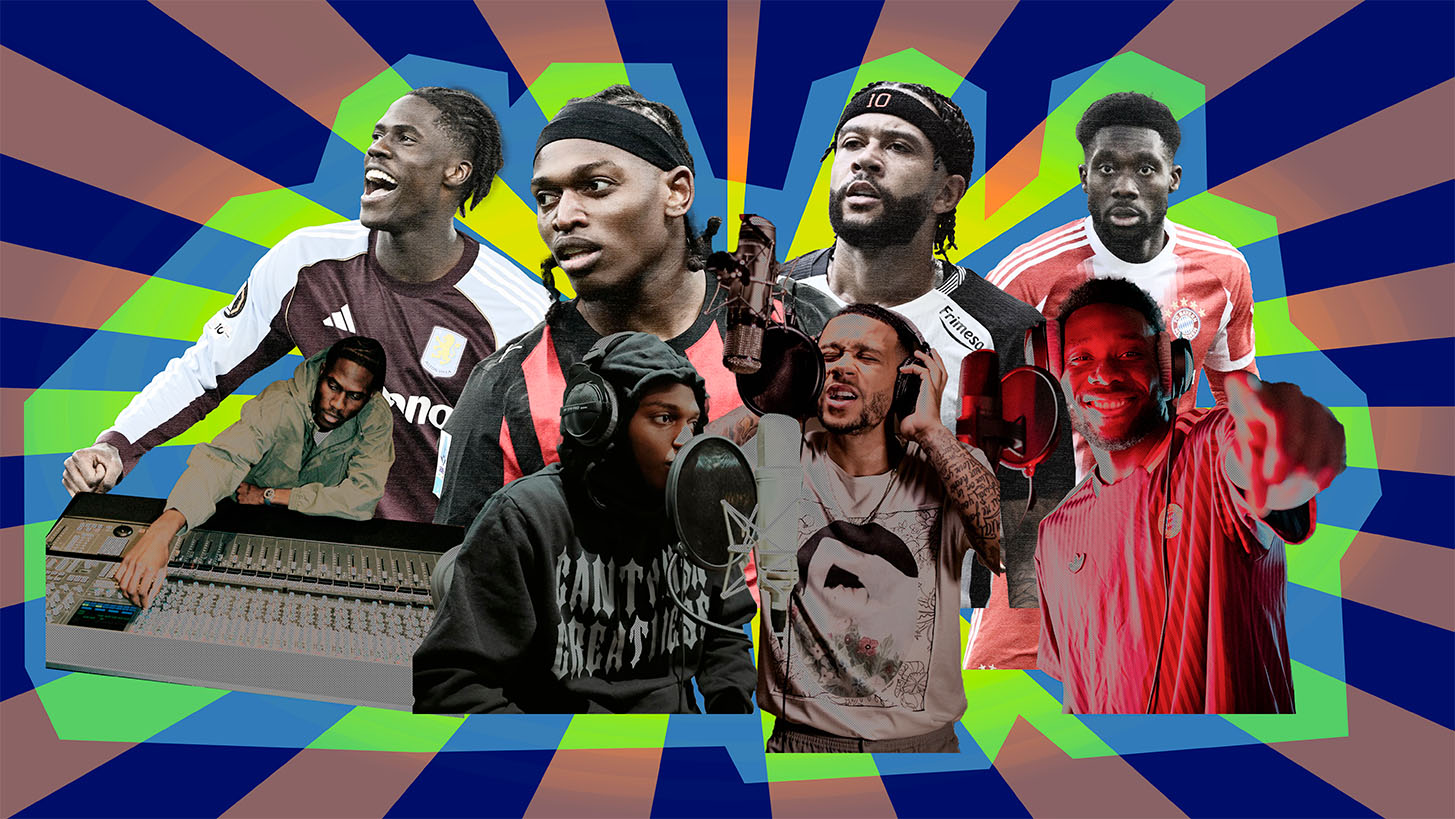
However, when we take a look at the footballers who clearly take music seriously — Memphis Depay, Amadou Onana, Rafael Leao, and Moise Kean to name a few — there seems to be a trend amongst them. While many of these footballers take inspiration from the world of British rap, very few, if any are actually British themselves.
There’s the mysterious rapper Dide, who conceals his identity with a mask and claims to be a Premier League player. But is this an Action Bronson-esque flex that’s more poetic than it is true? We won’t know until his identity is truly revealed.
So why aren’t there more British footballers that rap?
“In the NBA, they don’t shy away from embracing rappers,” said Amir Bell, a soccer creator and presenter based in the United States. “I’m from Atlanta. I’ve experienced a lot [of] the intersection firsthand. In English football there’s a lot of players who are advised by their agents not to embrace their personality and culture.”
Today’s hyper media trained footballer will protect their brand at all costs, wishing to maintain a clean image not only to appease brand partners, but also in order to avoid scrutiny from the press, which is notoriously more critical in the U.K. than it is in the U.S., and has only become worse in the social media era.
But the world of social media has also birthed another type of celebrity, one that isn’t as cautious about what they portray to their audience.
Olajide Olatunji, better known as KSI, has done plenty to change the cultural landscape, bringing music and football together in the U.K. and beyond.
“KSI was the biggest YouTuber in the world for my generation and he used to do a lot of crossovers with a lot of U.K. rappers like Skepta and JME,” Bell said. “He did a lot of the lifting and introducing those people into new audiences that traditionally wouldn’t have even heard of them.”
In 2013, KSI assembled a crew of friends to create the Sidemen, a group of YouTubers and influencers. While not officially part of the group, JME is often referred to as the “eighth member of the sidemen” due to his close ties with KSI and his cohorts.
Blending gaming, football, and grime music together, the Sidemen became wildly popular on the internet, and today boast nearly 23 million subscribers on YouTube (perhaps they are now the mainmen).
“That’s when I kind of began listening to their music because you’re listening to someone drop a bar about Sergio Kun Aguero and I just love that,” Bell said.
But while influencers, content creators, and online personalities are helping to make rap and Black culture synonymous with football, there still needs to be buy-in from the traditional figures — pro footballers and clubs — if the growth will continue.
More partnerships like Stormzy x Man United and AJ Tracey x Tottenham will certainly do much to move the needle forward, and it would be a good look for more clubs to form official partnerships with figures in the U.K. rap community.
Once the league embraces the value of rap music and how integral Black players are to English soccer, who knows how much more resonant and relevant it can become.