
'/%3e%3cdefs%3e%3clinearGradient%20id='prefix__paint0_linear_4737_37157'%20x1='3.018'%20y1='23.6'%20x2='44.925'%20y2='24.977'%20gradientUnits='userSpaceOnUse'%3e%3cstop%20stop-color='%231CB7FF'/%3e%3cstop%20offset='.502'%20stop-color='%232FF58B'/%3e%3c/linearGradient%3e%3c/defs%3e%3c/svg%3e)


International break injury toll leaves Premier League managers counting the cost
Oct 01 2026 18:48 · By onefootball.com · 5 Reads


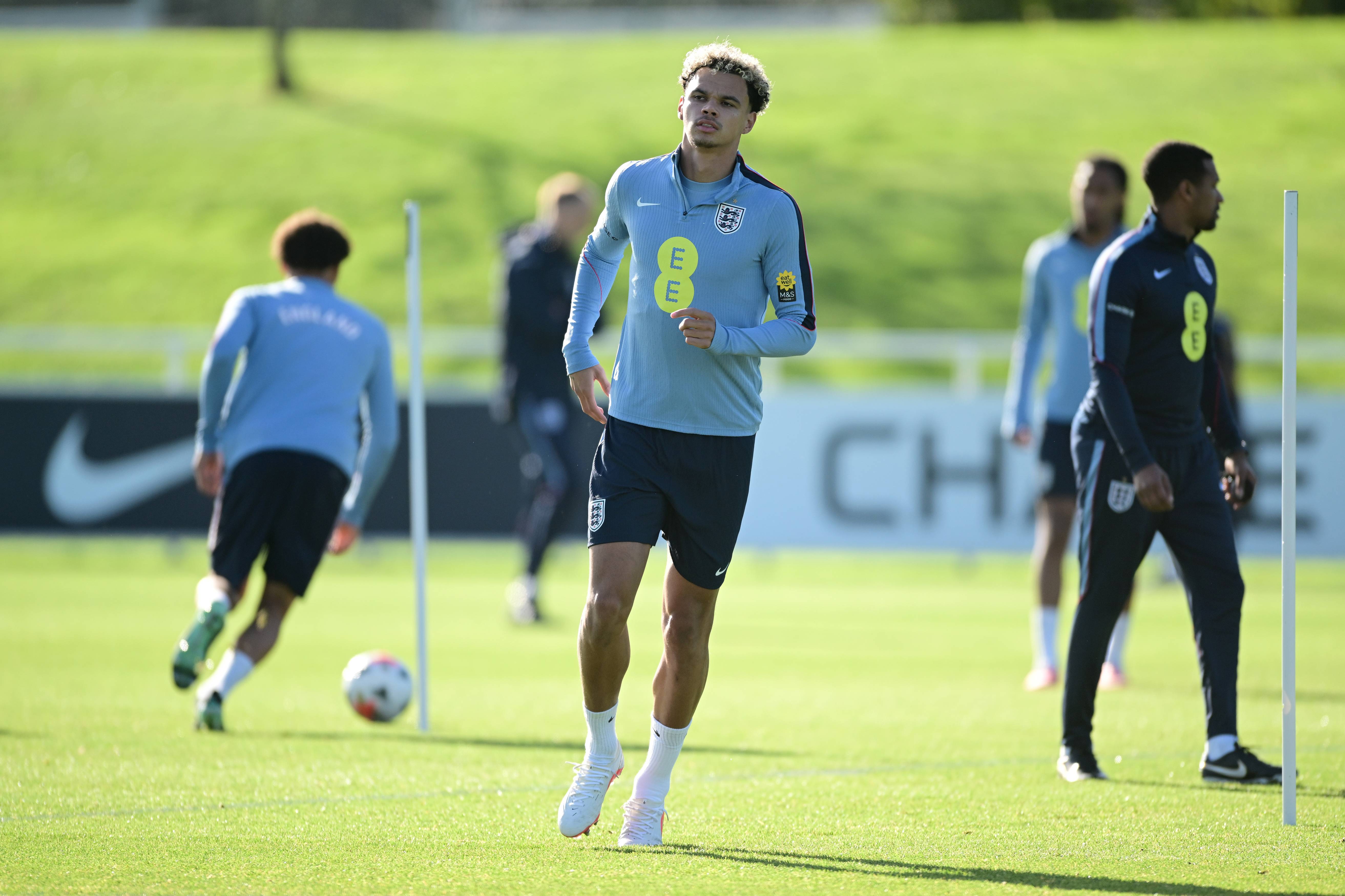
International breaks always come with a risk attached, but this one has been longer than most. For the first time, FIFA has merged the September and October windows into a single stretch running from 21 September to 6 October, with national teams able to play up to four matches. The Premier League paused after its fifth round of fixtures on 20 September and won’t return until 10 October.
With nearly a week of international football still to be played, the list of casualties is already growing. Liverpool, Manchester United and Chelsea have all had players sent home injured, while England boss Thomas Tuchel is juggling fitness concerns of his own ahead of the Croatia game.
For Premier League managers, the timing could hardly be worse. Many of them will get their international players back only a few days before the first round of fixtures, with little time to assess knocks or rebuild match sharpness.
For supporters it means an anxious wait for team news. The same uncertainty runs through the odds found at football betting markets like BOYLE Sports ahead of the first weekend back. Nobody can yet be sure which key players will be fit.
Liverpool sweat over Isak and Gakpo
No club has had a more worrying break than Liverpool. Alexander Isak withdrew from the Sweden squad with what the club described as a minor problem, and returned to Merseyside to be assessed rather than playing in Sweden’s remaining three fixtures.
That same day, Cody Gakpo was forced off in the first half of the Netherlands’ 2-1 win over Serbia with an ankle injury. He has also returned to Liverpool for further assessment and will miss the rest of the Dutch schedule.
The timing is awkward for Andoni Iraola’s side. Liverpool’s first game back is against Manchester City at Anfield on Sunday 11 October, one of the biggest fixtures of the autumn.
Manchester United’s double concern
Manchester United have their own problems. Patrick Dorgu lasted just 30 minutes of Denmark’s 2-0 Nations League win over Wales in Copenhagen before going off with a suspected hamstring injury. Denmark boss Brian Riemer confirmed he would return to United and miss Denmark’s final two games of the window.
Captain Bruno Fernandes has also been affected. He was left out of Portugal’s matchday squad for their Nations League game against Norway after reporting for duty with an injury problem. Portugal boss Jorge Jesus revealed the midfielder had played through pain in the earlier win over Wales.
Chelsea await news on Gittens
Chelsea are waiting on the fitness of Jamie Gittens. The winger picked up an ankle problem during England Under-21s’ 4-2 win over Kazakhstan, and his withdrawal from the squad has been officially confirmed. He has returned to the club, where he will be assessed before club football resumes.
England’s growing list
Tuchel has had his own headaches. Jude Bellingham came off the bench in England’s 2-0 win over Czechia, with his minutes deliberately managed because of the quick turnaround between games. The England boss then revealed the Real Madrid midfielder had felt a niggle at the end of the match.
Manchester City’s Nico O’Reilly missed the Czechia game altogether and has pulled out of the squad.
Arsenal captain Martin Odegaard also picked up a knock. He hit out at a late challenge from Bernardo Silva during Norway’s 2-1 Nations League defeat to Portugal in Oslo, but said he was hopeful the problem would settle within a few days.
Why this window feels different
The longer format has changed how injured players are handled. In a normal window, a player who picks up a problem often heads back to his club for treatment. With up to four games to play, national teams now have more reason to keep injured players around in the hope they recover in time for a later match.
Tuchel explained exactly that when discussing O’Reilly. He said a player in his position would usually return to his club, but with more games still to come, the Manchester City man is staying with England in the hope of featuring at least once more, before eventually withdrawing.
For clubs, that means less control over how their players are treated and even less time to prepare them for the Premier League restart. It isn’t a one-off either. The change was approved by the FIFA Council back in March 2023, and the longer autumn window is set to return every year until 2030.
Counting down to the restart
The Premier League returns on Saturday 10 October, when Arsenal host Leeds United in the opening game of the weekend. Liverpool’s clash with Manchester City follows on the Sunday.
By then, managers will finally know the full cost of the break. Some will get good news on scans and assessments, while others may be forced into a reshuffle for one of the most important weekends of the autumn.
The next international window arrives from 9 to 17 November. It is a more traditional break, with nations playing up to two matches, but Premier League managers will be hoping for a far shorter injury list next time around.