
'/%3e%3cdefs%3e%3clinearGradient%20id='prefix__paint0_linear_4737_37157'%20x1='3.018'%20y1='23.6'%20x2='44.925'%20y2='24.977'%20gradientUnits='userSpaceOnUse'%3e%3cstop%20stop-color='%231CB7FF'/%3e%3cstop%20offset='.502'%20stop-color='%232FF58B'/%3e%3c/linearGradient%3e%3c/defs%3e%3c/svg%3e)


'No Plan B': Will Jaissle have tactical flexibility Howe never showed at Newcastle?
Jul 30 2026 18:50 · By Morgan King · 8 Reads


Eddie Howe has left his role as Newcastle United manager, bringing to a close a hugely successful five-year spell in which the former Bournemouth boss took the Magpies back into the Champions League and ended a 56-year wait for a trophy by beating Liverpool in the EFL Cup final.
However, Howe increasingly faced criticism for not developing a successful 'Plan B' to his brand of high-intensity, physical football, which saw results suffer when fatigue, the demand of European football, and injuries impacted his first-choice team.
AI 'supercomputer' Machine Football's analysis of the manager widely expected to take over from Howe, current Al Ahli boss Matthias Jaissle, shows how his style of play has evolved over time and could be just what Newcastle need to once again instil a clear identity.
2023/24:
Jaissle's first Al Ahli side were what Machine Football categorises as 'high-octane pressers', setting up for the majority of games in a 4-2-3-1 formation and relying heavily on dribbling and forward carries alongside an aggressive press.
That approach delivered 1.85 points per game and continental qualification. But Jaissle did not stop there, evolving his side further ahead of the following season.
2024/25:
Al Ahli developed into what Machine Football categorises as 'aggressive disruptors', with the emphasis shifting away from wing play and towards creating higher-quality chances with expected goals rising from 1.59 per 90 to 1.97 and points per game increasing to 2.04.
2025/26:
Next, Jaissle added flexibility without changing the identity. Alongside the primary 4-2-3-1 setup - which he used in more than 40% of games - the German introduced a 4-3-3 variation in 22% of his games and, in roughly one match out of every five, more of a low-block counter style of play built on a traditional 4-4-2.
While the formations may have varied, the approach didn't. Al Ahli's PPDA (presses per defensive action - a pressing measurement where the lower the score, the more aggressive the press) was a high-octane 9.02.
Al Ahli also averaged 7.18 through passes per game – well above the Saudi Pro League average of 4.13 – and 19.83 touches inside the opposition box, comfortably ahead of the league average of 16.46.
Rather than dominating possession, Al Ahli look to win the ball high and attack quickly. That approach resulted in Jaissle's best domestic season yet, averaging 2.38 points per game while winning a second consecutive AFC Champions League Elite title.
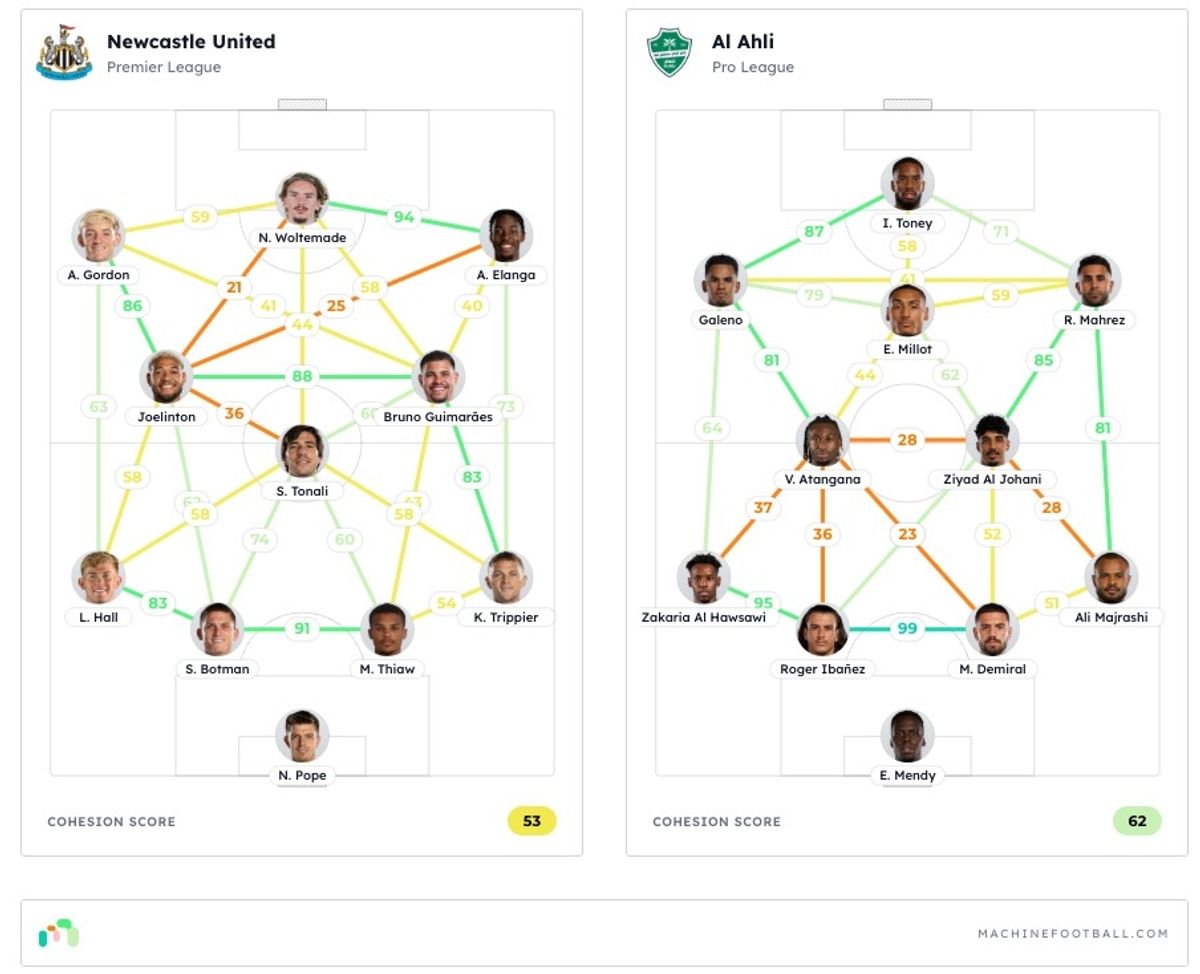
Who Jaissle is tactically suggests a significant change from the Newcastle side he looks set to inherit. The contrast becomes clearer when the numbers are put side by side.
The perception that Howe never managed to successfully implement a 'Plan B' comes from a run of seasons where the club's fortunes flip-flopped. Newcastle's style clearly changed from season to season during his tenure at St James' Park, but results also yo-yo'd.
In 2022/23 Newcastle were what Machine Football's analysis classes as 'high-octane pressers' and enjoyed their best-ever points return (2.09 PPG).
The 2023/24 season, however, saw Champions League group stage football return and a shift towards a 'passive controllers' model accompany it.
In practice, Newcastle were playing more patient, lower-tempo football focused on control. It was still productive (1.72 PPG) but represented a step down in intensity and earned only a seventh placed Premier League finish.
In 2024/25 - no European football again - Howe swung back toward a more progressive, 'attacking engine' playing style. This helped their PPG bounce back up to 1.81 resulting in fifth place and Champions League qualification for a second time under Howe.
Another flip then followed in 2025-26 as they moved into 'possession builders' - the most control-oriented identity of the four seasons - but only in just over half of their games, as PPG (1.26) reached its lowest ebb of any of Howe's four full seasons and Newcastle stuttered to 12th place in the league.
What this topsy-turvy playing identity suggests is that the new manager's style could help the Magpies get back to something like the best version of themselves from 22/23.
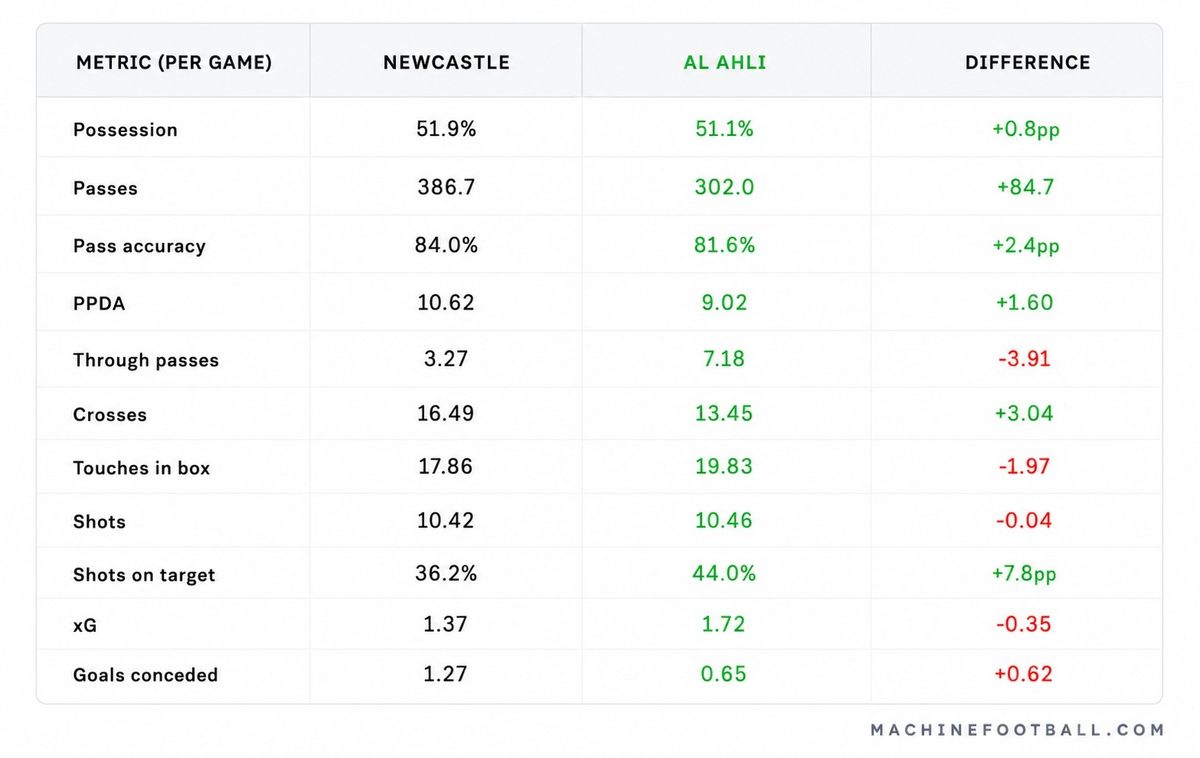
Taking the stats from 2025-26, Newcastle and Al Ahli's possession is almost identical, but everything that follows is different. Last season, Al Ahli completed around 80 fewer passes per game - yet attempted more than twice as many through balls, created higher-quality chances and conceded almost half as many goals.
Jaissle's style, then, is built entirely around progressing the ball quickly and attacking before opponents can reset.
While the change in approach might seem drastic, it looks set to get the Gallowgate End on its feet and - most importantly - the underlying numbers suggest it could translate into results, albeit with star players continuing to depart Newcastle.
Across 34 Saudi Pro League matches, Al Ahli scored 71 goals (2.09 per game), conceded just 25 (0.74 per game), kept 17 clean sheets and won 73.5% of their league matches.
Their expected goals total (66.73) closely mirrored their actual return, suggesting the attacking output is sustainable rather than the product of an unusually clinical season.
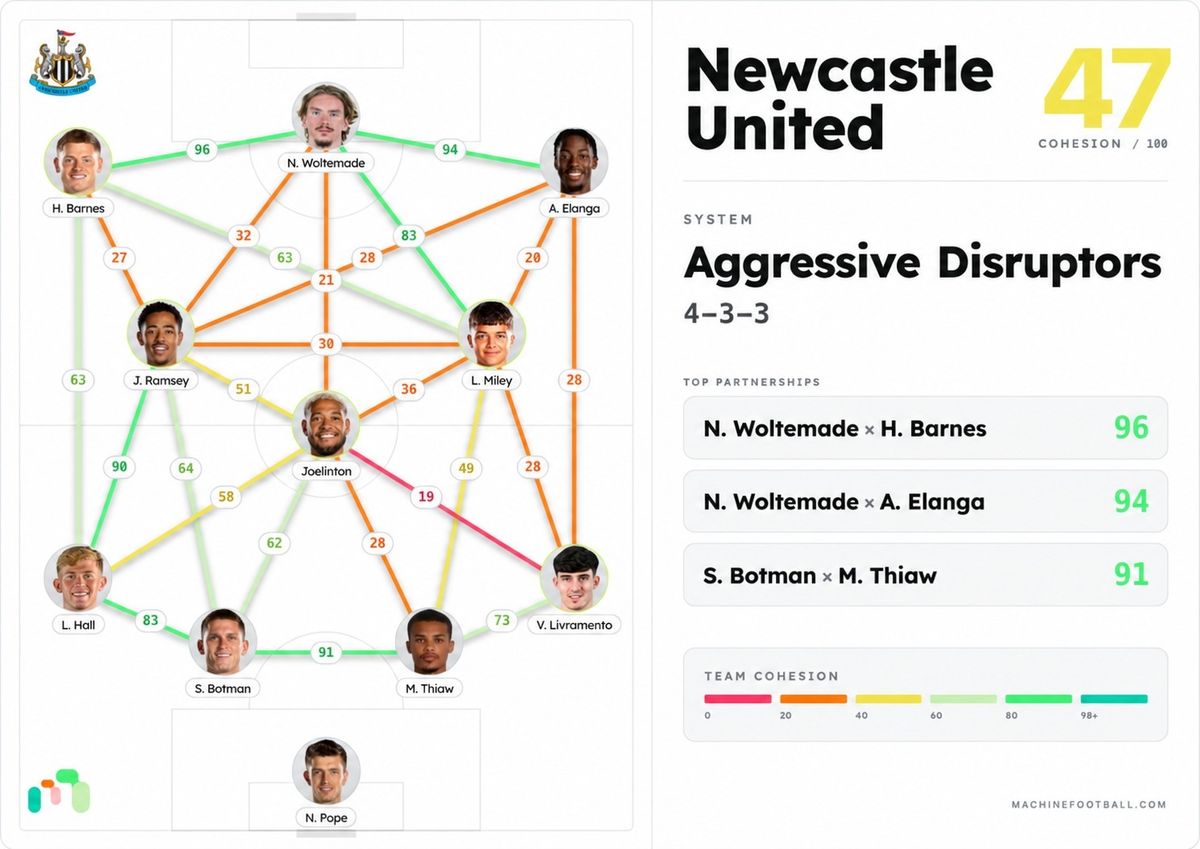
Newcastle's numbers tell a different story. They scored 53 goals in 38 Premier League games (1.39 per game), won just 36.8% of their matches and finished with expected goals for and against that were almost identical (59.23 xG versus 59.5 xGA).
The difference isn't how much of the ball the two teams have. It's what they do with it. Now all that's left is for Jaissle to prove he can make the same principles work in the Premier League.