'/%3e%3cdefs%3e%3clinearGradient%20id='prefix__paint0_linear_4737_37157'%20x1='3.018'%20y1='23.6'%20x2='44.925'%20y2='24.977'%20gradientUnits='userSpaceOnUse'%3e%3cstop%20stop-color='%231CB7FF'/%3e%3cstop%20offset='.502'%20stop-color='%232FF58B'/%3e%3c/linearGradient%3e%3c/defs%3e%3c/svg%3e)


Norway experts dispute 'hopeless' FIFA explanation for England 'Spidercam' goal
Jul 14 2026 20:49 · By Chris Davie · 20 Reads


Norway insist the ball hit one of Spidercam’s cables in the build up to England’s equaliser (Reuters)
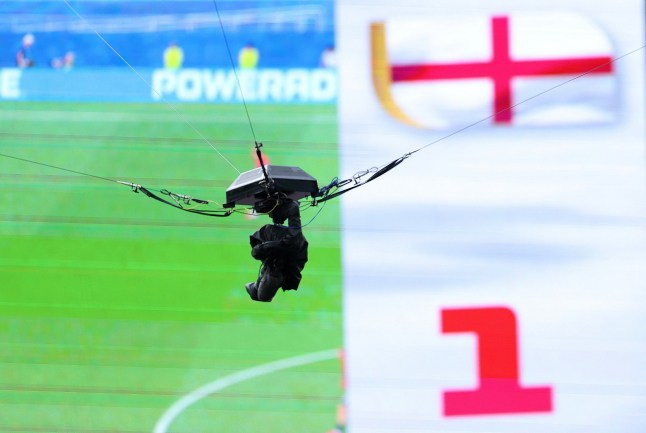
Experts in Norway are disputing
FIFA
’s response to their complaints involving Spidercam for
England
’s goal in the
World Cup
quarter-final on Saturday.
Norway were unhappy with Jude Bellingham’s first-half equaliser
as the ball appeared to hit one of the four cables linked to the stadium’s overhead camera in the build up to England’s goal.
FIFA responded to Norway’s complaints
by claiming that officials ‘checked the data and no peak on the graph from the connected ball heartbeat sensor’.
Inside the World Cup match ball is a built-in sensor chip which captures the ball’s position, speed, and exact kick point 500 times per second. The data is fed back to the team of officials who can detect whether a touch on the ball was made by the cable.
A statement from FIFA read: ‘Before England’s goal in minute 45+2 against Norway, the sensor in the Connected Ball showed no peak in the ‘heartbeat of the ball’ when in the air, and therefore no evidence that the ball touched the overhead wire and changed the movement of the ball.’
In a follow-up statement to Norwegian outlet
VG
, FIFA added: ‘The recording of the goal from the camera went on air, and from that it is clear that the camera did not shake or move.’
Before England’s goal in minute 45+2 against Norway, the sensor in the Connected Ball showed no peak in the 'heartbeat of the ball' when in the air, and therefore no evidence that the ball touched the overhead wire and changed the movement of the ball.
pic.twitter.com/gYf9ukfveT
— FIFA Media (@fifamedia)
July 11, 2026
However, cinematographers in Norway insist that the lack of movement from the camera should not be used as evidence by FIFA that the ball hit the cable.
Terje Rokke, who has worked in the cinema industry for over 30 years, including on films such as James Bond: No Time to Die and Mission Impossible: Dead Reckoning, is adamant that the camera would not move even if the cable was touched by the ball.
‘It is a completely hopeless statement from FIFA,’ Rokke told VG.
‘For example, if a ball hit the cable directly above the lens, the camera would tilt upwards if it were not gyro-stabilised. Since the camera is stabilised, it will be detected and compensated for by tilting the camera downwards.
Camera operators in Norway have called FIFA’s explanation ‘hopeless’ (Getty)
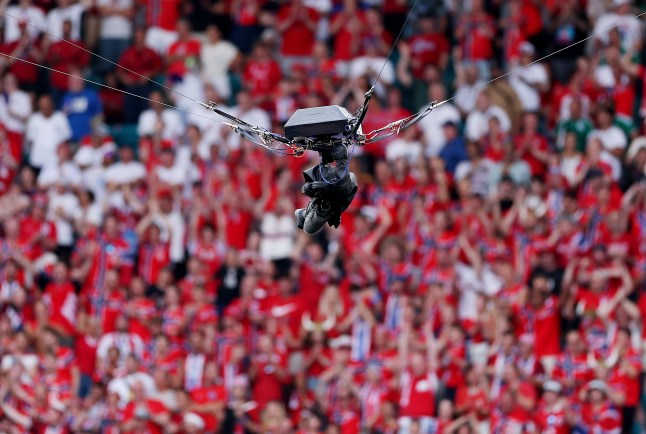
‘It takes an extremely long time for the camera to register that the ball is hitting.’
Havar Karlsen, a cinematographer at TrueStories who has worked with gyro-stabilised camera equipment, claims FIFA’s latest explanation ‘has no value’.
‘The statement suggests that they have not checked with the supplier of the camera technology. They are just trying to kill the case in every possible way,’ Karlsen said.
(Getty)
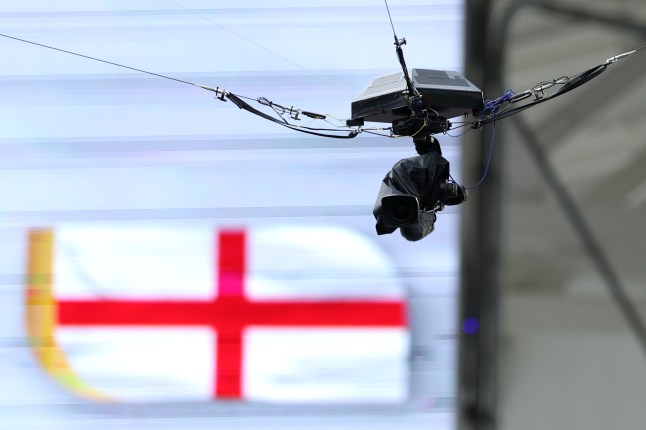
‘It’s a camera you can hang out of a jet plane and still have 100 per cent stable images without shaking. It can stabilise heavy cameras, and creates very stable images almost regardless of external influences.
‘I’m absolutely certain that the camera wouldn’t have shaken if the ball had hit the wire. A ball on a cable is nowhere near enough to cause shake in a system like that.
‘It has no value as a statement. Then it means that you don’t know the system and that you haven’t checked with the technical supplier. There is no proof that the ball hit the wire, but there is no proof against it either.’
The International Football Association Board (IFAB), which oversees the laws of football, states that if the ball hits Spidercam or one of its cables, the referee should give a drop ball at the point where the ball made contact, which would have ruled out Bellingham’s equaliser.
Home
divider
Sport
Football
Related topics
England men's football team
Fifa
Jude Bellingham
Norway
Thomas Tuchel
Michael Owen urges Thomas Tuchel to drop England World Cup star for Argentina clash
Channel: Football
5 hours ago
By
Ben Fleming
Arsenal star told he has 'played himself out' of England's World Cup semi-final team
19 hours ago
Louis Sealey