
'/%3e%3cdefs%3e%3clinearGradient%20id='prefix__paint0_linear_4737_37157'%20x1='3.018'%20y1='23.6'%20x2='44.925'%20y2='24.977'%20gradientUnits='userSpaceOnUse'%3e%3cstop%20stop-color='%231CB7FF'/%3e%3cstop%20offset='.502'%20stop-color='%232FF58B'/%3e%3c/linearGradient%3e%3c/defs%3e%3c/svg%3e)


PREVIEW: Leeds and Newcastle meet as two northern projects cross paths
Sep 14 2026 12:48 · By onefootball.com · 1 Reads


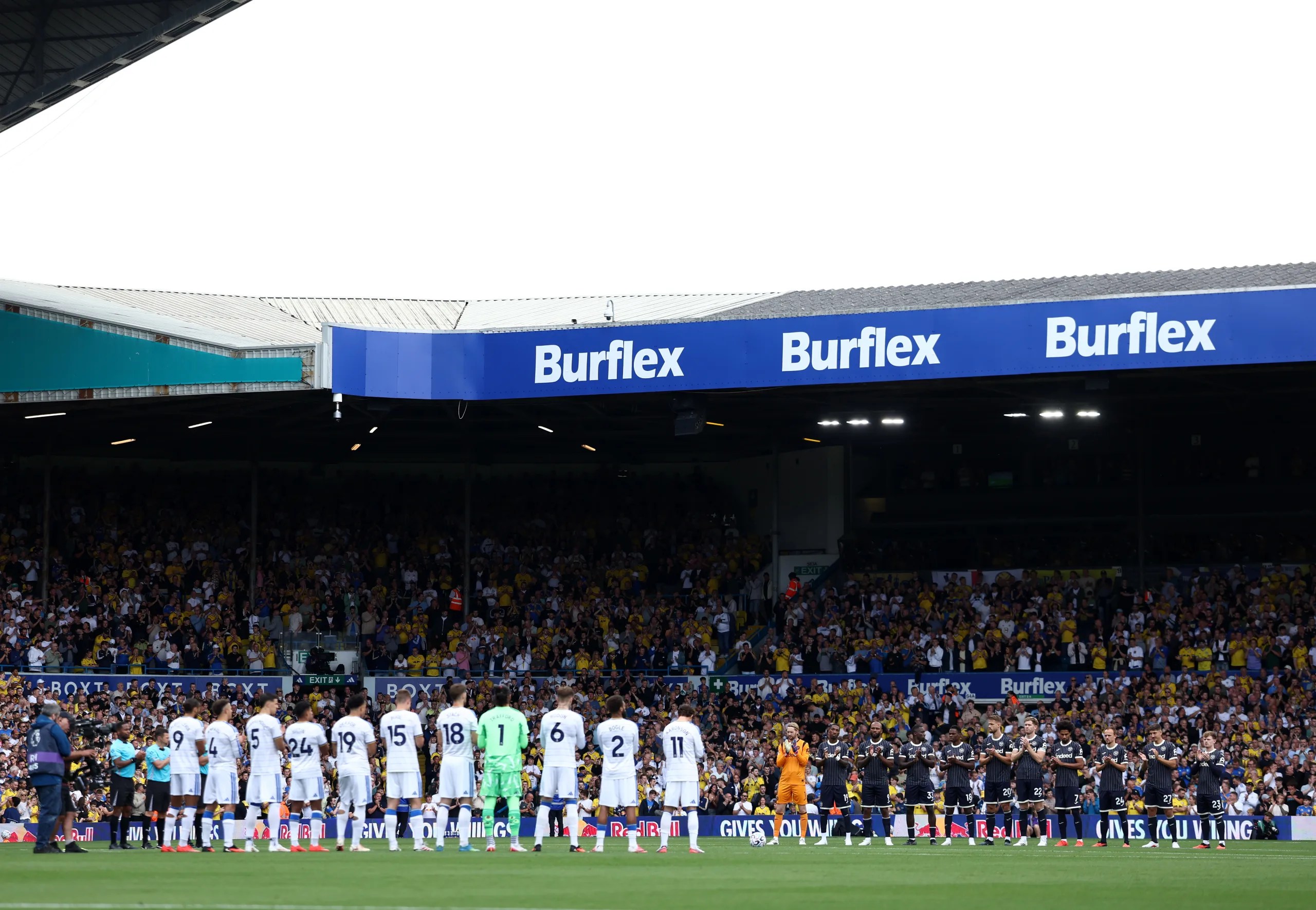
Monday night at Elland Road is more than a meeting between two unbeaten Premier League sides. It is also a snapshot of two northern clubs trying to work out where they belong in English football’s increasingly crowded hierarchy.
For much of the past few years, Newcastle have represented something Leeds could only aspire to.
Saudi-backed ownership brought Champions League football back to St James’ Park, ended a decades-long wait for domestic silverware and appeared to establish Newcastle as the most credible challenger to England’s traditional elite outside the established ‘big six’.
Leeds, meanwhile, were simply trying to stay in the Premier League.
That gap no longer feels quite as straightforward.
Under 49ers Enterprises, Leeds have begun thinking beyond survival. Plans are in place to expand Elland Road from roughly 38,000 seats to more than 53,000, with the project reportedly costing in excess of £200 million. The club also broke their transfer record this summer to sign James Trafford and invested heavily again in a squad that Daniel Farke had already guided to an FA Cup semi-final last season.
The message is increasingly clear: Leeds do not want merely to occupy a place in the Premier League. They want to climb its food chain.
Farke has been careful not to get carried away by that ambition, but his team increasingly reflects it. After losing six of seven league matches during a difficult spell last season, Leeds changed direction tactically and have since lost only five of their following 28 games. The biggest change has been flexibility. This is no longer a side that has to dominate possession in order to function. Leeds can press, go direct, defend deeper or play through midfield depending on the opponent.
Newcastle arrive at Elland Road from almost the opposite starting point.
Their problem is not how to build momentum, but how to preserve it after one of the most disruptive summers of the post-takeover era.
Eddie Howe has gone. So too have several players who defined his Newcastle side, including Bruno Guimarães and Sandro Tonali. Sporting director Ross Wilson later revealed that the club had begun planning for the possibility of Howe leaving as early as January, while CEO David Hopkinson has described the next phase of the club as “Newcastle United 2.0.”
That phrase tells you almost everything about Newcastle’s current position.
This is not supposed to be a retreat. It is supposed to be a reset.
Matthias Jaissle has inherited a younger squad built increasingly around resale value, athleticism and a different tactical identity. Eight new players arrived during a transformative summer, with the club consciously lowering the age profile of the squad while adapting to tighter financial restrictions.
Jaissle described his preferred football shortly after arriving as front-foot, intense, aggressive and vertical.
There have already been signs of it.
Anthony Elanga and Yoane Wissa have given Newcastle speed in transition, while Nico González has added a different passing profile in midfield. Reports analysis after their victory over Tottenham noted how quickly Jaissle appeared to be getting performances from players who had struggled previously, even while the wider rebuild remained unfinished.
And that is where Monday becomes particularly interesting.
Farke is trying to prove that Leeds are ready to move from survival towards establishment.
Jaissle is trying to prove that Newcastle can rebuild without slipping backwards.
Even their infrastructure tells a similar story from different directions. Leeds are preparing a major expansion of Elland Road; Newcastle have announced plans for a new £190 million training complex expected to be completed around the end of the decade. Both clubs are investing heavily in what they want to become, rather than simply protecting what they already are.
The managers themselves also represent an unusual subplot.
Two German coaches meet at Elland Road, but at very different stages of their English careers. Farke has already been promoted twice from the Championship, been relegated from the Premier League, rebuilt his reputation and now appears to have constructed his most adaptable top-flight side yet.
Jaissle is only beginning that journey.
Farke admitted this week that he has never met the Newcastle manager before, while also acknowledging the difficulty of succeeding Howe and warning specifically about Newcastle’s threat on the counterattack. He also returned to one of Leeds’ greatest advantages: Elland Road itself, describing the stadium and its supporters as a major reason behind the club’s formidable home record.
That makes Monday night a useful test of where both projects really stand.
For Newcastle, can a young team still learning a new system survive the intensity of Elland Road and show that “Newcastle 2.0” is evolution rather than retrenchment?
For Leeds, the question may be even bigger.
They have the stadium project. They have renewed investment. They have a manager whose team looks increasingly comfortable at Premier League level.
Now they have to prove that the ambition exists on the pitch as well as off it.
A year ago, Newcastle would have arrived at Elland Road as the club Leeds were trying to catch.
On Monday night, the distance between them may not feel quite so large.