


RUTE'S HEARTBREAK: Jota's wife recalls harrowing moment she learned of Liverpool star's death and reveals final messages between pair before tragic car crash
Oct 22 2026 12:56 · By Nathan Ridley,Senior Sports Reporter,and,Paul Gorst · 53 Reads


It was just 11 days after Diogo Jota married his childhood sweetheart, Rute Cardoso, that tragedy struck. The Liverpool forward was driving alongside his brother, Andre Silva, to board a ferry that would take him back to the UK for pre-season training after enjoying the summer of his life.
Jota, 28, had lifted the Premier League title at Anfield and the Nations League with Portugal before marrying Rute at a ceremony in Porto, close to where the couple met as teenagers at high school. The ex-Wolves star opted to return to the UK via ferry, having been advised against flying after undergoing minor lung surgery.
Jota and Silva, also a professional footballer, were killed on July 3, 2025 when their hired Lamborghini crashed on a motorway in Zamora, Spain. The brothers' deaths led to an outpouring of grief from the football world and beyond.
A new biography of Diogo Jota from Reach Sport tells the inside story of his life that was so sadly cut short. It contains interviews with his family, team-mates and managers that form part of a richly-detailed book and celebration of the much-loved husband and father of three.
In this extract, from Chapter 1 of the biography, Rute recalls how she learned of Jota's death.

Get our comprehensive football coverage, with news, updates, opinions, analysis and everything that matters to you, straight to your inbox.
To get it, it's a quick and easy one-two:
1. Head THIS WAY
Make sure you don't miss the best Liverpool coverage by making the Daily Mirror one of your Google preferred sources.
“It was a surprise,” says Rute Cardoso, Diogo Jota’s wife, on his decision to hire a Ferrari then a Lamborghini during the summer of 2025. “Unlike most players, who like fancy cars, jewellery and watches, Diogo was never into that sort of thing. He was happy with the cars we had.”
She continues: “So perhaps because he’d never been particularly into cars, he took that chance to try driving a Ferrari before our wedding. After that, he would also rent a Lamborghini, which he had to drop off in Santander.”
There were several key fixtures in Diogo Jota’s schedule for his break in Portugal: there was his rehabilitation from surgery; there was the wedding of José SA, the Wolves goalkeeper; and, above all, he had his own wedding to Rute Cardoso.
He would fulfil all these engagements. His return journey to Santander was planned for 2-3 July 2025 in the company of his brother, André. Before setting off, Diogo hired the Lamborghini.
As the departure drew closer they went to Rute’s sister’s house, to give their family the chance to say goodbye to Diogo and André. “That way, they had the opportunity to see the damned car and have dinner with us.”
Rute recalls having gone to “put the boys to bed” and, upon coming down to the living room, finding Diogo and André almost ready to leave. To break up the journey, they planned to stop for the night at a hotel in Benavente, in Spain.
“A few minutes after they’d left, I sent Diogo a message saying, ‘Safe journey’. He replied with an emoji, and I told him to keep his eyes on the road."
It was the last message that he replied to.
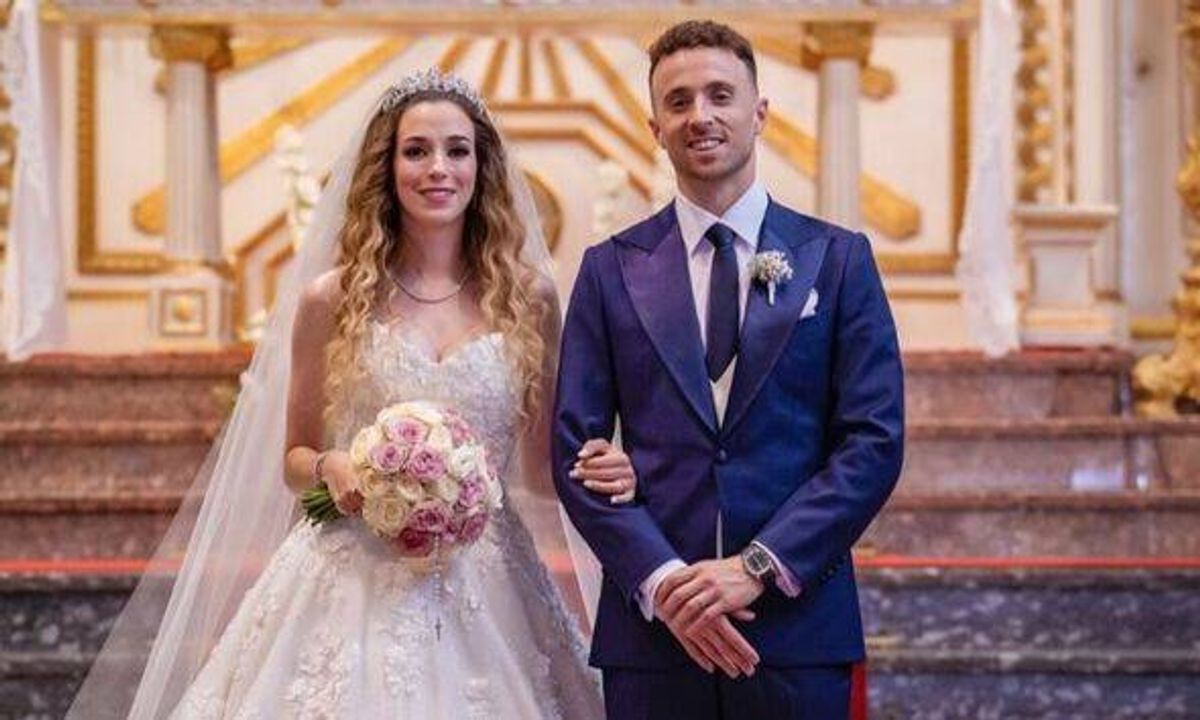
"At our wedding, my bridesmaids and I had organised a surprise for him – a dance. On the night of the accident, at around 22:40, the photographer sent me the video of it, which I forwarded to our group chat. They replied that Diogo looked like someone falling in love for the first time.”
Keen to share the video, Rute sent another message to her husband. “It said: ‘When you stop, I’ve got a video to show you.’ It was delivered, but it was never read.”
Of course, Rute knew that Jota was on the road, so an unread message was no cause for alarm. Everything seemed to be proceeding as planned.
“Meanwhile, an uncle of mine who works in Spain had just returned from a trip. I rang my aunt to tell her I was leaving to join Diogo in Liverpool on Friday, and asked her if they wanted to pop round to our house before then.”
They headed over, entirely oblivious to the important role they would play that night.
“After my aunt and uncle had left, I looked at my watch and thought it was about the time that Diogo and André must have been arriving at the hotel. I sent him another message, just asking, ‘Well?’”
This time a grey tick appeared on the WhatsApp message, but there was no sign of the second tick to confirm that it had been delivered. A concerned Rute sent him “another one, then another one… and none of them were delivered”.
There was something else that she could try in an effort to ease her rising anxiety: a message to André.
“That one wasn’t delivered either.”
Rute began to tremble, fearing that something might have happened to them. She sought comfort in her sister, who pointed out that they might be in an area with poor reception or that their phones might have run out of battery.
But Rute’s fears were already multiplying.
“Ever since my eldest son was born, I’ve become afraid of so many things. The week before, Diogo and I had talked about it – about the fear the children would be left to fend for themselves if anything were to happen to us. When I realised the messages weren’t being delivered, all that pessimism came flooding back.”
As if on autopilot, Rute rang a friend, Catarina, to ask if she had booked Diogo and André room at the hotel in Benavente. Catarina hadn’t, but that she did know the name of the hotel. Straight away, Rute rang the hotel, asking if they had checked in two men who had said they would be arriving late. Two brothers in a green Lamborghini.
The hotel receptionist’s reply was delivered in a completely neutral tone. No, they had not yet arrived.
Bursting with anxiety, Rute rang André’s girlfriend Paula, who told her that she hadn’t spoken to him for a few hours. Rute asked her to try to get hold of him, then continued trying to get to the bottom of the situation herself. She felt like she had to keep trying things out, keep taking action, keep looking for answers. To simply wait seemed impossible.
She phoned a hospital in Benavente, but was told they were unable to provide that sort of information.
Next, she tried to contact the Spanish police, to no avail. Her nerves were starting to overwhelm her. Meanwhile, her sister Lídia had another idea: they could call Uncle Vítor, a lorry driver, who might be able to obtain more information from the police.
“I rang him,” Rute recalls, “explaining that I couldn’t get hold of Diogo and that they hadn’t arrived at the hotel yet. I asked if he could help me.”
On the other end of the line, Vítor asked his niece to bear with him. He fetched another phone with a Spanish number and rang the traffic police, all the while keeping his Portuguese phone connected to the call with his niece.
Then Rute heard her uncle say into the other phone: “Yes, two brothers.”
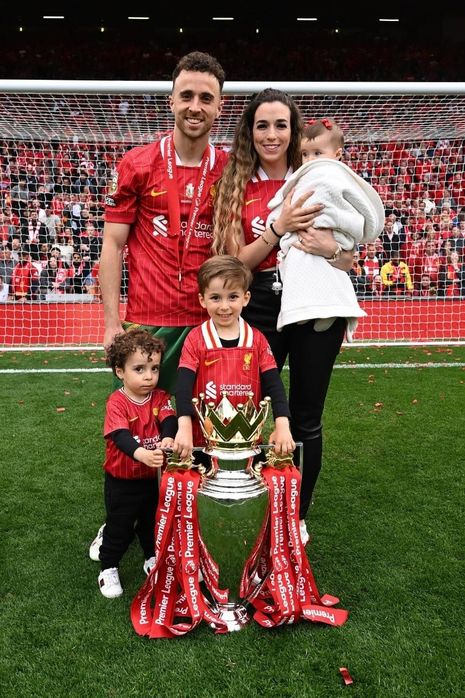
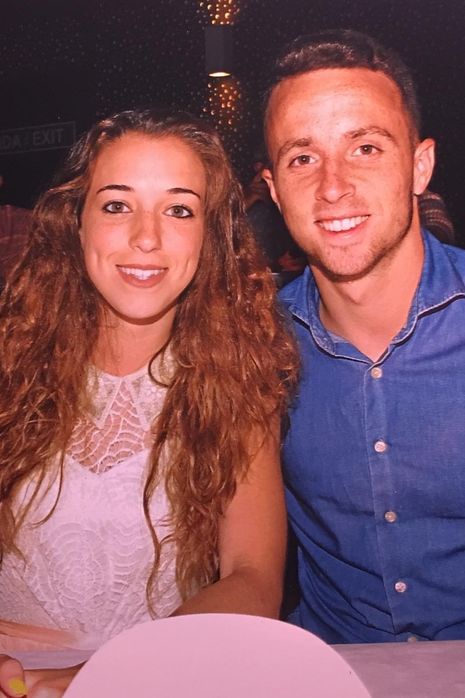
Rute felt the strong, unyielding certainty that something had happened. And yet...
“My sister and I were confused. How did they know they were brothers?”
Yes, there might have been an accident; yes, their phones might have been broken; yes, and they would be fine in no time.
“Suddenly, my uncle asked me to put Nuno, my brother-in-law, on the line. At that time of night, in the silence, I could make out every word they were saying. I heard my uncle tell him: ‘The bodies are being taken away’. I think he added ‘to the mortuary’, but that’s when my mind went blank.
"Bodies? My brother-in-law froze. My sister took the phone from him and asked my uncle to speak to her. My main concern was to ring Diogo’s father and tell him: ‘You must come here immediately.’ I rang André’s girlfriend and said the same thing: ‘Paula, come over now.'"
Suddenly, the panic began to strengthen its grip. A need to keep busy also took hold.
“I began to realise that it might be true, even though I wanted to believe it was impossible. According to my watch, I walked 11 kilometres that night, just pacing around the yard at my sister’s house."
Two psychologists from the National Institute of Medical Emergencies had already arrived to support Rute and the rest of the family when Uncle Vítor called again to tell her that there was something important she had to hear.
On the other end of the line was a Spanish police officer who, after confirming that he was speaking to Rute Cardoso and that he had Jota’s ID in his possession, stated the following: “I hereby declare the death of Diogo Jose Teixeira da Silva, born on 4 December 1996.”

Rute took a moment before she let a tear fall. She remained in denial, adamant it could not be true. Her mother and mother-in-law wept with an almost inhuman despondency. Rute kept pacing back and forth, ranting, drawing on her last shreds of strength in a refusal to accept the situation.
She remembered how she used to tease Diogo about how lucky he was and how things always went well for him — personally, professionally, everything.
“I just kept saying to my friend Catarina: ‘This is a joke, it can’t be true. There’s no way in the world this can be true!’”
Time passed. Rute cannot say how long. Minutes that must have felt like a lifetime.
“My sister pulled me closer to her and spoke to my heart. Only then did I begin to accept. To understand.”
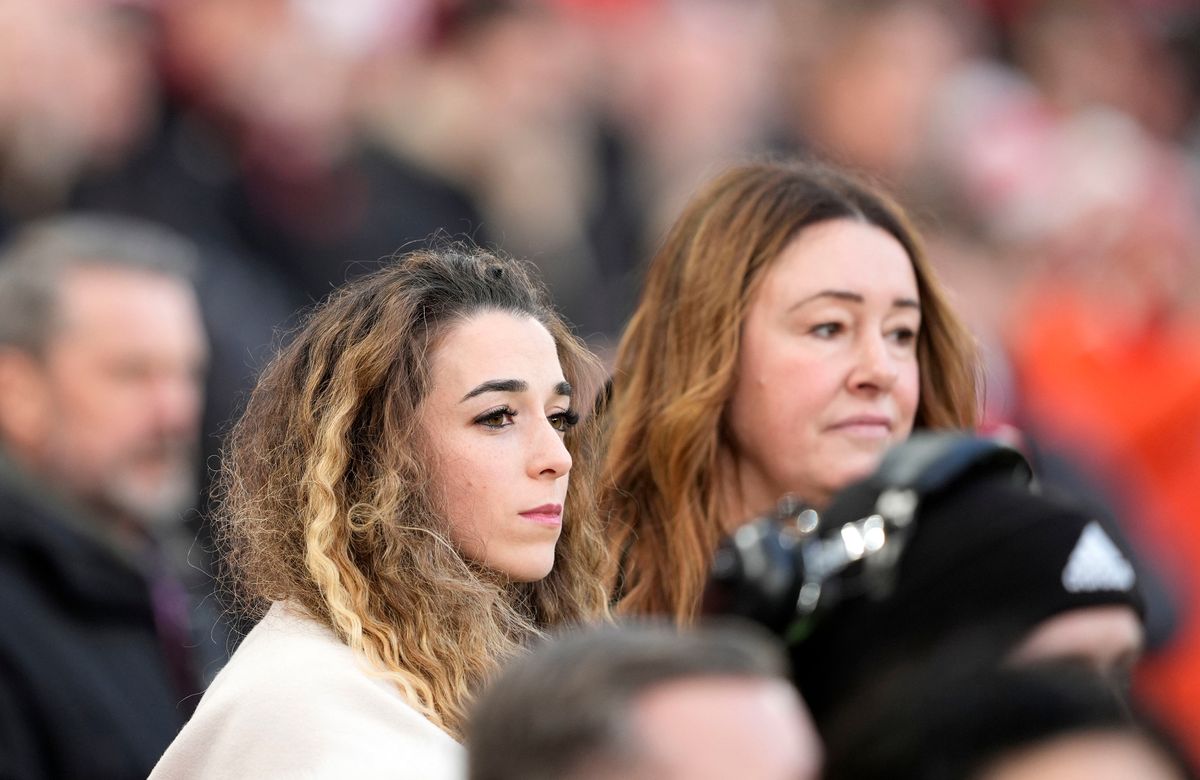
With professional detachment, the Spanish police informed Jota’s wife that she would have to go to the mortuary to collect his and his brother’s belongings.
“I told the driver I wanted us to take the same route that they had taken. I imagined that, so many hours on, there would be no traces left, but I wanted to know where it had happened. But when we reached that cursed Kilometre 64, what was left of the car was still there.”
Rute tried to get out of the car, but the rear doors were locked. She found herself banging on the glass from the inside, as if she herself were a frightened little girl. Eventually she rushed towards the scene, but she was stopped by a policeman who told her that she could remain at a distance and avoid etching that horrific image in her mind. Devastated, she agreed.
They proceeded to the mortuary, where Rute’s father was already waiting. She asked to see her husband’s body but was refused permission. She waited in a room and they showed her, on the other side of a small window, Diogo’s body on a stretcher and André’s inside a box. Both had been placed in a bag.
They gave her Jota’s watch, wallet and wedding ring. The bodies were transferred into vans and they all continued the journey to the funeral parlour. Finally, they returned to Portugal.
Rute travelled in the van with Diogo’s body, accompanied by Catarina. Exhausted, she finally fell asleep. Perhaps in a nightmare this would not be true.
Diogo Jota: Forever In Our Hearts (Reach Sport, £22) is on sale now.
Every purchase supports LFC Foundation, with all LFC profits funding a grassroots football programme established in Diogo Jota's name