
'/%3e%3cdefs%3e%3clinearGradient%20id='prefix__paint0_linear_4737_37157'%20x1='3.018'%20y1='23.6'%20x2='44.925'%20y2='24.977'%20gradientUnits='userSpaceOnUse'%3e%3cstop%20stop-color='%231CB7FF'/%3e%3cstop%20offset='.502'%20stop-color='%232FF58B'/%3e%3c/linearGradient%3e%3c/defs%3e%3c/svg%3e)


The Armband and Its Burden: Bruno Fernandes as Captain
Oct 06 2026 11:48 · By onefootball.com · 17 Reads


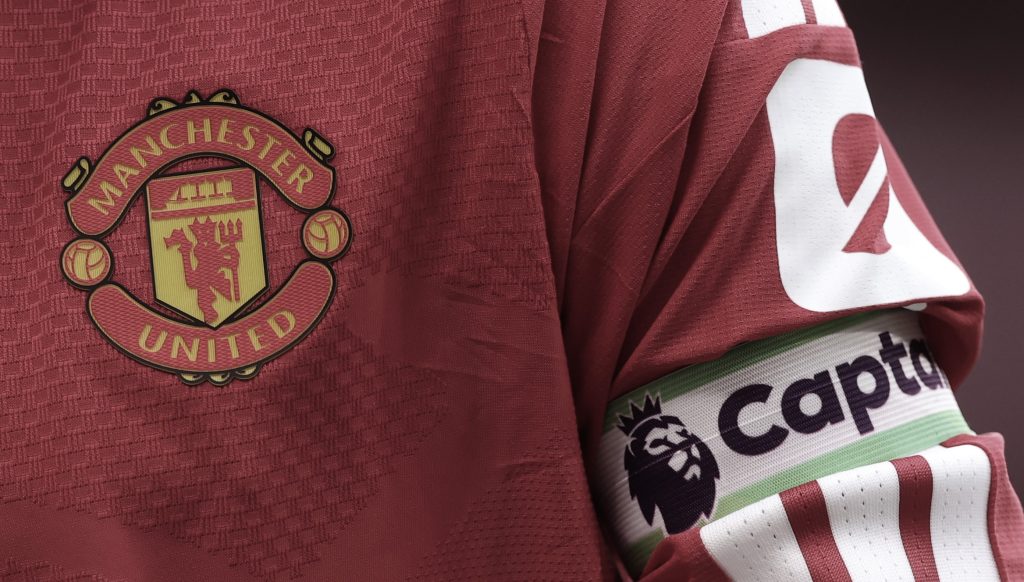
Few players in the modern Premier League have been as admired and as argued over as Bruno Fernandes. His output is never really in doubt.
The debate is about what kind of captain he is: an emotional engine who drags a team forward or a perfectionist whose frustration can spill over. The honest answer is that he is both, and that tension has defined his time as a leader.
An Immediate Influence
Fernandes arrived at Manchester United in 2020 with a reputation as a creative, high-volume midfielder, and he quickly became the heartbeat of the side. By the time he was handed the permanent captaincy, he had 64 goals and 54 assists in 185 games for the club.
Leadership is not only about numbers, but those figures explain why teammates and managers started to treat him as the reference point for standards inside the dressing room.
He has never been a quiet leader. His style is visible: pointing, gesturing, demanding the ball, demanding more from the player next to him. For some, that is the sign of a winner. For others, it can look like pressure being passed down the line. Both readings have supporters.
Taking the Armband
The armband came to him gradually. During the 2022-23 season, Fernandes wore it for most of the campaign while Harry Maguire struggled to hold down a starting place. In effect, he was already doing the job before the title was official. When Erik ten Hag made the decision formal, United confirmed that Fernandes would lead the team on a permanent basis.
Ten Hag’s reasoning is revealing. The manager described Fernandes as an example for others to follow and praised him as a good social connector who also reads the game very well. That last point matters. A captain is partly a coach on the pitch, an intermediary who translates the manager’s ideas in real time. Ten Hag saw those qualities in Fernandes: tactical understanding combined with the energy to pull others along.
Every captaincy has a low point, and Fernandes’s came during United’s 7-0 defeat to Liverpool in 2023. His body language drew sharp criticism, and Gary Neville said some of his second-half behavior was a disgrace. At the time, commentators were calling for him to lose the role.
What you should read next
5 Rising Young Stars Creating a Selection Headache for Their Managers The Carabao Cup is often where young players get their chance. For some, it is simply about getting a few minutes and…
What came next says more about his leadership than the criticism did. Reports at the time noted that he responded on the pitch, helping inspire United to a third-place finish and an FA Cup final. That season also brought the League Cup, United’s first trophy in six years. Good captains are not the ones who never make mistakes. They are the ones who answer them, and Fernandes answered with performances.
Staying Through the Storms
Fernandes’s commitment has also been tested off the pitch. In 2024 he signed a new contract running to June 2027, with an option for another year, saying he believed his best moments in a United shirt were still to come. In an era when top players often look for the exit when a club struggles, that was a meaningful signal to teammates and supporters.
He then had to lead through a long stretch of managerial turbulence. United went through the Amorim period, which ended with the head coach’s dismissal in January 2026. A captain’s job in those moments is to keep the dressing room steady while the people above him change. That the team recovered says something about the stability the senior players provided, and Fernandes was the most visible of them.
The Carrick Revival and Individual Recognition
Under Michael Carrick, United overcame the January dismissal of Ruben Amorim to secure Champions League qualification, with Fernandes described as the team’s inspiration. The personal recognition followed. In May 2026 he was named the Football Writers’ Association Footballer of the Year, narrowly beating Arsenal’s Declan Rice and becoming the first United player to win it since Wayne Rooney in 2010.
Individual awards are not proof of leadership, but they matter here. A captain who leads by example has to be the best version of the standard he sets, and a season of that quality gave his words weight in the dressing room.
For his country, Fernandes is increasingly a senior voice rather than just a creative spark. In the current international break, he was the standout performer in Portugal’s 4-2 win over Denmark, setting up Vitinha’s first international goal with a fine cross. He then helped Portugal beat Norway 2-1 in the Nations League in Porto. Creating goals for younger teammates while carrying the load himself is a quiet form of leadership, and the kind that tends to define how a squad grows.
Strengths and Flaws
Verdict
Fernandes is not the calm, stoic captain of football tradition. He is a passionate, demanding, sometimes volatile leader who has stayed at a club through setbacks, answered his critics with performances, and gradually earned the armband he was already wearing.
His captaincy is best judged not by his worst moments, such as the Liverpool game, but by how consistently he came back from them.
For a club that has needed identity and resilience as much as talent, that may be the most valuable thing a captain can offer. Whether he ends his United career with the major trophies his standards deserve is still unwritten, but few players have done more to carry the weight of the badge.
Join our writers