
'/%3e%3cdefs%3e%3clinearGradient%20id='prefix__paint0_linear_4737_37157'%20x1='3.018'%20y1='23.6'%20x2='44.925'%20y2='24.977'%20gradientUnits='userSpaceOnUse'%3e%3cstop%20stop-color='%231CB7FF'/%3e%3cstop%20offset='.502'%20stop-color='%232FF58B'/%3e%3c/linearGradient%3e%3c/defs%3e%3c/svg%3e)


Why Have Manchester United Signed Carlos Baleba?
Aug 30 2026 10:49 · By onefootball.com · 10 Reads


MU
Manchester United The Red Devils
Analysis
Carlos Baleba was officially announced as a Manchester United player on 25th August in a deal reportedly worth up to £65 million.
The Cameroonian international had been linked with the Red Devils dating back to last summer, where his physical and technical attributes aligned with what the club were looking for as part of their midfield rebuild.
But why have Manchester United signed Carlos Baleba?
Who is Carlos Baleba?
Carlos Baleba was born on the 3rd January 2004 in Douala, a major city in Cameroon.
His father, Eugene Balepa, immediately taught him the importance of hard work from a young age and also advised him to take up acrobatics whilst growing up so that he could learn how to read the flight of a ball.
Carlos Baleba was originally a right-winger whilst playing for Douala club Futur Soccer FC. But after taking some time away from the game due to injury, he returned as an attacking midfielder whilst playing for numerous local sides in Cameroon.
When Baleba was 13, Brasseries du Cameroun Football Academy organised a youth tournament where Baleba was spotted. After being recruited, he soon trained with their u18s side where he was also able to develop the physical side of his game.
As he took the steps in becoming a professional footballer, Baleba idolised Paul Pogba whilst also taking inspiration from Kevin de Bruyne and Thiago Alcantara.
Carlos Baleba’s Player Profile
Carlos Baleba’s breakthrough came during the 2024/25 season at Brighton & Hove Albion where his performances saw him become one of the most important players in Fabian Hürzeler’s team. But what are the attributes that make him so good?
Open body positioning is one of the key attributes Baleba consistently showcases whilst his team are in-possession. What open body positioning means is that he is consistently positioning himself sideways to be an active passing option for his teammates which enables him to open the pitch and play progressively.
In the example below, Brighton have a goal-kick against Tottenham and Carlos Baleba has opened his body to become a potential passing option.
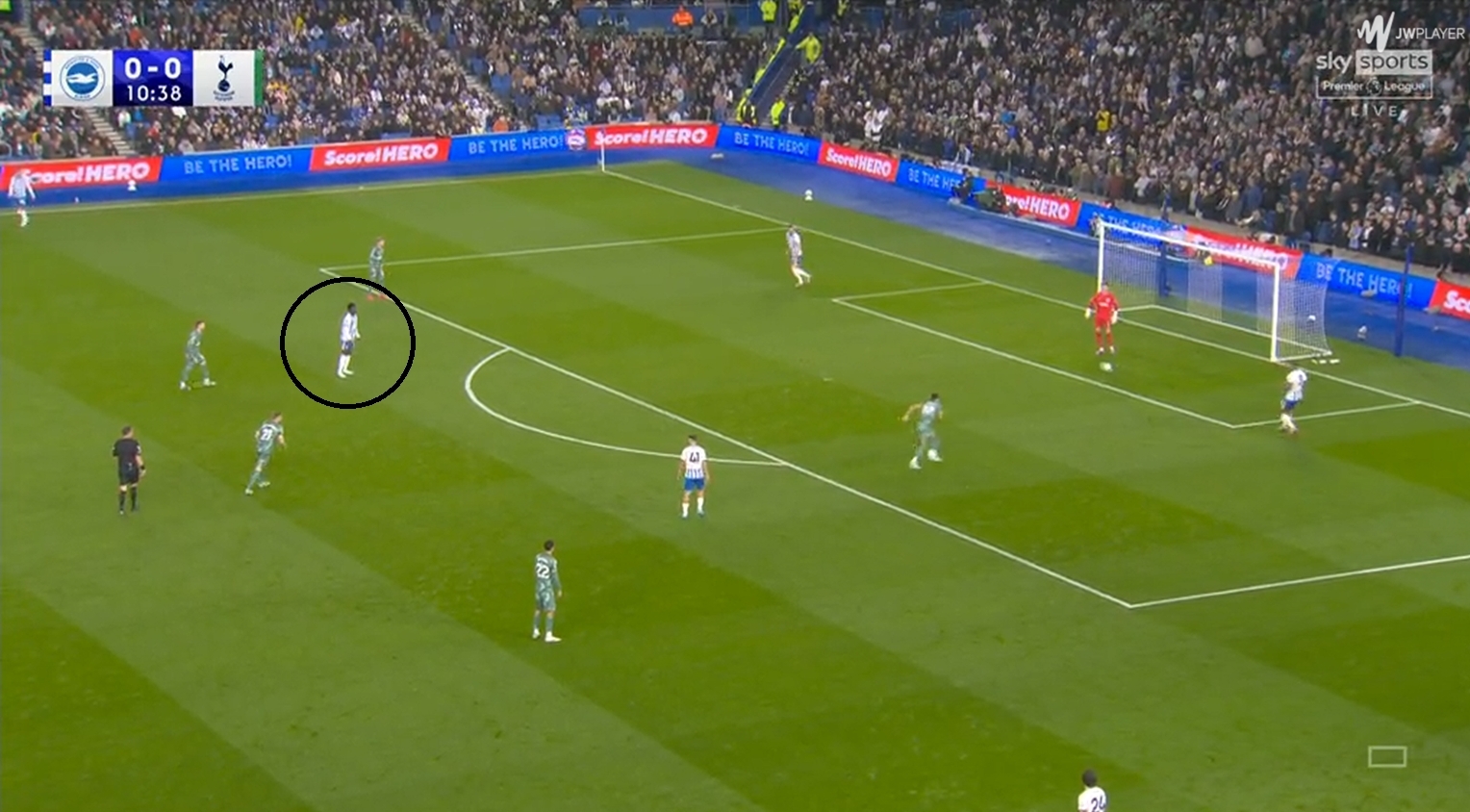
Image credit: footballia.eu
Whilst in the sequence he didn’t receive the ball, you would have noticed that he has attracted the pressure of two Tottenham players close by.
This is because if you are positioned side-on in order to receive, you are creating access for the opponent to try force a turnover whilst simultaneously creating spaces in order to progress play.
This leads onto the next attribute Baleba has: Receiving on the back foot
Regularly during matches, Carlos Baleba looks to receive the ball onto his back foot. What this means is that he looks to control with the foot which is furthest away from the ball.
This could also be seen as a mechanism in order to create space elsewhere on the pitch. If he receives with his back foot, it invites the opponent on to press him.
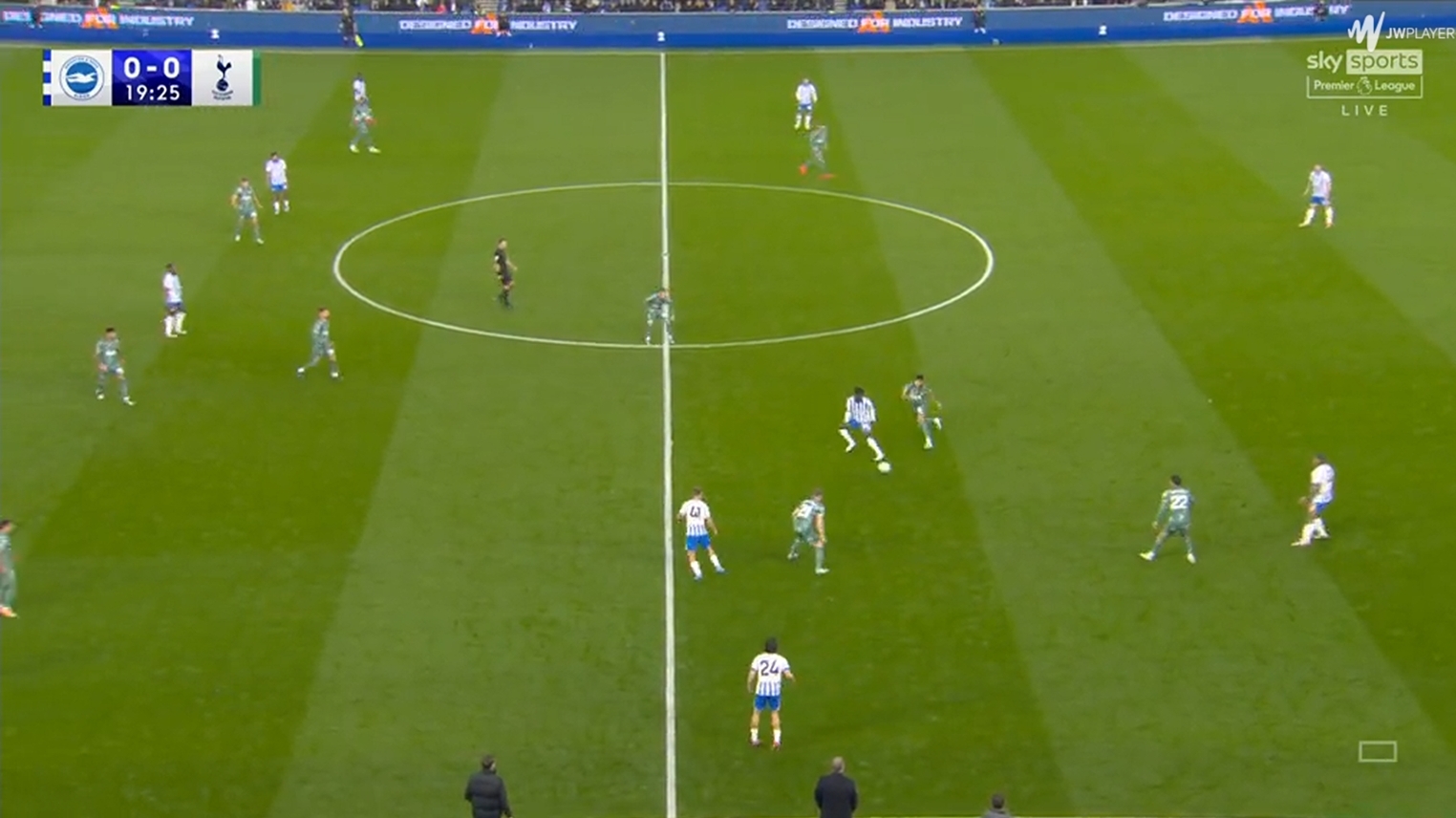
But Baleba is clever with how he maximises the use of the back foot as he uses the opponent’s momentum to either play through pressure or to turn away to play around it.
In the examples below, Baleba has opened his body to receive in a tight space. He controls the ball with his back foot which invites the pressure from the opponent before driving through into space.
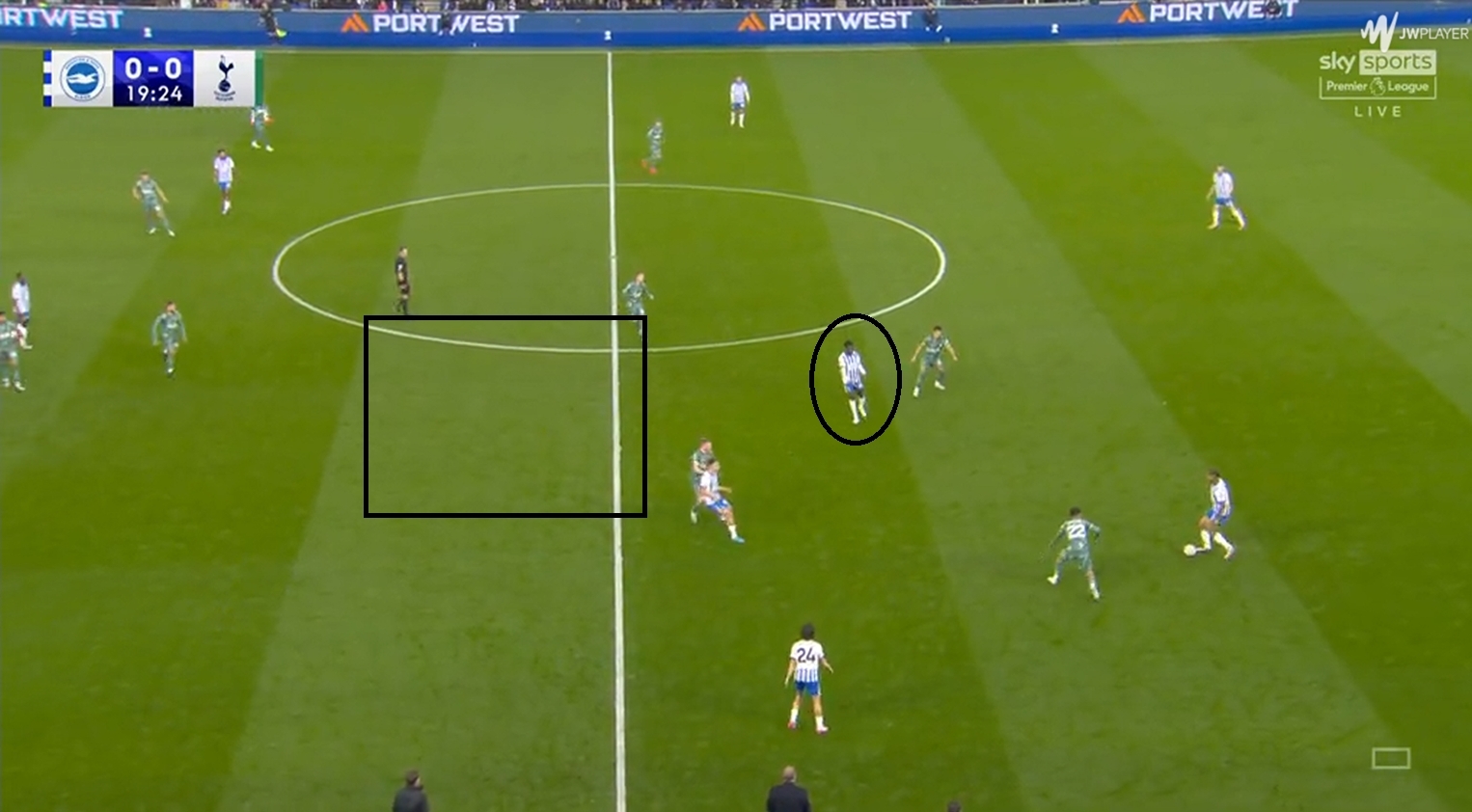
Image credit: Footballia.eu
Playing with an open body and receiving with the back foot can link to his passing capabilities.
When there is no pressure arriving from the opponent, Baleba seeks to find long range passing solutions that can help his team progress higher up the pitch in a quick manner.
In the examples below, Baleba receives the ball from one of his teammates and controls with his back foot where he can turn and open the pitch. He then wraps his foot around the ball to play a long range pass into space.
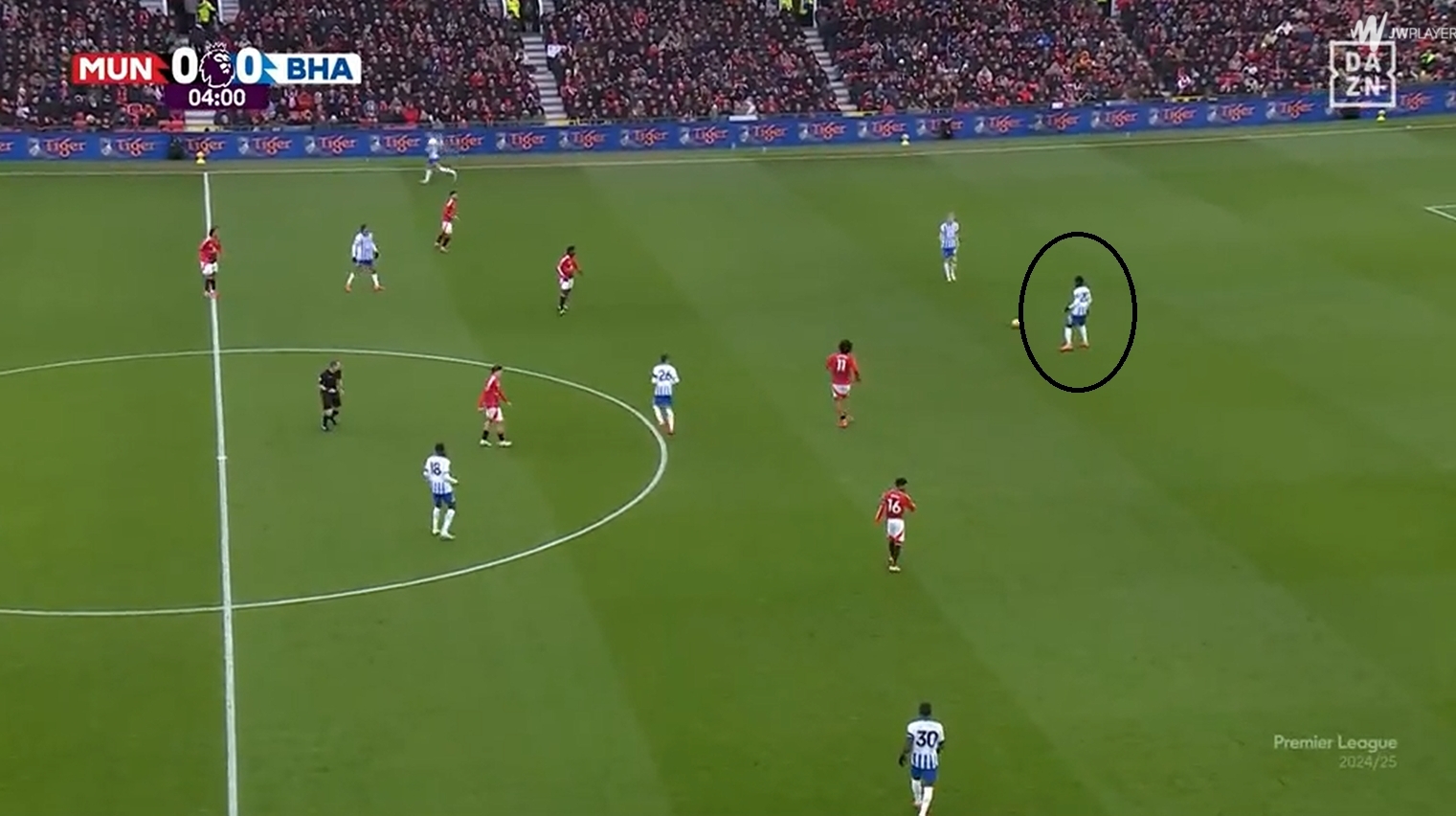
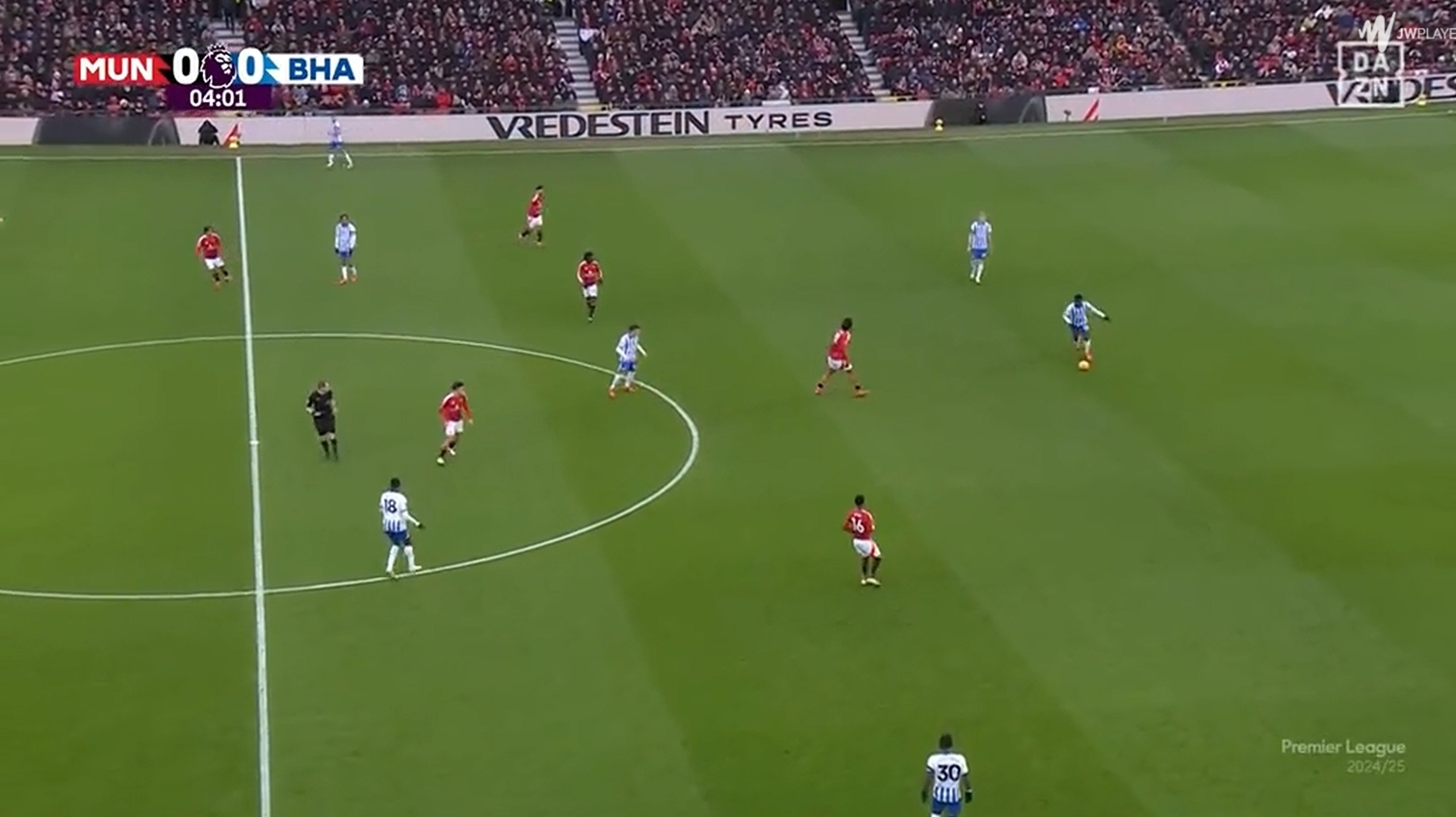
The way he wraps his foot around the ball is a crucial detail in regards to his long range passing. As he wraps his foot around, whilst also leaning backwards, this sees the ball hang in the air for a few extra milliseconds.
This is beneficial for his team because it enables teammates to make deeper runs which can help in breaking an opponent’s offside trap. This is a similar technique Paul Pogba used whilst he was playing at his peak level.
For this technique to work effectively, it requires full body rotation to be in sync from the upper body and down towards the legs. This is because as the body rotates, the weight can be effectively transferred in order to generate the right amount of power when the ball is eventually struck.
Out of possession, Carlos Baleba is equally as impressive. One of the attributes that instantly stand out is his ground coverage.
One of the reasons why Baleba is so good at covering ground is because of how agile he is on his toes. By applying light weight onto his toes whilst running, it can help him to cover large distances in short time.
In the examples below, Baleba has played a ball forward towards one of his teammates. But Wolves have turned possession over and begin a counter-attack. Baleba is able to get across and stop Matheus Cunha from progressing.
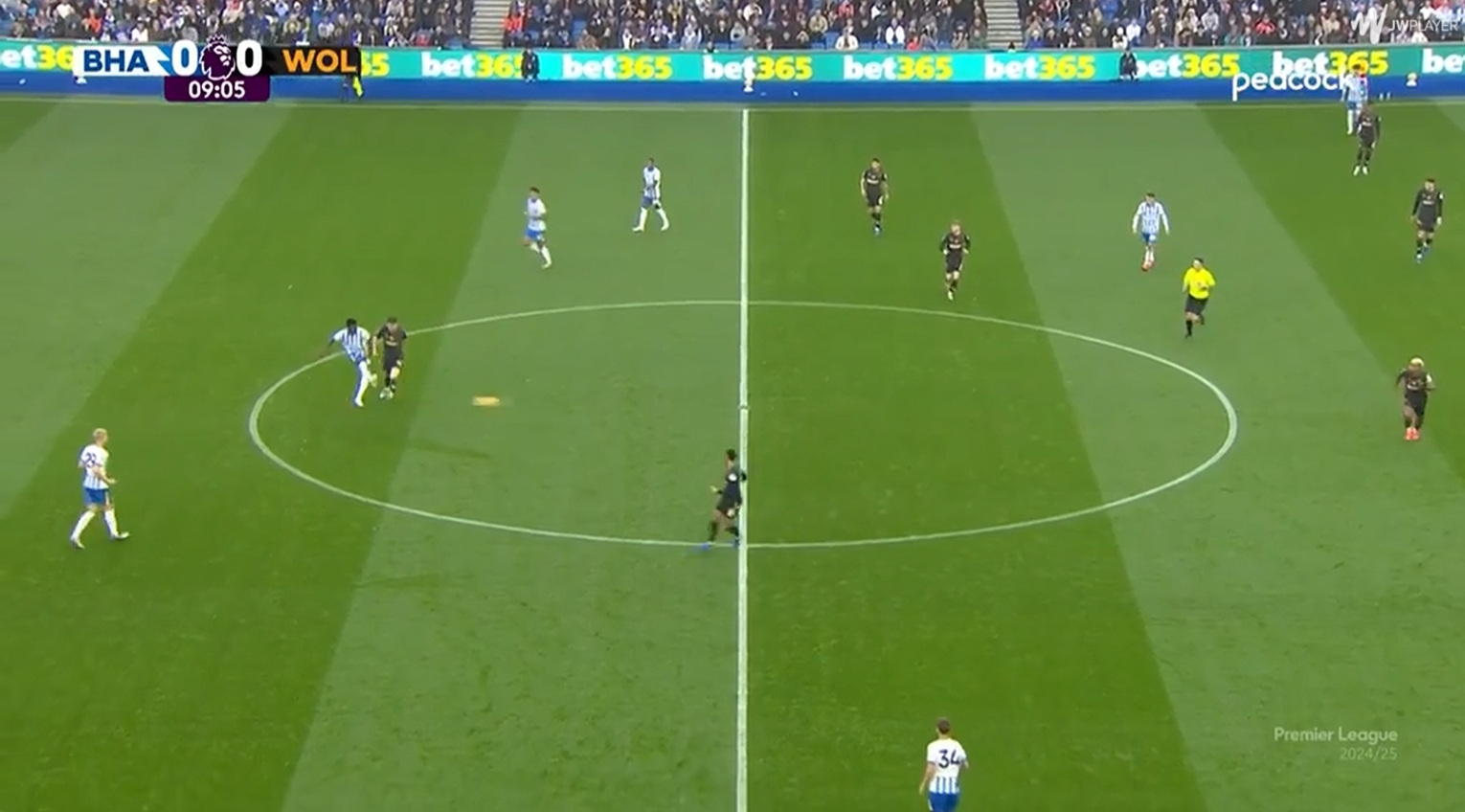
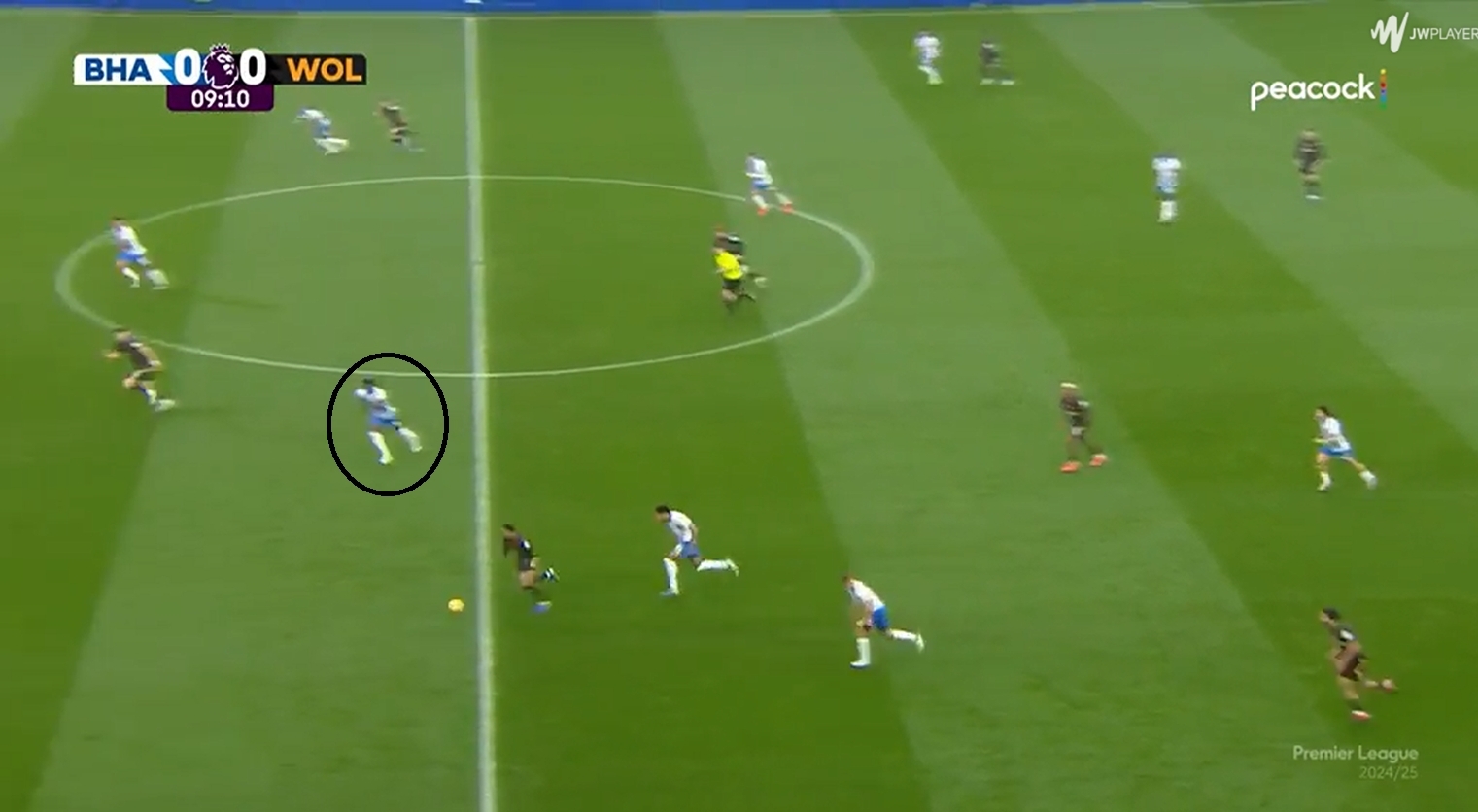
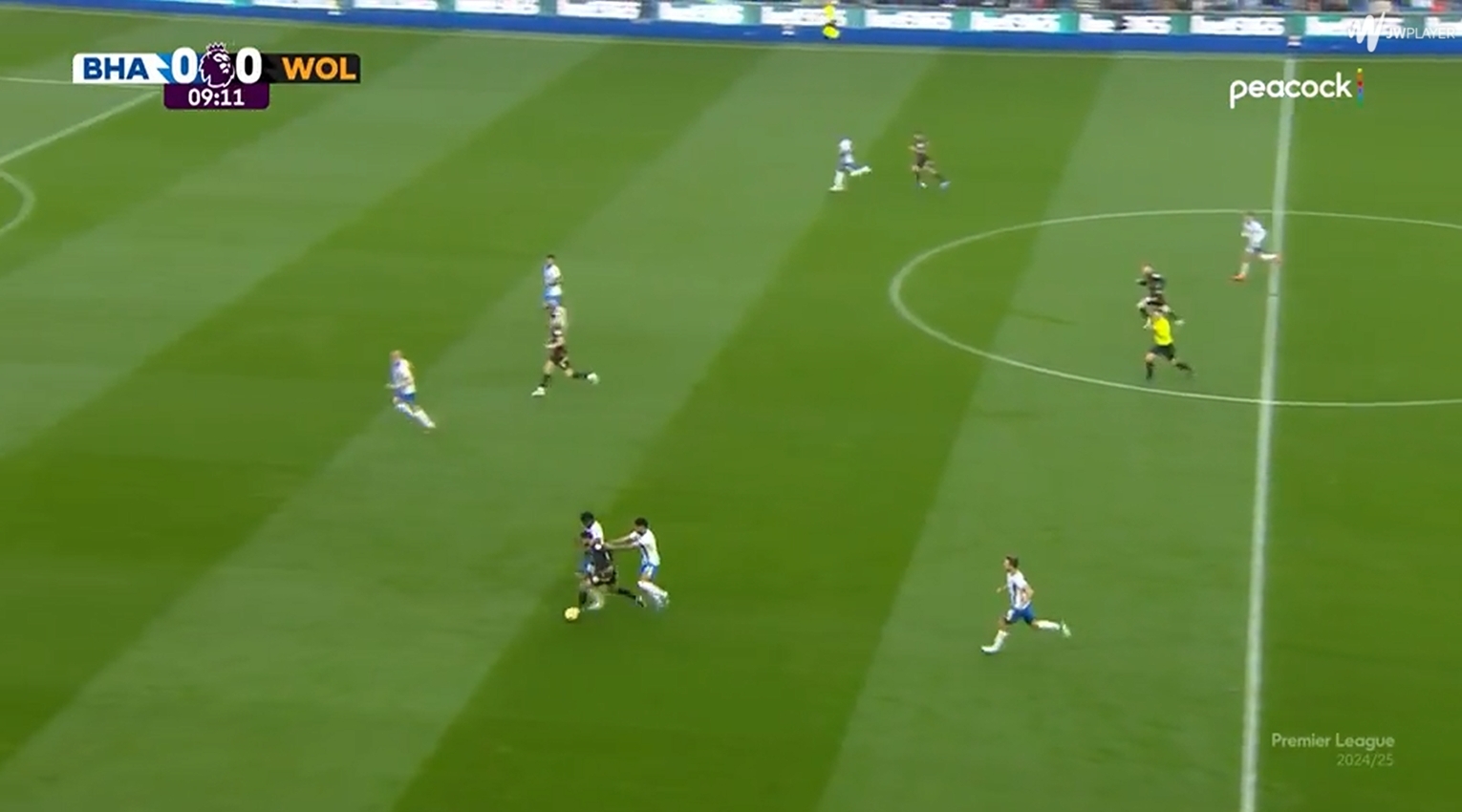
When directly stopping attacks, defensive positioning is also important. What this means is that distances between the area you cover as well as the player you mark are ideally moderate.
In the case of Baleba, this is something he is very good at doing. This is because he is able to read the game well in order to anticipate what the opponent’s next action might be.
What you should read next
Manchester United’s Spanish Evolution: Who Is Eva Olid? Manchester United Women will begin a new era heading into 2026/27, with Eva Olid taking over from Marc Skinner as the team's…
For example, if the opponent is outside of the penalty area in the wide channel, Baleba would position himself equally between the player he is marking as well as the ball.
This means that he is capable of cutting out the passing lane to that player as well as being able to step out to directly stop the attack from progressing further.
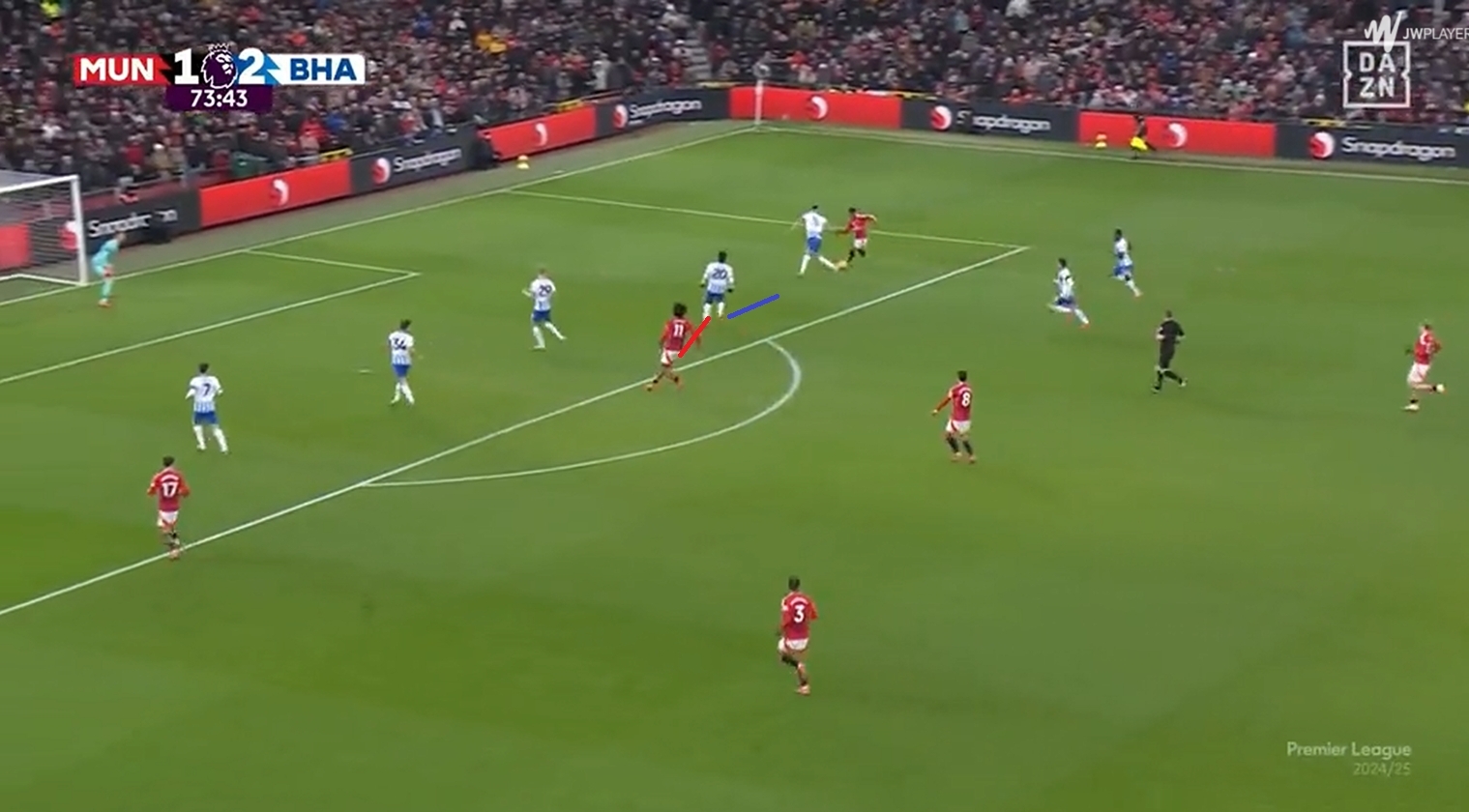
In open play, the same idea applies.
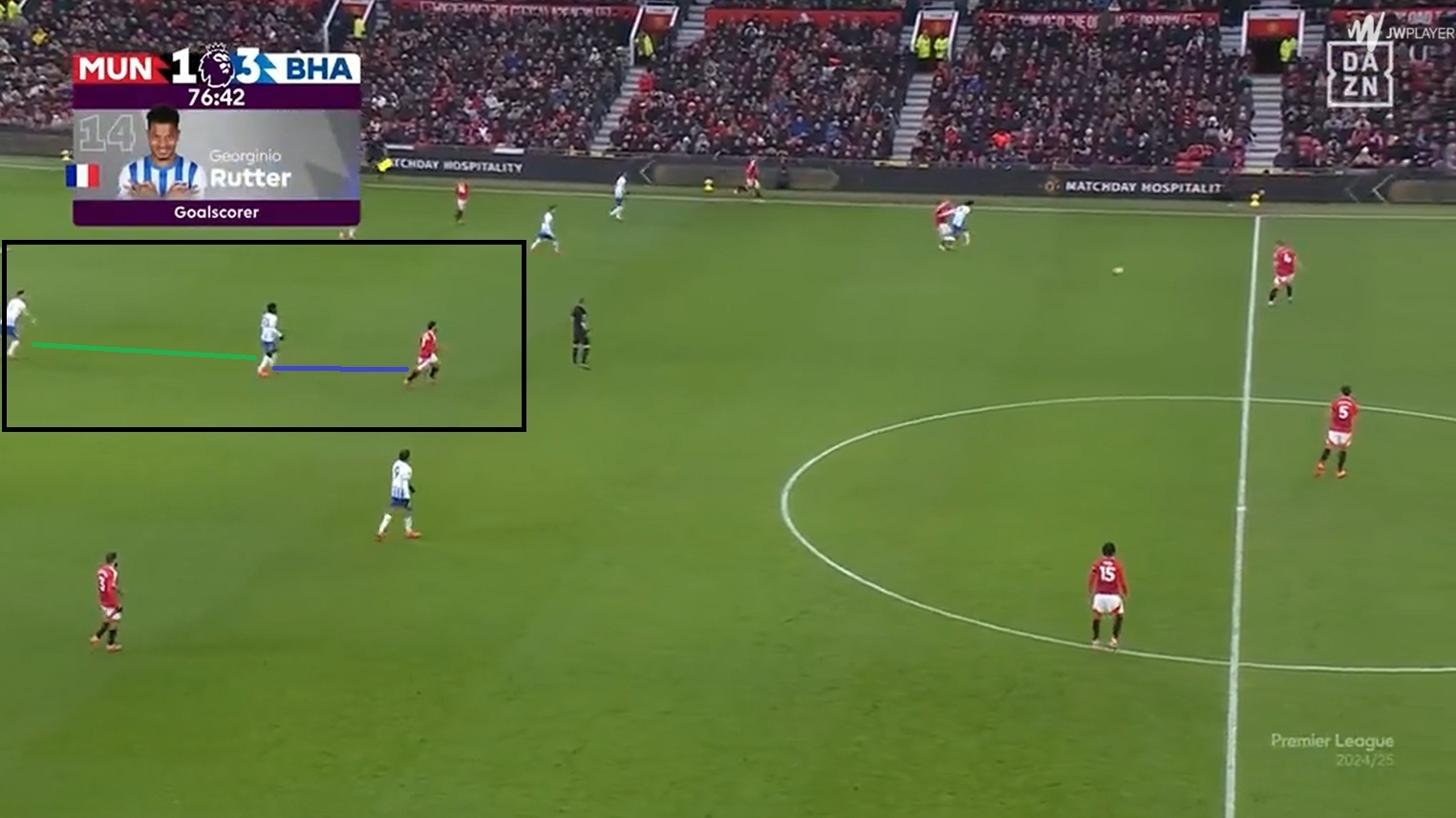
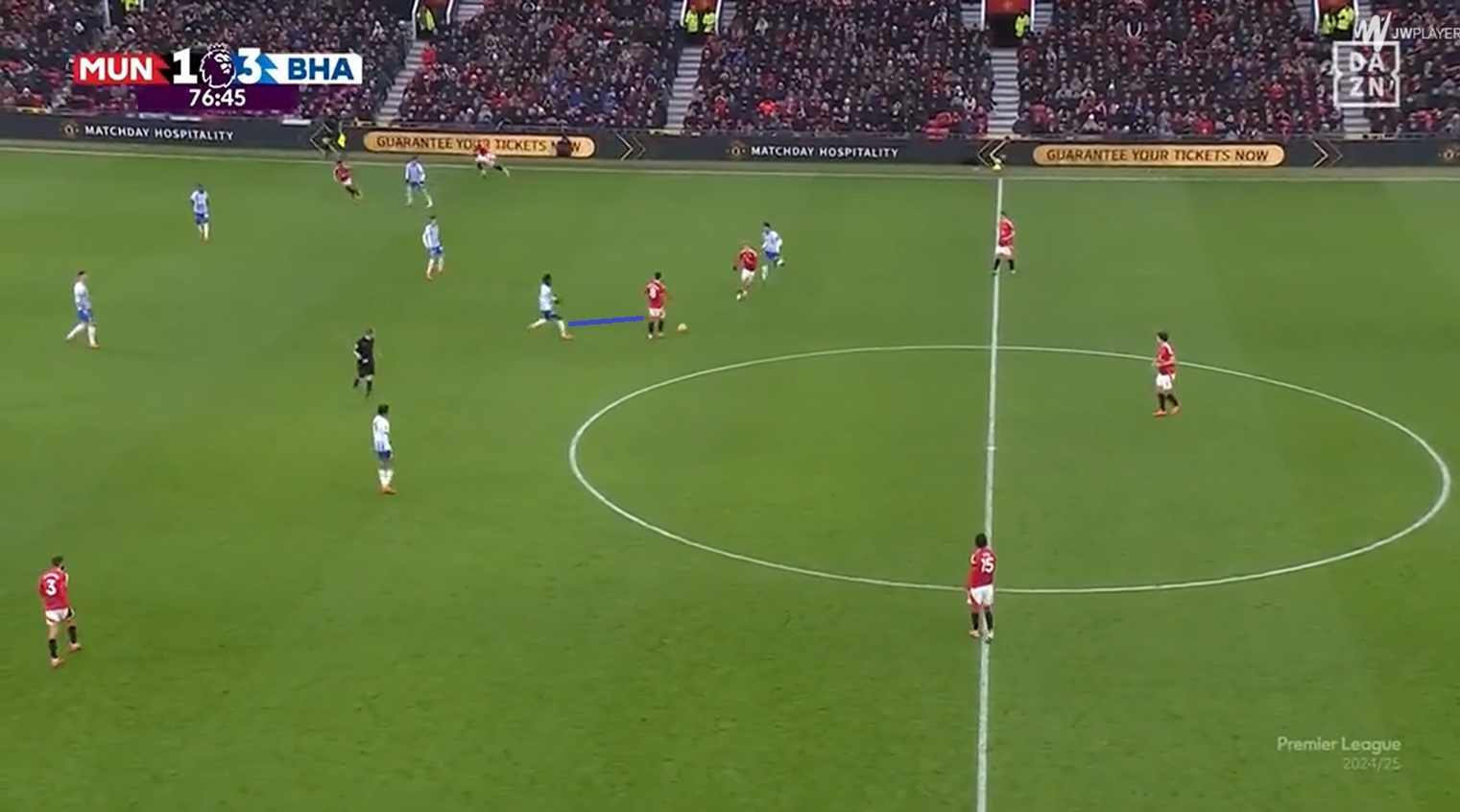
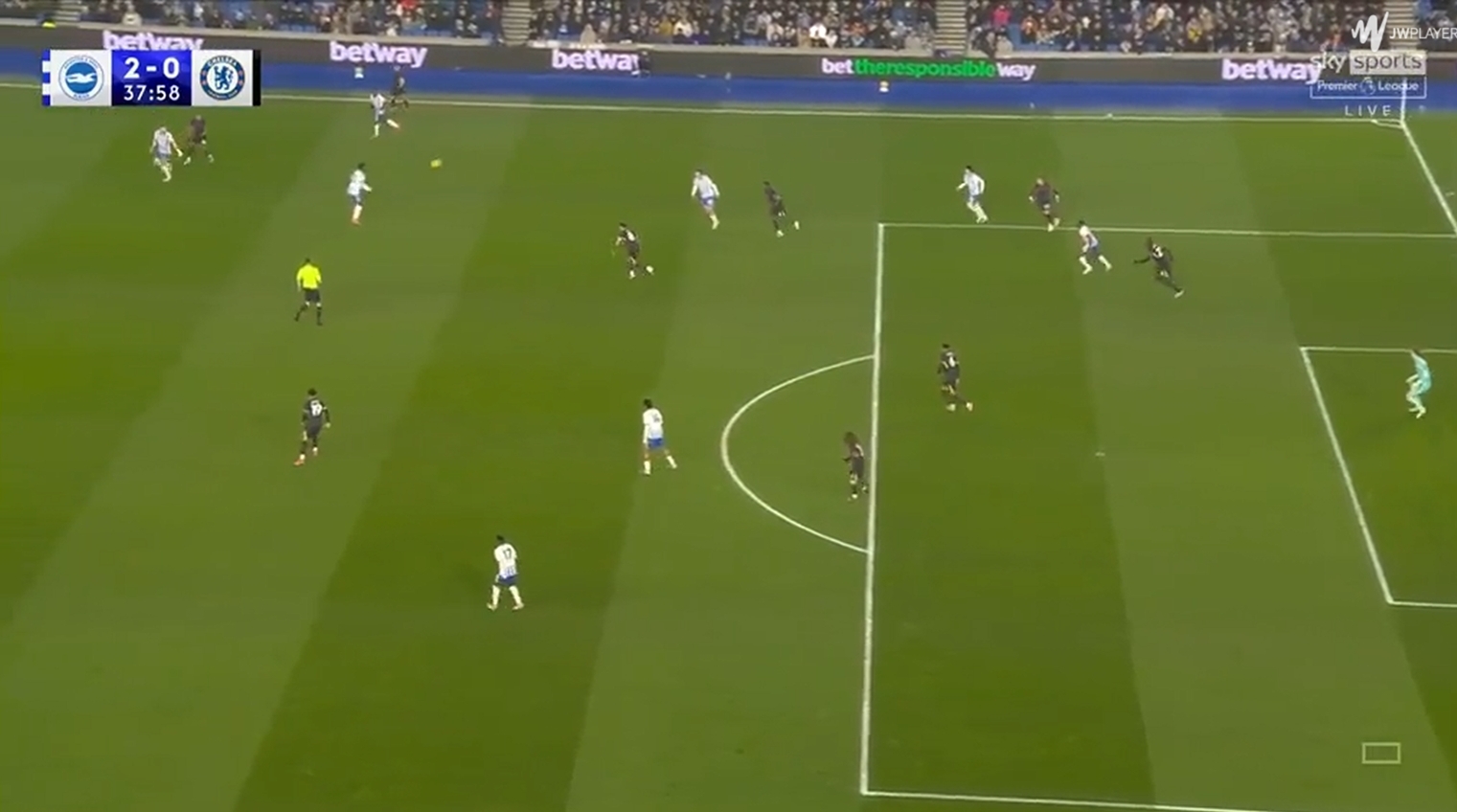
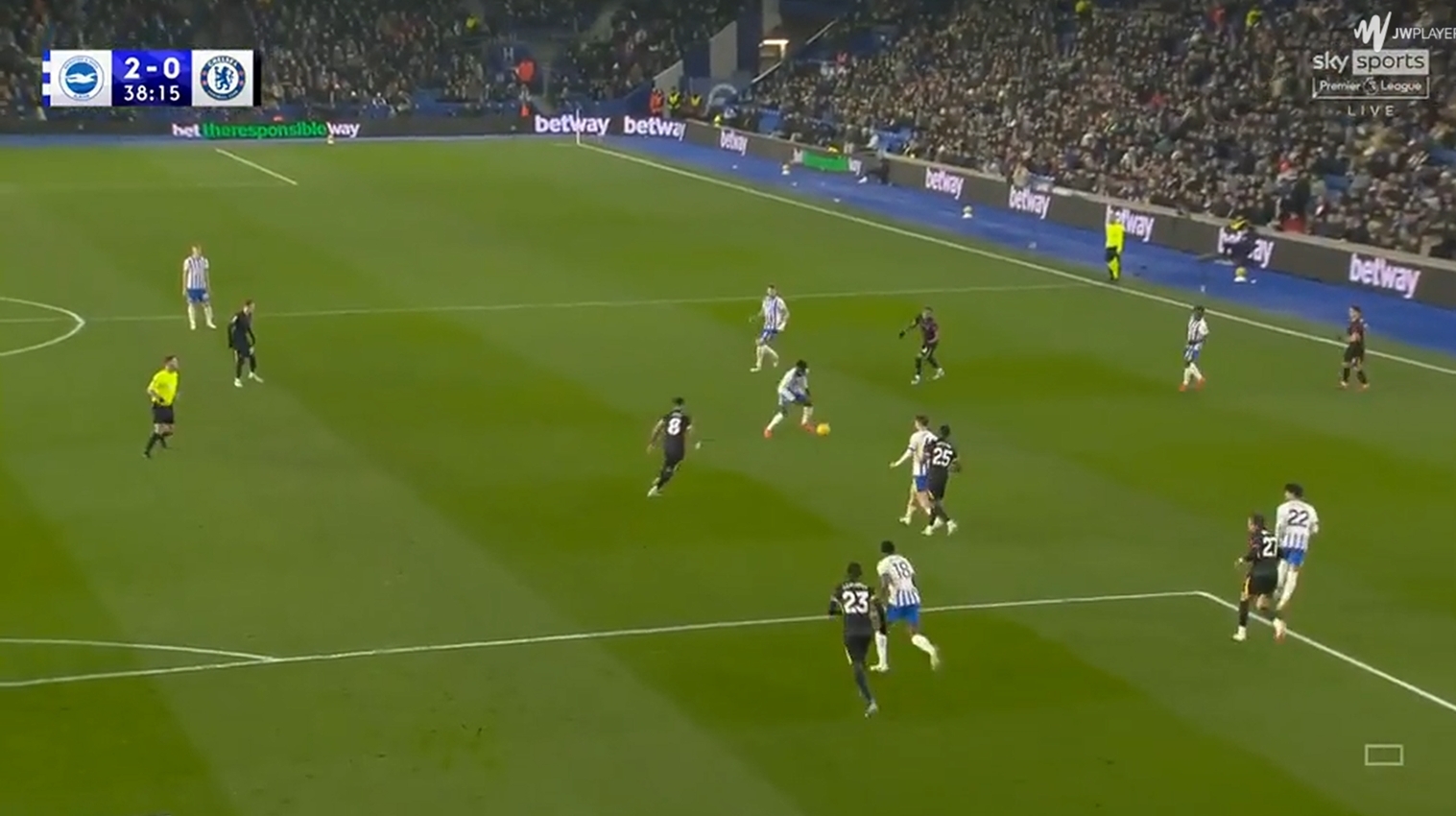
Defensive positioning is also crucial within the attacking third of the pitch. In the examples below, Baleba is behind play so is part of Brighton’s rest defence.
As part of Brighton’s high press, which has forced Chelsea to clear the ball, Baleba has stepped up into a higher position where he went from blocking a potential Chelsea exit to directly intercepting the ball.
As well as being positionally intelligent, physical strength in duels is also key and is another standout attribute in Baleba’s game.
Whether it be in defensive duels or duels in which he is protecting the ball, Baleba’s upper body strength is remarkable and this might be down to the acrobatics he learnt as a kid.
In an interview with The Guardian in 2025, when he was asked about his backflip celebration, Baleba pointed to the acrobatic training his father advised him to do whilst he was a kid.
Outside his house in Akwa, Douala, there would be abandoned truck tyres which he’d run up to and back. He’d then jump up onto the tyres to perform backflips and front flips.
His father would also get him to do gymnastic training at the beach along with two hours of non-stop running which included hill sprints and resistance work.
Whilst on face value it wouldn’t seem like much, these methods of training directly contributed to his physical development as he got older due to him consistently testing his core strength and agility. Gradually over time as he got older, this helped him to become stronger than others around him.
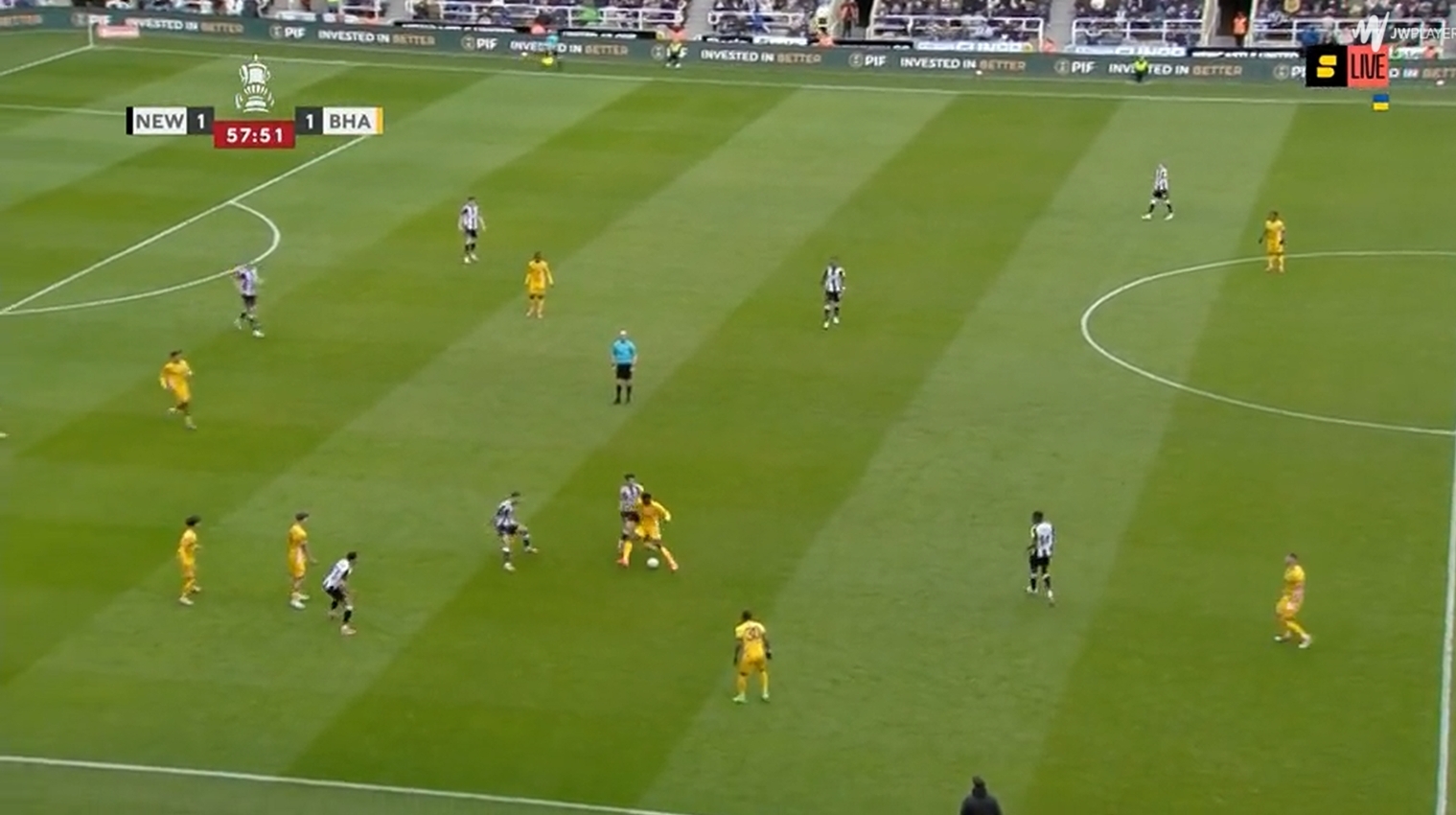
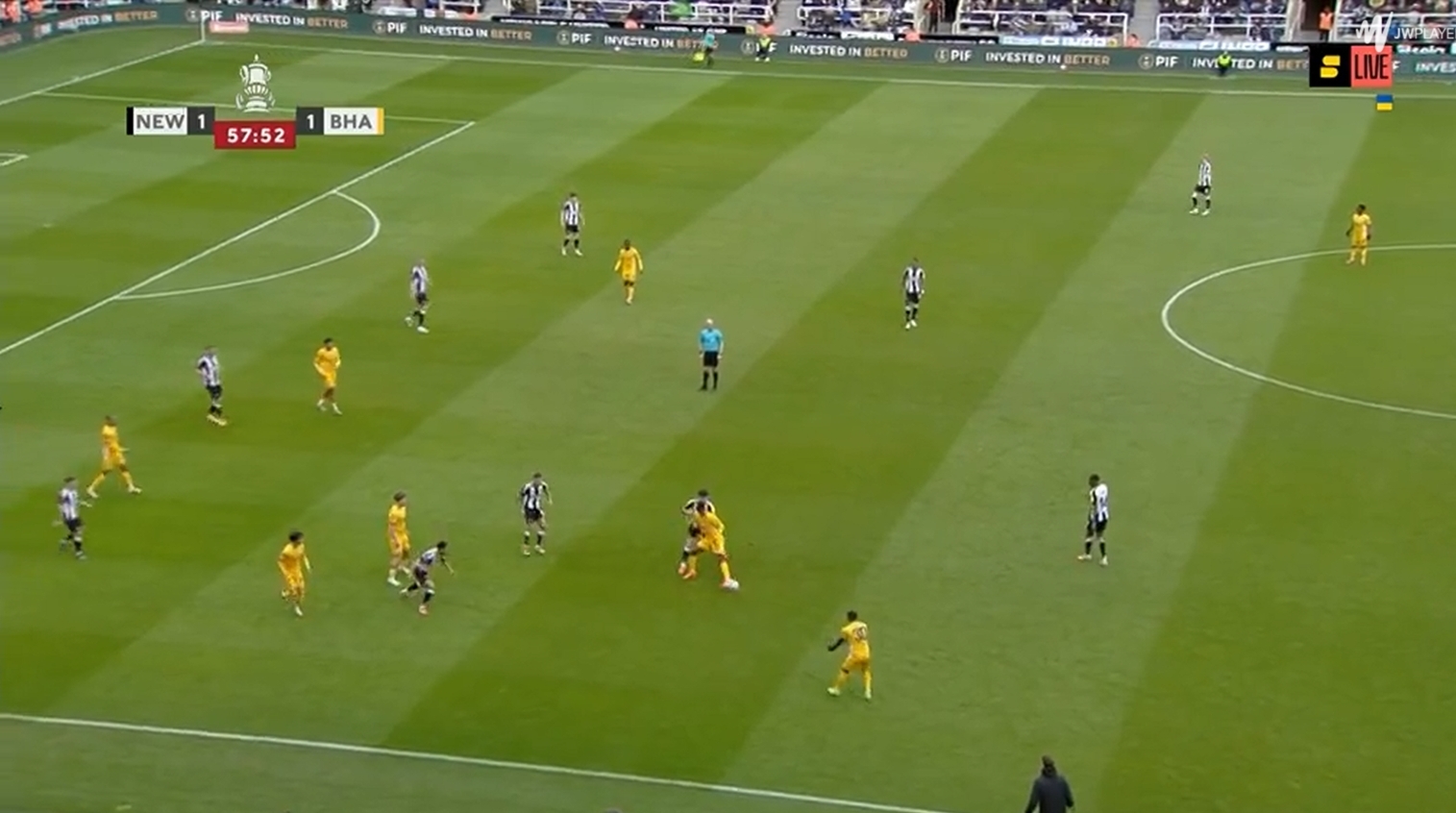
In the examples below, Newcastle are applying a pressure onto him. But he is able to protect the ball using different methods.
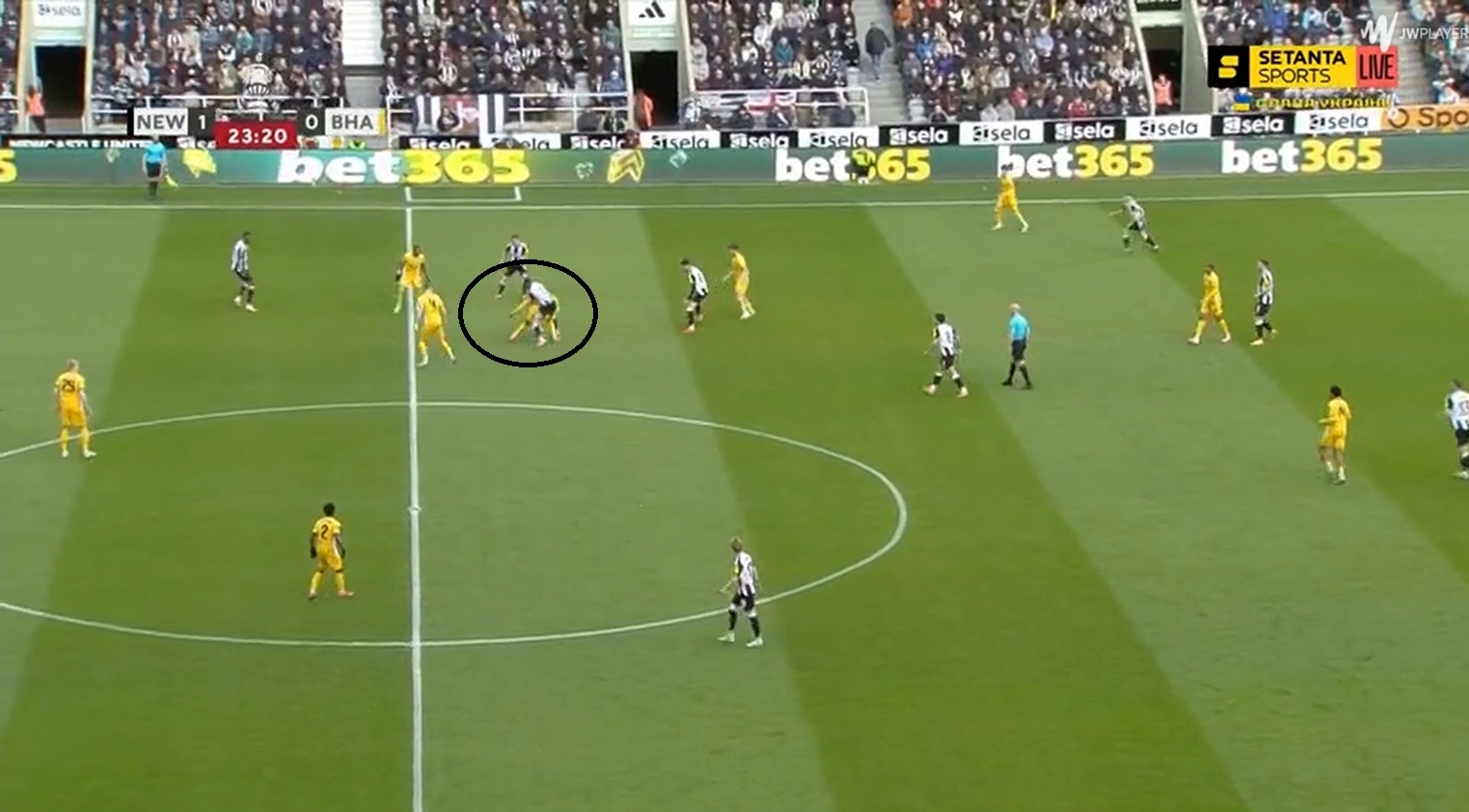
In the first example, Baleba has bent his knees slightly and has pushed himself back onto the Newcastle player behind him. The benefit of this method is that it creates further separation between the defensive player and the ball.
In examples two and three, he uses the strength of his core as well as his arms to protect the ball from the defensive player as well as help in creating leverage. The benefit here is that it also creates further separation between the defender and the ball.
As a result, opponents are reduced to going through Baleba to try win the ball back or they end up giving fouls away.
Why did Baleba struggle during 2025/26?
One of the reasons could have been the original speculation around Manchester United’s interest.
But another reason could also be down to his physical development. In comparison to 2024/25, where Baleba had a slim and long limb build, he entered the 2025/26 season looking significantly bigger.
This was due to the added mass to his upper body where his chest was wider and his shoulders were broader.
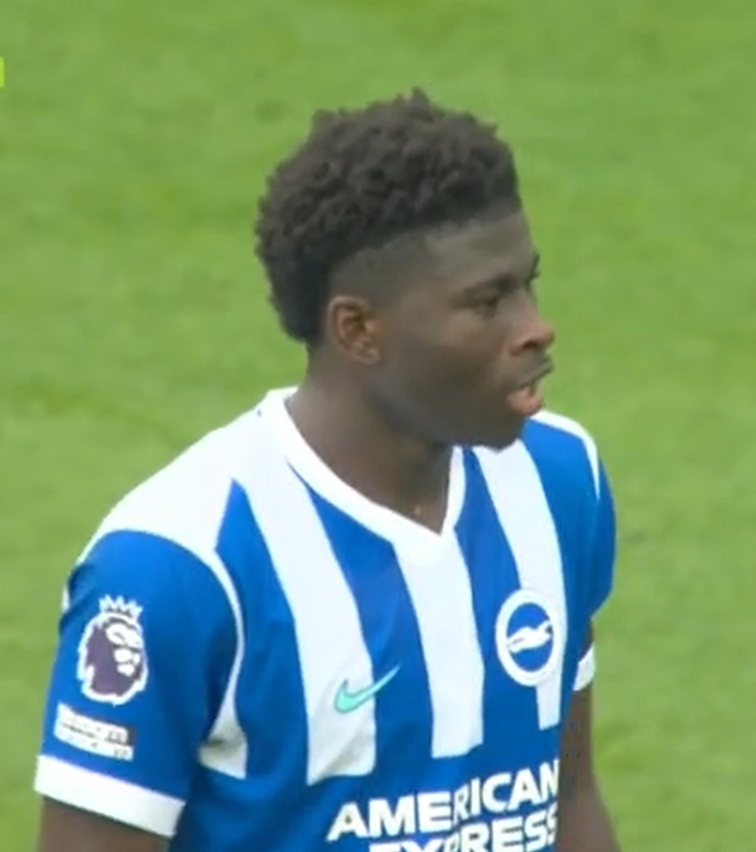
Whilst we don’t know for certain this body mass increase directly contributed to his struggles, we do know that these changes to his body would require an adaption period.
The mechanisms he’d have known before weren’t as effective anymore, such as full body rotation with the ball. Due to the additional weight, the weight transfer could have taken longer because it had to cover greater mass.
This meant that, in the first few months of the season, Baleba could have looked more clunky when trying to rotate as his brain might have been adapting to the extra mass around his body. Think of it like a computer having a large software update.
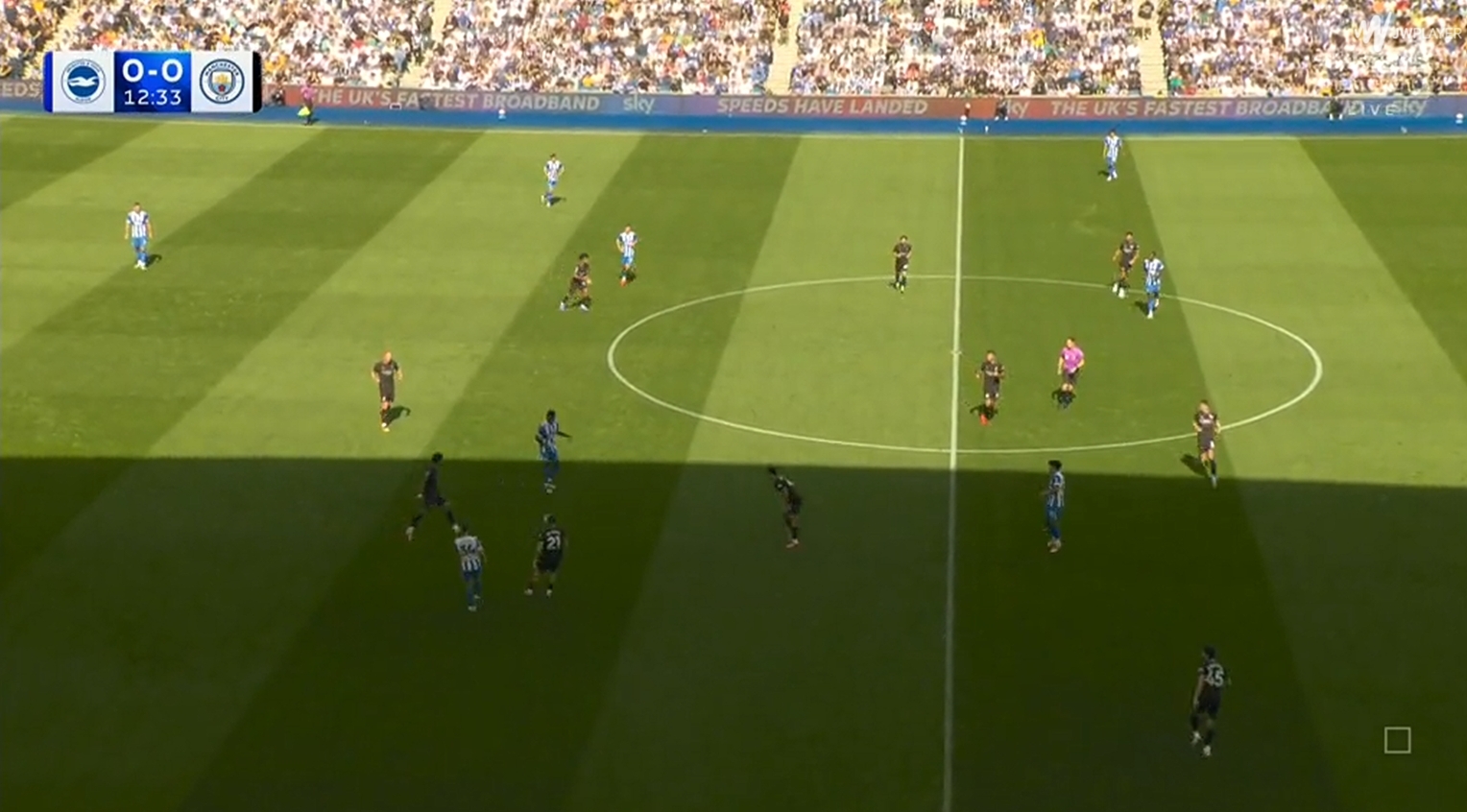
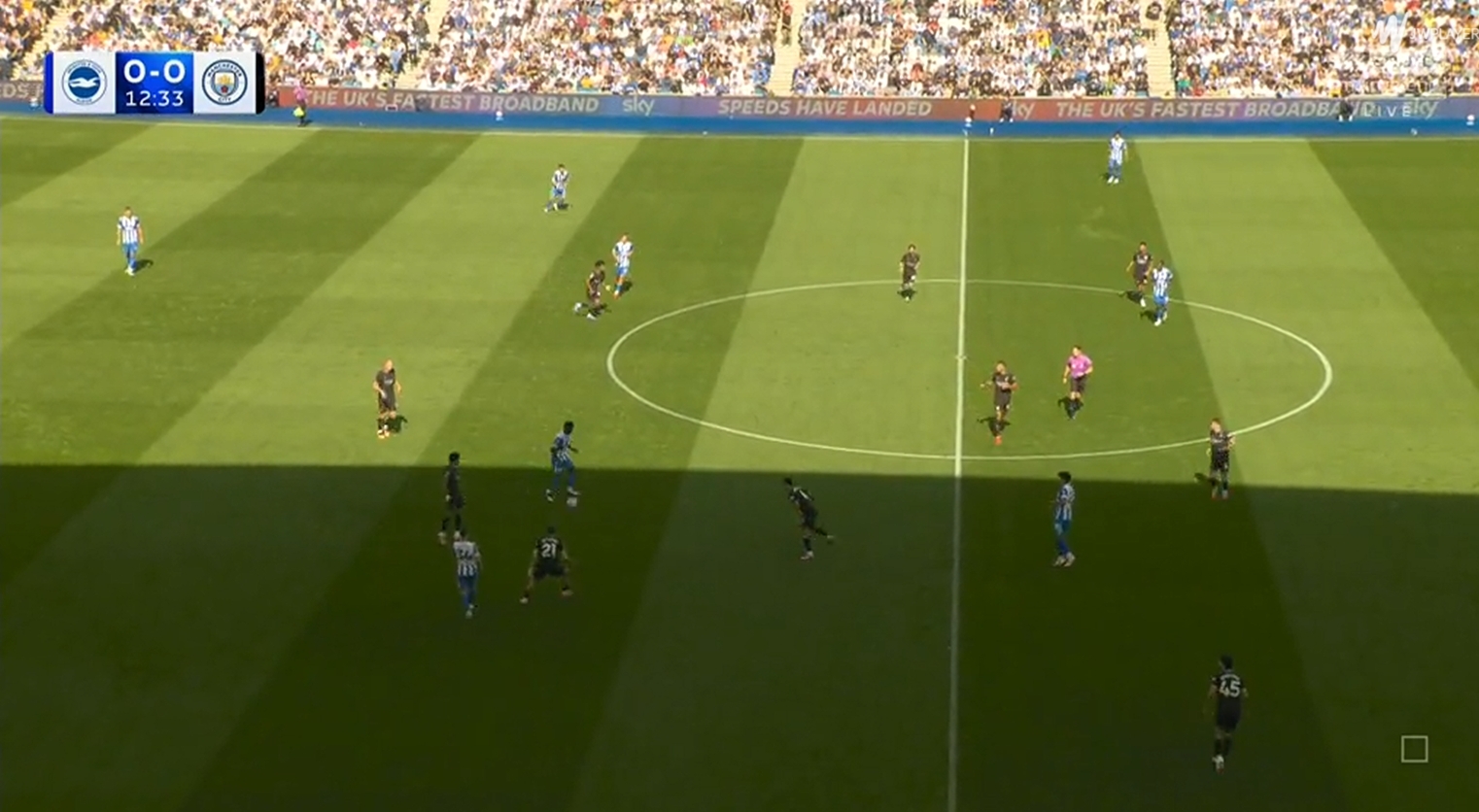
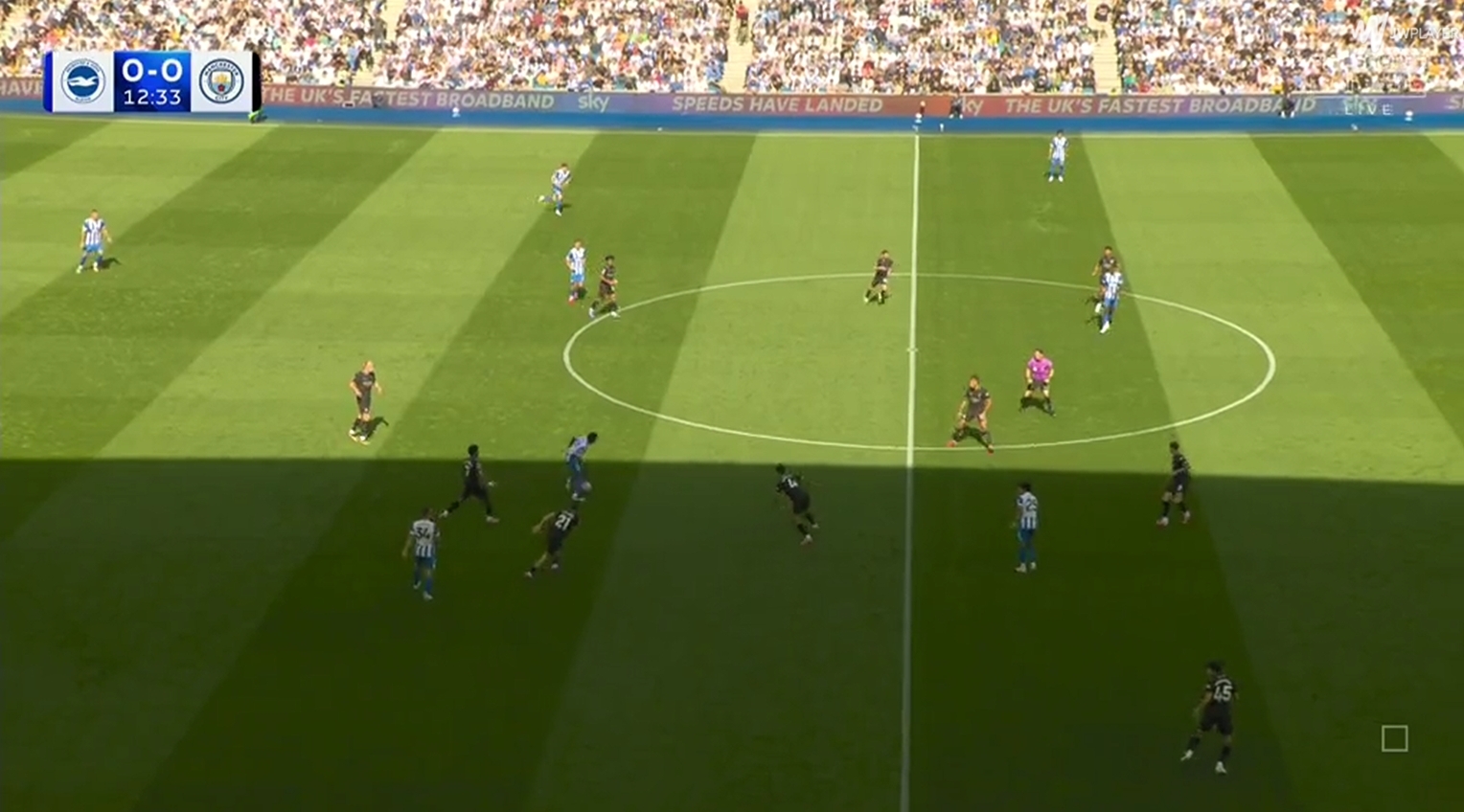
As well as the struggles with body rotation, Baleba also struggled with his ball control. Sometimes the ball would get stuck under his feet or the ball would completely get away.
This could be because his brain had to adapt to the new timings required for him to rotate and play. When the upper body and lower body are not fully synchronised, timing may become inconsistent, which could consequently lead to poor touches and ultimately losing possession.
Why Manchester United Have signed Baleba
Manchester United signed Carlos Baleba because they were in need of a profile who has the combination of physical, technical and positional intelligence attributes.
Prior to Baleba’s arrival, Manchester United’s midfield was leaning towards more technical players who possessed creative qualities, such as Andrey Santos and Youri Tielemans who joined earlier in the summer.
With Baleba, United will not just have technical quality, but also someone who is physically robust in duels and positionally intelligent in different phases of play, allowing him to help protect the defence. The physical and defensive dimensions are different to Tielemans and Santos which offers balance.
With this profile in the team, United will be able to create spaces elsewhere on the pitch whilst in-possession. This is due to Baleba’s ability to invite the pressure of the opponent whilst also being able to open the pitch due to his body positioning.
Baleba is also capable of driving into these created spaces himself through progressive carrying. This is due to the support of a strong core which makes it hard for opponents to knock him off the balance, whilst receiving on the back foot enables him to use the opponents pressing momentum in his favour.
Manchester United can also take greater risk in the attacking phase of play by pushing more bodies into attacking areas. This is because Baleba will likely be positioned behind play as part of rest defence, whilst he is also capable of covering larger distances if possession is lost.
All in all, Carlos Baleba gives Manchester United a combination of three important qualities a top midfielder needs: physicality, technical skill and positional intelligence.
What he brings can benefit him individually as well as Manchester United collectively, both with and without the ball.