
'/%3e%3cdefs%3e%3clinearGradient%20id='prefix__paint0_linear_4737_37157'%20x1='3.018'%20y1='23.6'%20x2='44.925'%20y2='24.977'%20gradientUnits='userSpaceOnUse'%3e%3cstop%20stop-color='%231CB7FF'/%3e%3cstop%20offset='.502'%20stop-color='%232FF58B'/%3e%3c/linearGradient%3e%3c/defs%3e%3c/svg%3e)


Hate campaign against Lionel Messi erupts in England after the World Cup
Jul 23 2026 12:49 · By SAM · 257 Reads


British media and supporters turn bitter after Argentina ends England’s dream
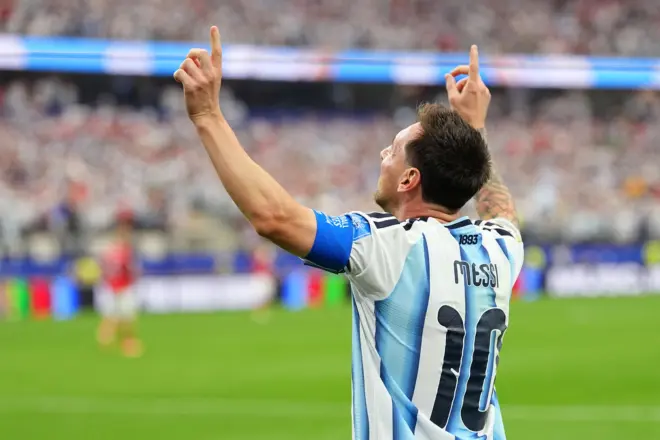
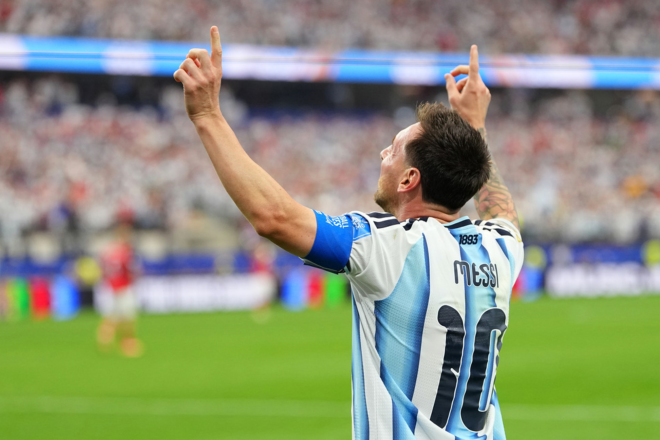
Lionel Messi has become the target of a remarkably bitter backlash in England after Argentina eliminated the Three Lions from the 2026 Men’s World Cup, with parts of the British media and football public apparently struggling to accept another painful defeat.
The hostility intensified after Argentina beat England 2–1 in the semifinals, denying Thomas Tuchel’s side a place in the final. Several of Messi’s teammates were later photographed holding a banner about the Malvinas, or Falkland, islands.
The message was deliberately provocative given the long-running dispute between Argentina and Britain over the islands, known as Las Malvinas in Argentina. Criticism of the banner itself was therefore entirely predictable, and likely exactly why it was held up.
What followed, however, went far beyond a reasonable response to one political statement. The English took the bait.
The tone of the coverage increasingly resembled a pathetic exercise in sour grapes, with Messi recast as a villain almost immediately after he helped destroy England’s hopes on the field.
British bitterness
A YouGov poll illustrated the dramatic change in British attitudes toward the Argentina captain.
Following the opening group matches, 55 percent of respondents had a favorable opinion of Messi. During the round of 16, he was still viewed positively by 50 percent, while only 11 percent held an unfavorable opinion.
By the end of the tournament, his approval rating had fallen to 29 percent, with 44 percent viewing him negatively. His net score therefore collapsed from plus 46 to minus 15 in the space of roughly one month.
Messi didn’t suddenly become a different person during that period. He simply helped Argentina beat England.
The speed of the reversal makes the reaction look less like principled outrage and more like wounded national pride. English football culture has spent decades turning each major tournament into a festival of inflated expectation, only to search for villains and excuses when the familiar disappointment arrives.
This time, Messi became the convenient target.
Even England knows Messi is the GOAT
The backlash also failed to change the most important judgment.
Among British respondents with at least some interest in football, 38 percent still named Messi the greatest player of all time. Cristiano Ronaldo received just 16 percent, less than half the support given to the Argentine.
Even after hostile headlines, political controversy, and the pain of a semifinal defeat, British football fans couldn’t convincingly deny the obvious.
Messi can fairly be criticized for appearing with the banner. That doesn’t justify a wider campaign aimed at diminishing his character, career, or footballing greatness.
England lost because Argentina were better when it mattered, with Messi once again driving his country toward the biggest prize in the sport. Turning on him afterward won’t alter the result or erase his legacy.
It merely makes the reaction look bitter, predictable, and increasingly embarrassing. Messi remains the GOAT, regardless of how many angry Brits there are.