
'/%3e%3cdefs%3e%3clinearGradient%20id='prefix__paint0_linear_4737_37157'%20x1='3.018'%20y1='23.6'%20x2='44.925'%20y2='24.977'%20gradientUnits='userSpaceOnUse'%3e%3cstop%20stop-color='%231CB7FF'/%3e%3cstop%20offset='.502'%20stop-color='%232FF58B'/%3e%3c/linearGradient%3e%3c/defs%3e%3c/svg%3e)


Uprising at FIFA: Infantino faces the threat of removal by his closest ally, Mattias Grafström
Jul 31 2026 23:19 · By SAM · 5 Reads


Pressure mounts on FIFA chief after proposed $20 billion plan divides global football
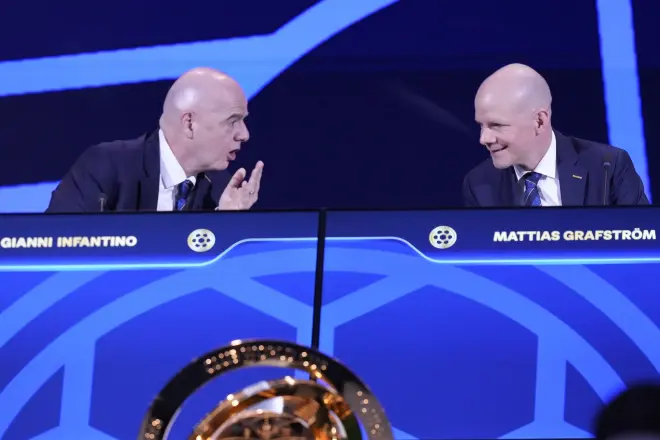

Gianni Infantino is facing the biggest challenge of his FIFA presidency after a controversial plan to introduce private investment into the World Cup’s commercial structure triggered a major backlash across global football.
The FIFA president’s position has come under intense scrutiny, with former allies, governing bodies and political figures questioning whether he can continue leading the organization.
The controversy centers on a reported proposal to create FIFA Forward Enterprise, a separate commercial entity that would oversee valuable FIFA assets, including broadcasting and sponsorship rights.
The plan reportedly involves selling a 20% stake in the company, with the venture valued at around $20 billion. Thrive Eternal, an investment firm founded by Joshua Kushner, has been identified as a potential anchor investor.
Infantino has defended the proposal as a way to generate more revenue for football development and provide greater financial support to FIFA’s member associations. However, critics argue that the move could allow private investors to gain influence over the World Cup, one of the most important sporting events in the world.
The proposal quickly created division among football’s governing bodies. UEFA held emergency discussions and strongly opposed the plan, warning that the World Cup should not be placed under private ownership influence.
Other confederations, including CONCACAF and the Asian Football Confederation, also expressed concerns, increasing the pressure on FIFA’s leadership.
Infantino’s inner circle begins to break apart
The biggest threat to Infantino’s authority has come from inside FIFA itself, with senior figures distancing themselves from the president.
Carlos Cordeiro, a former US Soccer president and senior adviser to Infantino, became one of the first major figures to step away. He criticized the proposal, questioning why FIFA needed outside investment when the organization already has significant financial reserves.
Kevin Lamour, FIFA’s chief operating officer and a long-time associate of Infantino, delivered an even stronger criticism. Lamour claimed that FIFA staff, officials, confederations and other stakeholders had not been properly informed about the project.
He argued that the controversy reflected wider concerns about transparency, decision-making and governance within the organization.
The criticism has also attracted attention beyond football. Political figures have called on Infantino to reconsider his position, while the controversy has added to previous disputes involving FIFA’s leadership.
The president has already faced criticism over accusations that he became involved in political matters and over decisions linked to the 2026 World Cup.
Despite the growing pressure, Infantino has not resigned and has given no indication that he plans to leave FIFA. However, reports suggest that FIFA Secretary General Mattias Grafström, once regarded as one of Infantino’s closest allies, has become increasingly separated from the president amid the crisis.
Speculation has grown that Grafström could play a role in a potential leadership challenge, although no official move has been announced. FIFA’s future direction may depend on whether Infantino can regain support among member associations and senior officials.
For years Infantino appeared to have firm control over FIFA, but this latest dispute has exposed significant divisions within the organization.
With former allies questioning his leadership and football bodies pushing back against his proposals, the coming months could represent the most difficult period of his presidency so far.